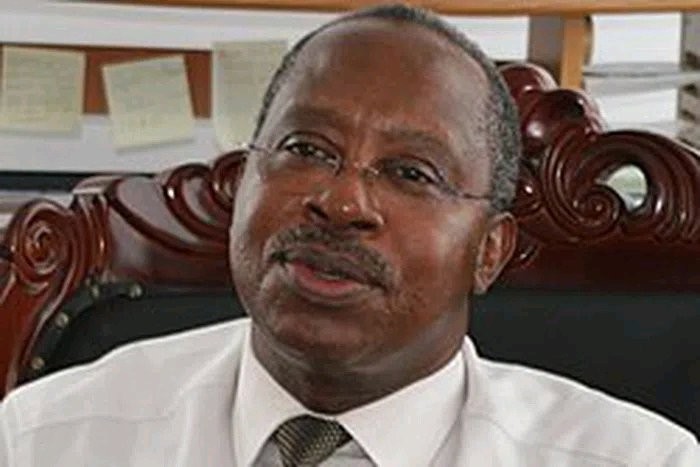
Justice Martin Stephen Egonda-Ntende, a senior judge of the Court of Appeal and one of Uganda’s most esteemed legal thinkers, has raised alarm over what he sees as a worsening disregard for fundamental rights in the country’s lower courts. Addressing participants at the World Philosophy Day Conference at Makerere University, the veteran jurist—who is approaching retirement in roughly half a year—said he is increasingly troubled by practices emerging from magistrates’ courts.
He noted that he is regularly disturbed by reports surrounding bail hearings, particularly instances where suspects are remanded simply because prosecutors claim they must “verify a national ID” presented by a surety. Justice Egonda-Ntende called this reasoning baseless and contrary to long-standing judicial norms, remarking that such arguments would have been unimaginable in earlier years.
Looking back on his early career, he described a judiciary that was far more attentive to safeguarding the right to bail. Magistrates, he recalled, took it upon themselves to inform accused persons of their entitlement to seek bail and approached the process with diligence—not as a courtesy, but as an obligation.
According to the justice, any democratic legal system should begin from the presumption of liberty. Anyone charged with an offence that permits bail, he argued, should be released unless the State can provide compelling and legally sound grounds for keeping them in custody. He lamented that, over time, judicial attitudes have hardened, fostering what he termed an “antagonism” toward basic constitutional guarantees.
Justice Egonda-Ntende also revisited an old but contentious habit from decades ago: some magistrates routinely postponed Friday bail applications until Monday, effectively ensuring that the accused spent the weekend behind bars. He recalled that the then–Chief Justice, Wako Wambuzi, issued a formal directive denouncing this practice and instructing judicial officers to handle bail applications swiftly and openly.
He now hopes to trace this directive and encourage the Uganda Legal Information Institute (ULII) to publish it. Making the document public, he said, would remind Ugandans—and the judiciary—of how similar issues were confronted in years past and reinforce the ongoing duty to defend constitutional rights.
In his closing remarks, the soon-to-retire justice urged lawyers and judicial officers alike to renew their commitment to protecting the freedoms guaranteed by law, warning that undermining these principles risks eroding public confidence in the justice system.
About the Author