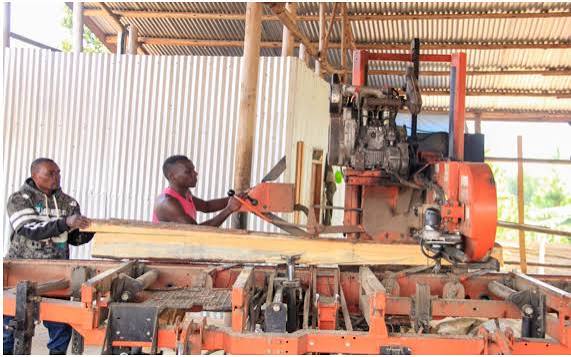
Uganda’s carpentry and timber sector is experiencing a remarkable shift as small and medium-sized enterprises embrace modern technology and sustainable production methods to reduce dependence on imported wood and cut carbon emissions. After years of relying on timber shipped from Asia—an approach that created long, costly, and environmentally damaging supply chains—local innovators are now steering the industry toward self-sufficiency.
Central to this transformation is the movement to fully utilize Uganda’s forest resources through advanced machinery and improved processing methods. Zainabu Kakungulu, National Project Coordinator at the Food and Agriculture Organization (FAO), underscores the potential of this shift, noting that modern equipment allows local producers to generate high-quality timber products without looking abroad. This strategy not only strengthens domestic production but also lowers emissions linked to international transportation.
A nationwide program is now working with 70 to 100 SMEs, offering hands-on business coaching, upgraded tools, and technical training to support their transition to efficient and low-emission operations. According to Kakungulu, identifying key industry players and equipping them with certified wood sources, professional guidance, and superior machinery is crucial in turning small enterprises into sustainable and profitable ventures.
Driving this effort is a €10 million investment from the European Union, dedicated to financing low-emission technologies for Uganda’s timber processors. The funding is helping enterprises boost productivity while embracing environmentally responsible practices. By tapping into planted forests and focusing on high-efficiency processing, Kakungulu explains, Ugandan producers can supply both domestic demand and regional markets while creating jobs and reducing the need for costly imports.
Kirangwa Investments Limited stands out as a powerful example of this new direction. With upgraded equipment and a commitment to responsible forestry, the sawmill is improving efficiency while reducing its environmental impact. Director Dr. Godfrey Bahiigwa highlights how their plantation helps mitigate climate change by absorbing carbon dioxide and how conservation practices—such as safeguarding wetlands and streams—are integral to their operations. The company has also switched from petrol to diesel to cut emissions and is preparing to adopt hydropower once local electricity access expands.
Nonetheless, the shift to modern, greener production methods is not without its obstacles. Bahiigwa notes that pine plantations require far more weed management than eucalyptus, increasing operating costs. Fire hazards also pose risks, but the company has implemented strong preventive measures, including fire lines, cleared boundaries, and community collaboration to protect plantations.
Even with these challenges, momentum continues to grow as more SMEs recognize the financial and environmental advantages of modern timber processing. The positive results—greater efficiency, reduced emissions, and stronger local production capacity—are reinforcing confidence across the sector.
Ultimately, Uganda’s emerging timber revolution demonstrates how innovation and sustainability can work hand in hand to transform an industry. Through modern tools, responsible forest management, and a commitment to reducing imports, local SMEs are reshaping the country’s wood-processing landscape and setting a promising example for the region.
About the Author