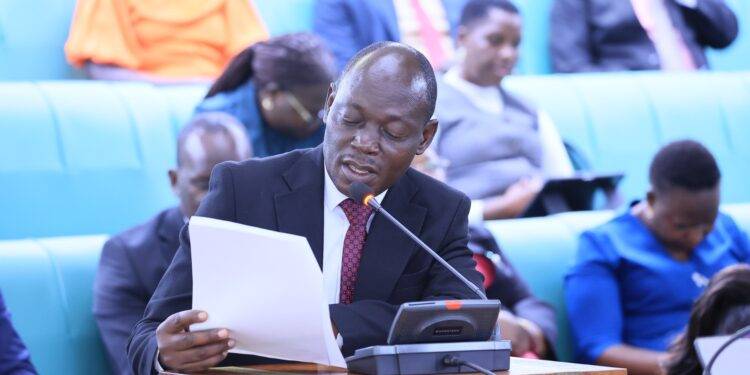
A heated political debate has emerged following strong remarks by legislator Daudi Kabanda, who has criticized what he describes as a growing trend of symbolic anti-corruption actions that fail to end in full prosecutions and convictions.
Kabanda argued that if Uganda is truly serious about fighting corruption, then authorities must go beyond generating public excitement through arrests, investigations, and media headlines, and instead ensure that suspects are taken through the full judicial process.
He insisted that accountability only becomes meaningful when those found guilty are prosecuted in court, convicted based on evidence, and sentenced accordingly, warning that anything short of that weakens the entire justice system.
Kabanda expressed frustration over what he called a pattern of forgiveness in high-profile corruption cases, saying it risks undermining the morale of individuals involved in exposing wrongdoing within public institutions.

He further argued that selective enforcement of the law creates the impression that certain individuals are treated differently depending on their political influence or proximity to power.
His remarks come amid ongoing investigations into alleged corruption, money laundering, and illicit enrichment involving former Speaker Anita Among and several individuals connected to Parliament.
The probe, which reportedly began on 16 May 2026, initially focused on Among before expanding into wider investigations across multiple government departments and institutions.
Security agencies, including the Criminal Investigations Directorate and forensic units supported by intelligence operatives, are reported to have conducted coordinated searches at several properties linked to Among in Nakasero, Kigo, Ntinda, and Bukedea district.
According to sources familiar with the investigation, the searches led to the seizure of multiple assets, including at least six luxury vehicles such as a Rolls-Royce, alongside the removal of official vehicles previously assigned to her.
The investigation is said to have broadened significantly, with detectives now examining financial transactions linked to parliamentary staff across departments such as finance, transport, protocol, and communications.

Authorities are reportedly reviewing multiple bank accounts believed to be associated with individuals close to the former Speaker, in an effort to trace the flow of funds under investigation.
Sources claim that several departmental heads who had previously avoided questioning have begun reporting to CID headquarters in Kibuli to provide statements as the probe intensifies.
Investigators are also alleged to be examining accounts belonging to parliamentary staff said to have handled large cash movements linked to internal financial operations.
Some reports suggest that multiple accounts were used to receive and transfer funds in structured transactions intended to obscure their origin and destination.
There are also allegations that lower-level parliamentary workers, including drivers, cleaners, and security personnel, were involved in financial movements now under scrutiny by investigators.
According to individuals familiar with the probe, some staff members allegedly received portions of funds that passed through their accounts as incentives for their participation in the transactions.
It is further alleged that certain parliamentary commissioners from the 11th Parliament may be required to record statements regarding claims of financial exchanges involving large sums of money.

Since the investigation became public, Anita Among has largely remained out of public view, missing several high-profile political meetings and party gatherings, including NRM-related engagements.
Her absence has fueled speculation regarding her current status, including unconfirmed reports suggesting she may be under restricted movement at her residence, although authorities have not officially confirmed this.
Law enforcement agencies have remained largely silent on operational details, while political and military leaders have occasionally commented on the broader anti-corruption drive and ongoing recovery of suspected illicit funds.
As the investigation continues to expand, Kabanda maintains that the true test of Uganda’s anti-corruption efforts will not be the visibility of raids or arrests, but whether those implicated are fully prosecuted and punished under the law without exception.
About the Author