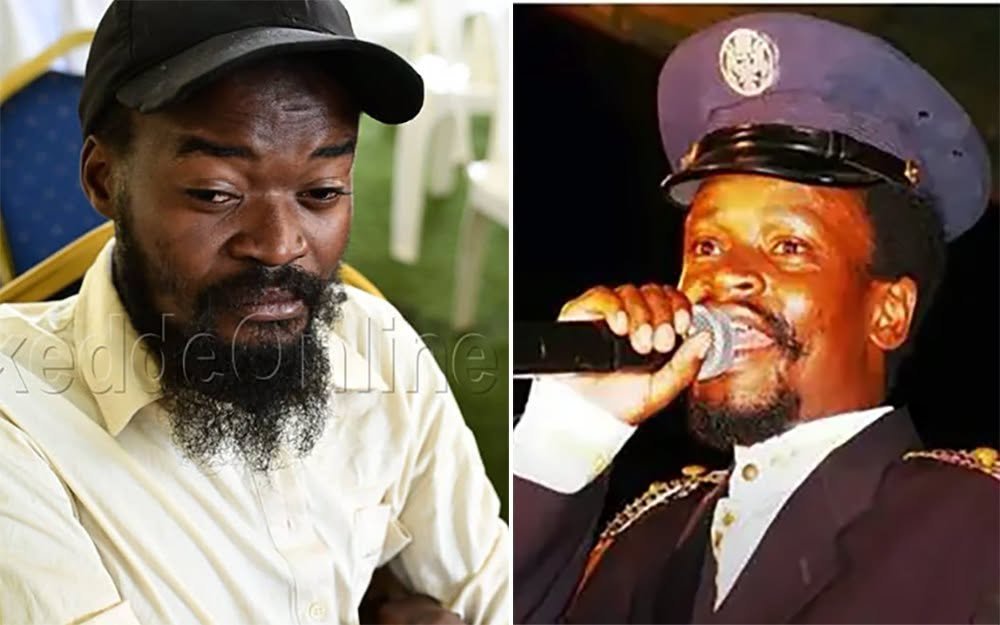
One of the biggest surprises to emerge from the recently concluded DNA verification exercise involving the family of late Kadongo Kamu legend Paul Kafeero was the revelation that a man widely believed to be his son is not biologically related to him.
The individual, who not only shares a striking physical resemblance with the late musician but also carries the name Paul Kafeero, was among those who had claimed to be the singer’s biological child.
For years, many people pointed to the remarkable similarities between the two as evidence that they were related.
The resemblance was so strong that some fans considered the matter settled long before any scientific testing was conducted.
His facial features, expressions, and overall appearance frequently sparked discussions among supporters of the late musician.
Many people believed that nature itself had already provided the answer through the obvious similarities between the pair.

However, the recently released DNA results delivered a completely different conclusion.
According to the forensic findings, no biological relationship was established between the claimant and the late Paul Kafeero.
The outcome has left many members of the public shocked, especially those who had long relied on physical appearance as proof of paternity.
The revelation has become one of the most talked-about aspects of the wider DNA exercise that sought to establish the true biological children of the music icon.
Observers say the findings demonstrate the limitations of judging family relationships solely based on appearance.
While physical similarities can sometimes indicate a biological connection, experts note that they are not a substitute for scientific evidence.
The case has therefore become a powerful example of why DNA testing is regarded as the most reliable method of determining biological parentage.
Many social media users reacted with disbelief after learning that the look-alike claimant had not been confirmed as Kafeero’s son.
Some described the results as proof that appearances can be misleading, while others said the findings challenged assumptions they had held for years.

The development has also sparked broader conversations about identity, family history, and the role of science in resolving longstanding disputes.
For the claimant himself, the results mark the end of a chapter that had generated significant public attention and speculation.
Meanwhile, supporters of the DNA exercise argue that the findings have helped establish the truth in a matter that had remained uncertain for many years.
The wider forensic investigation ultimately confirmed only four biological children of the late Paul Kafeero out of the 25 individuals who had come forward with claims.
As the public continues to digest the results, the story of the look-alike claimant has emerged as perhaps the clearest reminder that resemblance alone is not enough to prove family ties.
The outcome serves as a striking example of the old saying that looks can indeed be deceiving, with science ultimately providing answers where appearances could not.
About the Author