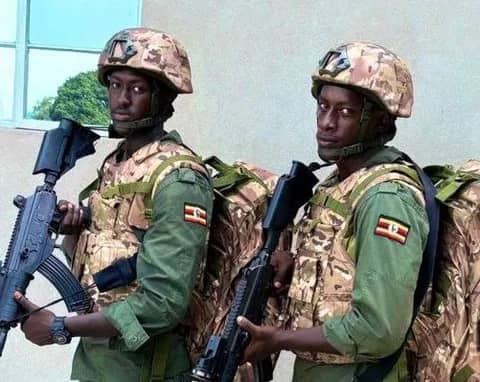
Ugandan opposition supporters based in the United Kingdom have staged a protest outside the prestigious Royal Military Academy Sandhurst, demanding the removal of Private Ruhamya Kainerugaba, the son of Uganda’s Chief of Defence Forces, Gen Muhoozi Kainerugaba.
The demonstration was reportedly organized by members of the UK chapter of the National Unity Platform (NUP), who argued that the presence of Gen Muhoozi’s son at the British military institution raises concerns about Uganda’s political situation and military relations.
Private Ruhamya Kainerugaba is the son of Gen Muhoozi Kainerugaba, who currently serves as the Commander of the Uganda People’s Defence Forces (UPDF), and grandson of President Yoweri Museveni, who has led Uganda for several decades.
The protesters called on authorities at Sandhurst to reconsider his training, claiming that offering military education to members of Uganda’s ruling family sends the wrong message about democratic values and human rights.
During the demonstration, activists carried messages demanding that Ruhamya Kainerugaba be expelled from the academy, arguing that Britain should not be involved in training individuals connected to Uganda’s leadership.
The protesters accused Uganda’s security forces of human rights violations, including allegations of suppression of political opponents, and said they wanted the international community to pay attention to their concerns.

One of the organizers reportedly stated that they could not remain silent while institutions in democratic countries continue working with governments they accuse of restricting political freedoms.
However, the Royal Military Academy Sandhurst has not publicly announced any decision regarding the demands made by the protesters. The academy has also not released any statement confirming whether any action will be taken against the cadet.
The United Kingdom Ministry of Defence has also maintained that it does not comment on individual cadets or private details concerning foreign students enrolled at military institutions.
Military academies such as Sandhurst have historically trained officers from different countries around the world as part of international defence cooperation and diplomatic relations.
The presence of Ruhamya Kainerugaba at Sandhurst has attracted attention because his father, Gen Muhoozi Kainerugaba, also attended the same institution during his military training years.
Gen Muhoozi has previously spoken about his experience at Sandhurst and described his time there as an important stage in his military career.
The UPDF commander announced his son’s military journey publicly, expressing happiness that another member of his family had joined the armed forces.
Following his son’s training, Gen Muhoozi shared updates about Ruhamya’s progress at Sandhurst, praising his dedication and commitment during military exercises.
The issue has created debate among Ugandans both inside the country and abroad, with supporters of the government defending the right of individuals to pursue military careers while critics continue raising political concerns.
For NUP supporters, the protest represents a wider campaign to draw international attention to what they describe as challenges facing democracy and political freedoms in Uganda.
The opposition party has previously criticized the government over issues including arrests of supporters, security operations, and the use of military courts in certain cases.
Supporters of Uganda’s government, however, argue that international military training is based on professional standards and should not automatically be linked to political disagreements.
They maintain that military academies train individuals based on their qualifications and that removing someone because of their family background would set a controversial precedent.
Political observers say the protest highlights the growing role of Uganda’s diaspora communities in raising political issues on international platforms.
As debates continue, the situation has placed renewed focus on the relationship between Uganda and the United Kingdom, especially in areas of military cooperation and diplomatic engagement.
The demonstration outside Sandhurst shows how Uganda’s political disagreements continue to extend beyond national borders, with different groups using international platforms to express their views and demand action.
About the Author