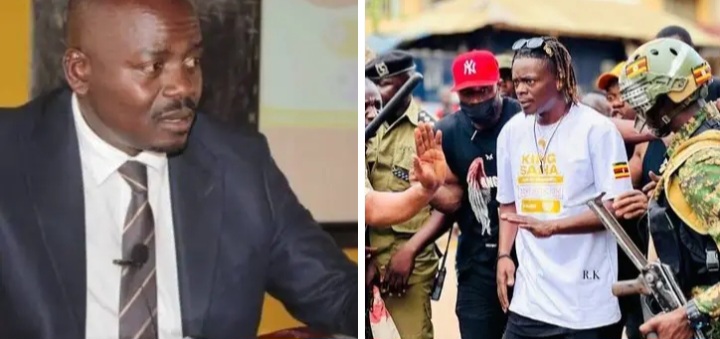
Ugandan musician Mansour Ssemanda, famously known as King Saha, has escalated his conflict with Microfinance Minister Haruna Kasolo following the abrupt cancellation of his concert in Kyotera. The performance, which promised to draw a massive crowd, was abruptly halted by police, who cited insufficient security personnel as the reason.
However, King Saha claims the move was politically motivated, orchestrated by Minister Kasolo himself.The cancellation has triggered a fierce exchange between the entertainer and the minister. King Saha, renowned for his socially conscious and politically charged lyrics, insists that the government is deliberately targeting him because his music exposes corruption, inequality, and governance failures.
“This wasn’t about safety—it was about silencing me. Kasolo thinks he can shut down my voice just because I speak the truth through my songs,” King Saha stated. He dismissed the police explanation as a thin cover for political interference, arguing that the government is increasingly wary of musicians who amplify the voices of the marginalized.In a dramatic escalation, King Saha has vowed to take his battle beyond the stage.
The singer announced plans to dedicate himself to ensuring Minister Kasolo loses his parliamentary seat in the upcoming elections. He revealed intentions to actively engage with communities in Kyotera, mobilizing citizens and advocating against Kasolo’s re-election.
“I will be in Kyotera until he faces a real challenge. I will do everything to make sure he doesn’t get into Parliament,” King Saha declared, signaling a transition from outspoken artist to direct political activist.The incident has ignited heated discussions online, with many Ugandans criticizing the selective use of security forces to disrupt events organized by musicians known for their political commentary.
The situation echoes similar experiences faced by other artists, such as Bobi Wine, who encountered repeated interference before formally entering politics.Minister Kasolo has yet to respond directly to King Saha’s accusations. Allies of the government, meanwhile, have dismissed the claims, describing them as emotional exaggerations. They insist that security concerns are legitimate and that no individual—regardless of popularity—can circumvent the law.
Critics, however, argue that the consistent targeting of politically vocal artists cannot be ignored.For observers, the clash between King Saha and Minister Kasolo is emblematic of the growing tension between Uganda’s entertainers and its political establishment. By channeling his frustration into grassroots activism, King Saha is reflecting a broader trend in which public figures leverage their platforms to demand accountability and social justice.
The people of Kyotera now find themselves at the center of this unfolding drama. With King Saha promising to rally the constituency, the 2026 elections could see a historic showdown between youthful political energy and established governmental influence.
One thing is clear: what began as the cancellation of a single music show has evolved into a politically charged confrontation, with potential implications far beyond the stage. King Saha’s campaign against Minister Kasolo is only beginning, and its ripple effects may resonate throughout Uganda’s political landscape in the coming years.—
About the Author