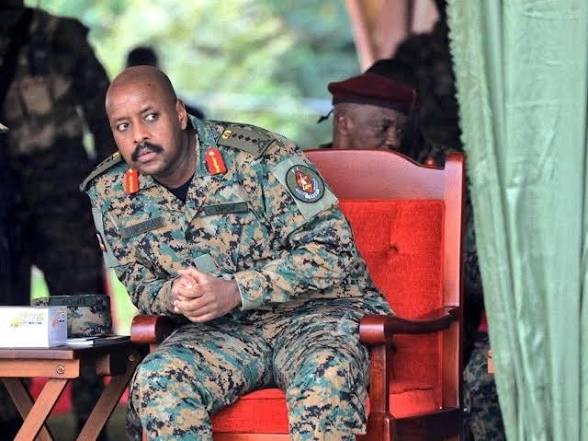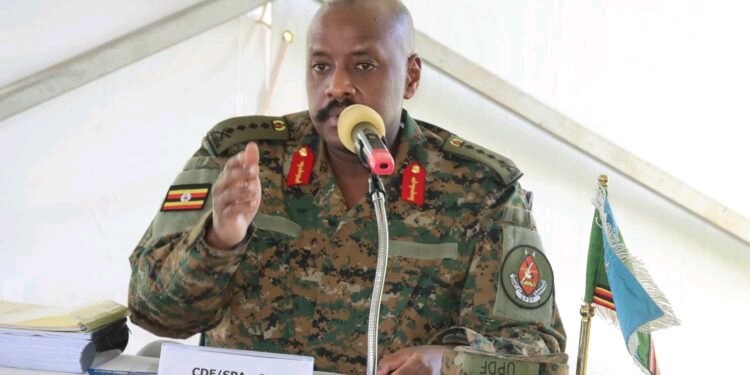
Gen. Muhoozi Kainerugaba, Uganda’s Chief of Defence Forces, has taken decisive steps in launching an ambitious anti-corruption campaign within the military, signaling his determination to restore integrity in the ranks of the Uganda People’s Defence Forces (UPDF).
This move comes at a critical juncture when the country is grappling with not only an uptick in urban violence but also strained relations between security forces, particularly the military and the police.The crackdown has seen high-profile arrests, including two colonels and a captain from the Air Force, who were detained over allegations of inflating procurement costs.
This is part of a broader effort to root out corruption, which many in the military view as a serious obstacle to national security and defense readiness. These arrests follow an earlier, high-profile detainment of Maj. Gen. James Birungi, the former intelligence chief, who was questioned in connection with falsified intelligence reports that allegedly led to significant operational failures earlier in the year.
However, these internal military reforms have not been enough to address the surge in violent urban crime, particularly in the capital, Kampala. Armed gangs known as “panga-wielding” criminals have terrorized residents, with machetes being their weapon of choice. These gangs have grown bolder in recent months, and police have reported sweeping actions to apprehend suspects, arresting over 130 individuals in October alone across multiple crime hotspots in the city.
At the same time, the criminal networks operating in Uganda have extended their reach beyond simple street crime. Organized syndicates have been implicated in widespread vandalism of national infrastructure. High-voltage power lines, crucial for the country’s energy supply, have become prime targets for these criminals, leaving regions across central and northern Uganda facing frequent power blackouts. Security agencies warn that these power outages are being exploited by highway robbers and those seeking to infiltrate factories and other industrial facilities.
In response to these growing security concerns, the Ugandan government has imposed stringent penalties under the Electricity Act. These penalties, which include prison sentences of up to 15 years for repeat offenders, are aimed at deterring the increasing sabotage of power lines. However, the impact of these measures remains to be seen, as the country grapples with the broader challenges of criminal syndicates.The tension between the military and police has only added to the volatile situation.
In incidents at Lubowa and Wakiso police stations, soldiers were accused of raiding police facilities to assault officers or forcibly release detainees. These confrontations have underscored the deepening rift between two of the nation’s primary security forces, raising questions about the coordination and communication between them in times of crisis.The year’s security challenges reached a somber climax with the unsolved murder of David and Deborah Mutaaga, a retired couple from Entebbe.
The couple, who had spent 30 years in Switzerland, were brutally stabbed to death upon their return to Uganda in July. Despite the tragic nature of the crime, local investigators have made little progress in identifying the killers, leading their family to bury them abroad, citing a lack of confidence in the local investigation.
With the internal reforms in the military and a government crackdown on corruption, Uganda’s security forces seem to be facing an unprecedented challenge, one that demands not just better policing and military coordination, but an overhaul of how the nation tackles corruption and its response to organized crime. Gen. Muhoozi’s anti-corruption drive may be a necessary first step, but it remains to be seen whether it will be enough to quell the rising tide of violence and restore trust within Uganda’s security institutions.
About the Author