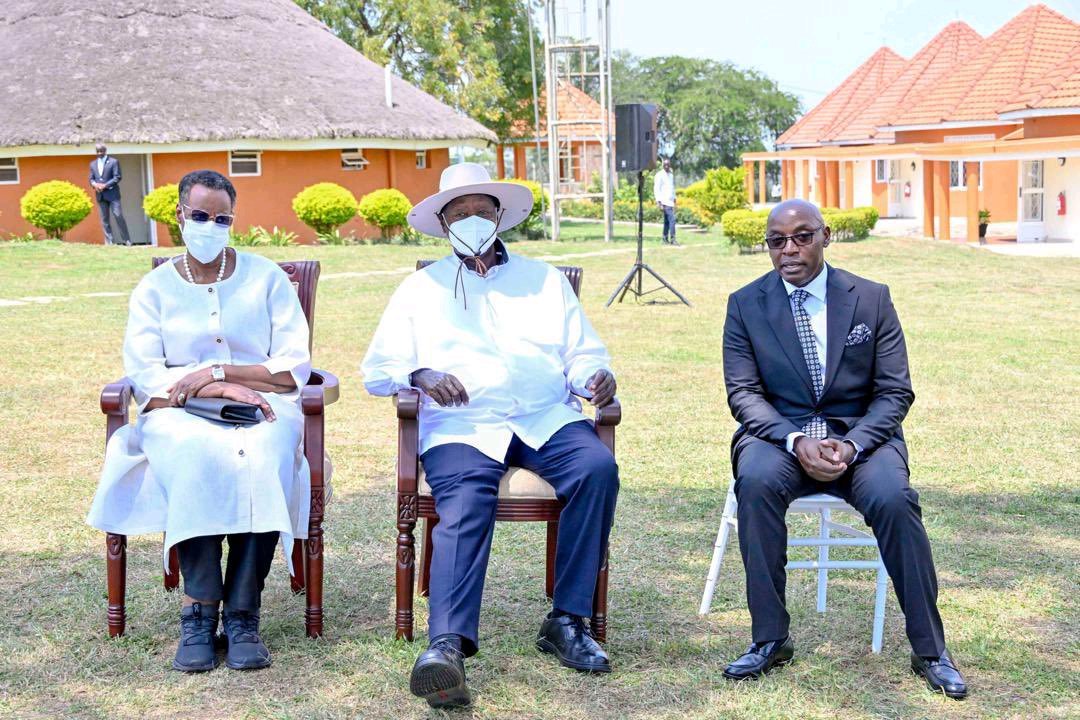
Winnie Byanyima, wife of jailed opposition leader Dr. Kizza Besigye, has publicly challenged President Yoweri Museveni over the controversial swearing-in of Uganda’s new Chief Justice. Byanyima questioned why the ceremony took place at the president’s private farm instead of an official state venue, warning that such a setting risks undermining the independence of the judiciary.
According to Byanyima, the Chief Justice should have been sworn in at State House, a site that embodies official authority and the dignity of Uganda’s highest offices. She argued that holding the event on private property makes the Chief Justice appear as a guest rather than a constitutional authority, diluting the ceremony’s significance.
Her criticism raises deeper concerns about the mixing of private interests with state responsibilities.
Byanyima suggested that personal venues for state functions create the perception of executive influence over independent institutions, a notion that threatens public confidence in the judiciary.
The controversy highlights broader governance issues in Uganda. Public ceremonies for key offices are not merely formalities—they are opportunities for citizens to witness the functioning of the state and to affirm the independence of its institutions. Byanyima emphasized that visible, formal procedures are essential for maintaining trust between the government and the people.
Byanyima also expressed hope that a public ceremony at the Supreme Court would still occur, allowing officials, families, and citizens to witness the Chief Justice’s oath. She argued that such transparency is crucial for preserving the symbolic power of the judiciary and reinforcing its independence from political pressure.
Public reactions to her comments have been divided. Some Ugandans agree that an official setting is critical for upholding the sanctity of state functions, while others contend that the authority of the office matters more than the location of the event, sparking debate about symbolism versus substance in governance.
Legal analysts note that judicial independence is protected by law, regardless of ceremony location. Still, they acknowledge that symbolism shapes public perception, and by hosting the swearing-in privately, the presidency risks projecting an image of centralization of power, which can weaken trust in democratic institutions.
Byanyima’s statement serves as a reminder of the importance of citizen oversight and institutional boundaries. She underscored that adherence to formal constitutional procedures is not just a ritual—it is a safeguard for democracy, ensuring that Uganda’s judiciary remains impartial, respected, and visibly free from undue influence.
About the Author