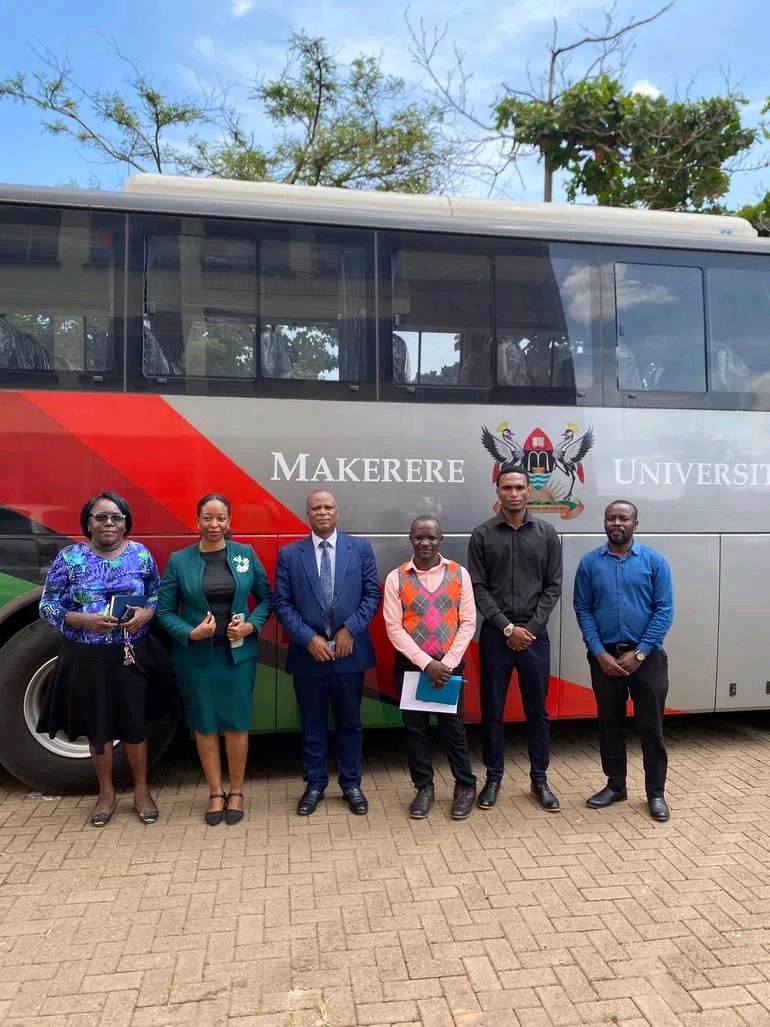
Makerere University has officially added a brand-new 41-seater bus to its fleet, marking a milestone in Uganda’s growing automotive industry. The bus, valued at UGX 500 million, was delivered this week to the College of Engineering, Design, Art and Technology (CEDAT), proudly painted in the university’s signature colours.
CEDAT Principal, Prof. Moses Musinguzi, formally received the vehicle from Tonny Seruyange, Makerere University’s transport officer, in a brief ceremony celebrating the collaboration between the institution and Kiira Motors, the state-owned vehicle manufacturer. Social media quickly lit up with images of the sleek new bus and praise for the local innovation behind it.
Kiira Motors traces its origins back to Makerere University itself, where the Kiira electric vehicle project was first conceived over 15 years ago by students and professors at CEDAT. The initiative has since evolved into a fully-fledged state-owned company, aiming to develop a sustainable domestic automotive industry in Uganda.
The UGX 500 million price tag, however, sparked debate online. Some critics questioned why a locally made bus could cost so much. Ambrose Mwaka wrote, “A 40-seater at 500 million? Naye, what is wrong with this country?” while others suggested that importing buses might have been cheaper.
Supporters argued that the price reflects the challenges of building a homegrown automotive sector. Jacob Nansinguza noted, “Uganda now has a vehicle people have been waiting for, but discussions shouldn’t just focus on cost—this is about growing local industry and creating jobs.”
Globally, new 40-seater buses range in price from UGX 230 million to over UGX 600 million depending on specifications, and luxury coaches can exceed UGX 1 billion. Even smaller imported vehicles like the Toyota Hiace can cost more than UGX 200 million, showing that Kiira Motors’ pricing is competitive in context.
Kiira Motors has already supplied buses to several institutions, including the Civil Aviation Authority, and its Kayoola buses are part of Kampala’s planned Tondeka Metro Bus Service. Some units have been used for airport shuttles and government demonstrations, highlighting Uganda’s push for electric and locally manufactured vehicles.
The delivery to Makerere University represents more than a new transport asset—it symbolizes the nation’s commitment to nurturing innovation, supporting local manufacturing, and reducing dependence on imports. As Kiira Motors continues production, the focus is expected to shift from price debates to the broader impact of homegrown technological progress.
About the Author