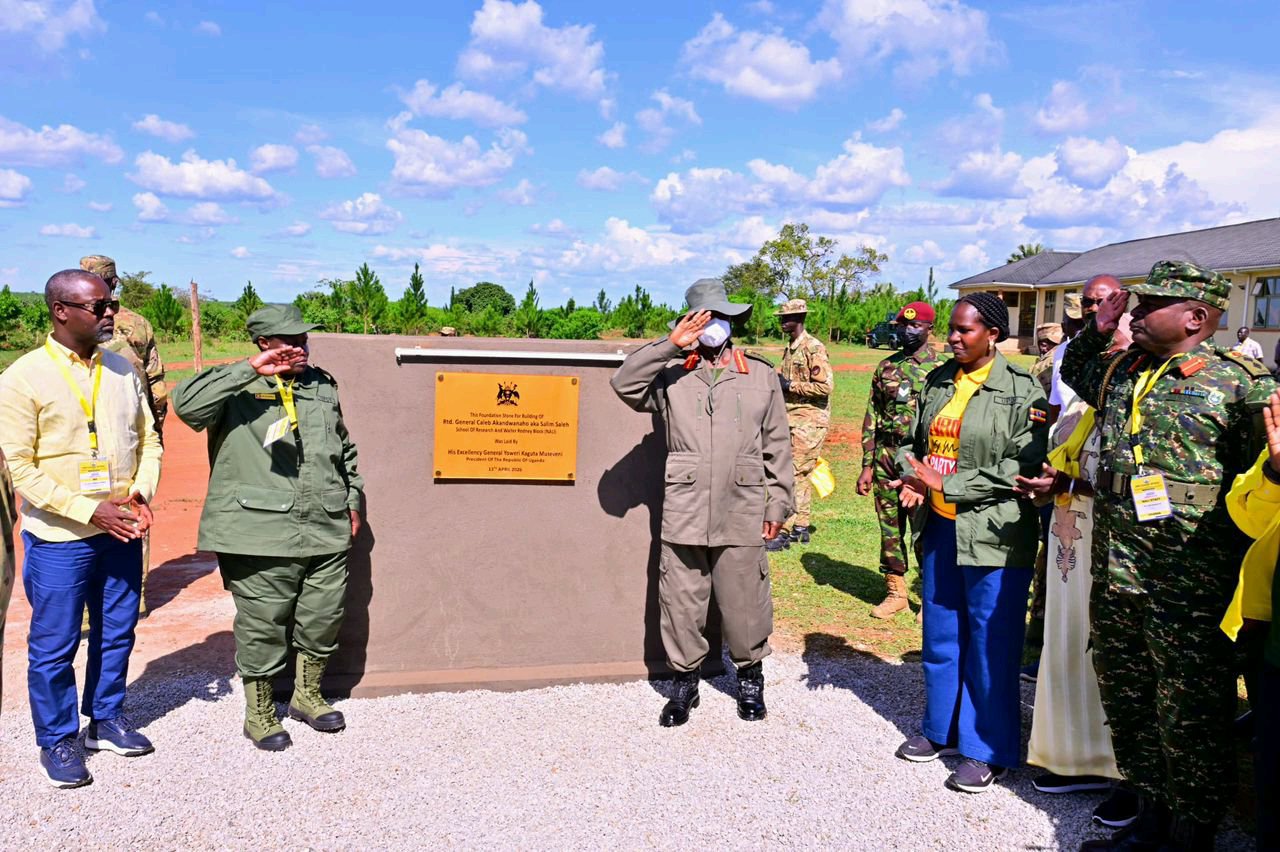
In a defining moment for Africa’s intellectual and ideological landscape, President Yoweri Kaguta Museveni has unveiled a new research complex at Kyankwanzi, a bold move set to amplify Pan-African thought and safeguard the history of the continent’s liberation struggles. The launch took place during the ongoing National Resistance Movement (NRM) Leaders’ Retreat, marking a milestone in Uganda’s vision for shaping the future of Africa.
The newly commissioned facility comprises two major components: the Rtd Gen Caleb Akandwanaho School of Research and the Walter Rodney Block. These institutions are designed to foster rigorous intellectual engagement, addressing the need for a comprehensive platform where the socio-political and economic issues of Africa can be critically examined. Salim Saleh, the former combatant in Uganda’s liberation war and President Museveni’s brother, is the namesake of the school, a fitting tribute to his lifelong contributions to the country and continent.
Central to this ambitious project is the creation of a museum dedicated to Africa’s liberation struggles. This museum will serve as an educational tool for future generations, offering a corrective lens to the dominant historical narratives that have often overlooked Africa’s journey to freedom. Through its exhibitions, the museum will preserve critical moments in Uganda’s and Africa’s history, ensuring these stories are never forgotten.
At its core, the complex is designed to advance Pan-African unity by encouraging the exchange of ideas and collaboration across borders. The facility is envisioned as a breeding ground for ideological exploration, allowing African scholars and thinkers to meet and debate, fostering an environment where ideas that could transform the continent’s future are cultivated and disseminated.
President Museveni’s ideological framework, often referred to as “musevenomics,” underscores the importance of self-reliance, wealth creation, and long-term economic restructuring. This research center is seen as an intellectual extension of this framework, providing a space for further exploration of these principles and their application to broader African economic and social challenges.
Gen. Salim Saleh, who has evolved from a key figure in Uganda’s military struggle for independence to a champion of the country’s economic policies, plays an instrumental role in the vision for this complex. His deep involvement in the project highlights the connection between the historical struggle for liberation and the contemporary pursuit of economic development in Uganda and Africa as a whole.
Leaders attending the retreat have widely praised the initiative, viewing it as a strategic move to strengthen ideological cohesion within the NRM and Uganda’s broader contribution to Pan-Africanism. The complex, they believe, will enhance Uganda’s role as a thought leader on the continent and inspire other African nations to invest in the preservation and expansion of their intellectual capital.
The unveiling of the research hub in Kyankwanzi represents not only a significant step in Uganda’s ideological journey but also an affirmation of its commitment to the Pan-African project. By combining the preservation of history with the cultivation of forward-thinking ideas, President Museveni’s new initiative aims to position Uganda as a central player in the intellectual and economic transformation of Africa.
About the Author