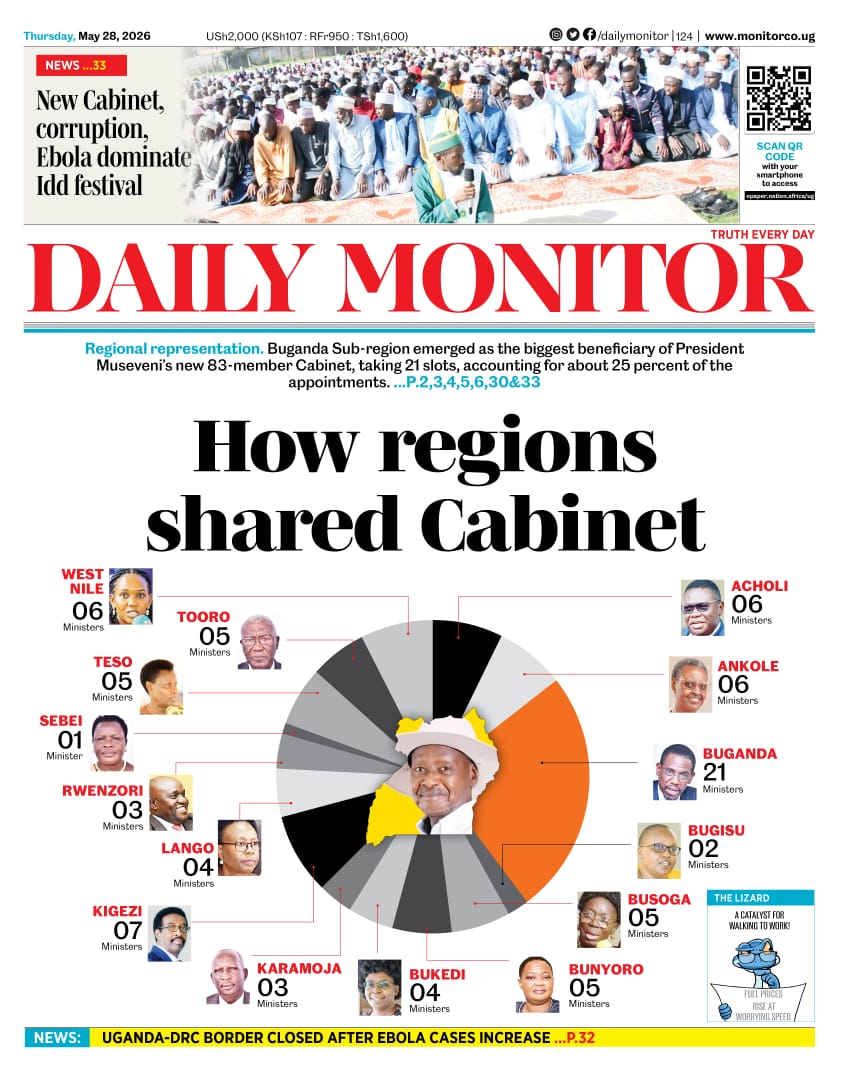
The unveiling of Uganda’s new Cabinet has sparked disappointment and frustration across the Bugisu sub-region after the area was allocated only two junior ministerial positions. Leaders and residents say the appointments do not reflect Bugisu’s historical importance, economic contribution, and political support to the country, especially to the ruling National Resistance Movement (NRM).
Many people in the region believe Bugisu has once again been left behind when it comes to national leadership appointments.
They argue that the issue is not only about the number of positions given to the region, but also about recognition and fairness within government. While other regions secured several senior and influential Cabinet posts, Bugisu remained with minimal representation despite its population and growing political significance.
Residents and opinion leaders continue to highlight the contribution made by the Bugisu Cooperative Union, which for years stood among Uganda’s strongest economic institutions through coffee production and farmer organization. Elders in the region say Bugisu farmers played a major role in strengthening the country’s economy and supporting national development long before many regions became politically active.
The region also takes pride in the role it played during Uganda’s liberation struggle. Politicians often refer to President Yoweri Museveni’s book Sowing the Mustard Seed, where places such as Mulukhu and Bumbo are mentioned as areas where local people reportedly protected and supported him during difficult periods of the struggle. Many residents believe such loyalty and sacrifice should be remembered during important government appointments.
Bugisu is also known for producing respected national leaders, including the late Rt. Hon. James Wapakhabulo, who contributed greatly to Uganda’s constitutional and political growth. Leaders from the region say Bugisu has consistently produced patriotic citizens committed to national unity and public service, making the current level of representation disappointing for many people.
Frustration has grown even stronger because of the region’s recent political support for the ruling party. During the last general elections, support for the NRM reportedly rose from about 42 percent to nearly 68 percent across Bugisu, with many districts strongly backing President Museveni and the Movement. Supporters expected this increase in loyalty to be rewarded with stronger representation in Cabinet and other senior government positions. However, the latest appointments have instead left many questioning whether the region is being treated fairly.
Some leaders have also raised concerns about the continued impact of the “mabaati scandal” on Bugisu’s image while leaders from other regions linked to similar controversies continue to hold influential government offices.
According to politicians from the area, mistakes involving a few individuals should not be used to deny an entire region opportunities in national leadership.
Despite their disappointment, leaders from Bugisu insist that their concerns are not intended to create conflict or division. They say they are speaking out in support of fairness, inclusiveness, and equal opportunity for all regions. As discussions about regional balance in government continue, many residents hope future appointments will better reflect Bugisu’s contribution, loyalty, and role in Uganda’s development.
About the Author