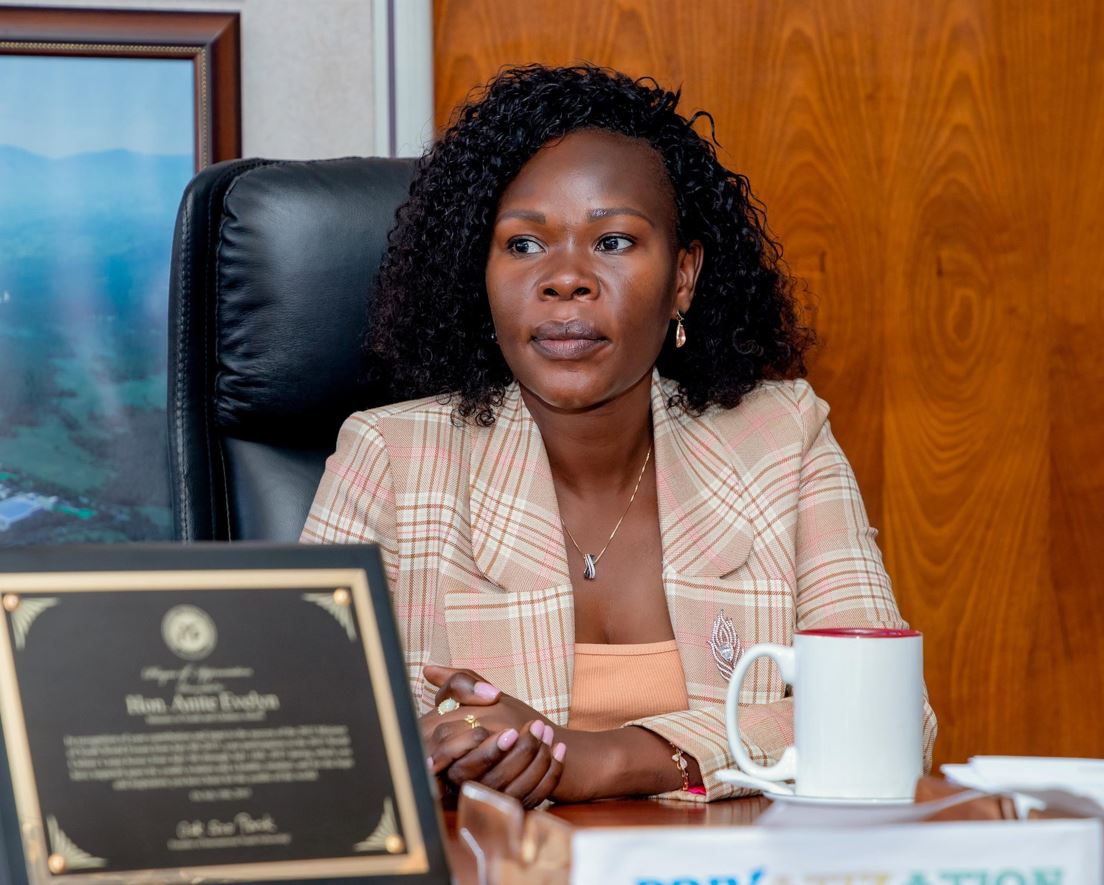
Evelyn Anite has shared reflections on her personal and professional journey, describing how her work ethic and leadership style have evolved from her teenage years to her current position as a senior business leader and public figure.
She explained that she began working at the age of 18 as a radio presenter, a job that required her to wake up very early in the morning, often around 5:00am, to prepare for broadcasts.
According to her, those early years were marked by intense discipline, hard work, and a strong commitment to building her career from the ground up.
She noted that the experience of waking up early and working long hours helped shape her understanding of responsibility and consistency.
However, she said that her current lifestyle at the age of 41 is very different, as she now manages a large group of companies that employ over 500 people.
Anite explained that she no longer needs to wake up as early as she used to because she has built systems and teams that handle the daily operations of her businesses.

She emphasized that her role today is more focused on leadership, oversight, and strategic decision-making rather than hands-on daily execution.
According to her, this shift represents what she called “strategic planning,” where leaders focus on guiding organizations instead of doing all the operational work themselves.
She said her main responsibility now is to read reports, analyze performance, and ensure that the companies she oversees are functioning effectively.
Anite highlighted that employing over 500 people comes with a high level of responsibility, requiring trust in management teams and structured systems.
She added that successful leadership is not only about personal effort but also about building strong institutions that can operate independently.
Her comments were aimed at explaining that leadership evolves over time, especially when one transitions from employee-level work to executive-level responsibilities.
She suggested that continuing to operate like a junior worker while managing large organizations would not be practical or efficient.
Instead, she argued that effective leaders must learn to delegate tasks and focus on long-term planning and growth.

Her statement also reflects a broader discussion about leadership styles among public figures and business owners in Uganda.
Some supporters view her remarks as an example of progress and smart leadership development over time.
They argue that the ability to build and manage large teams is a sign of success and maturity in business leadership.
However, critics often question such statements, debating the balance between hands-on leadership and delegation in public service roles.
Regardless of differing opinions, Anite’s remarks highlight the transition many professionals experience as they move from entry-level roles to senior leadership positions.
Her story continues to attract public interest, especially as discussions about work ethic, leadership, and success remain central in Uganda’s public discourse.
About the Author