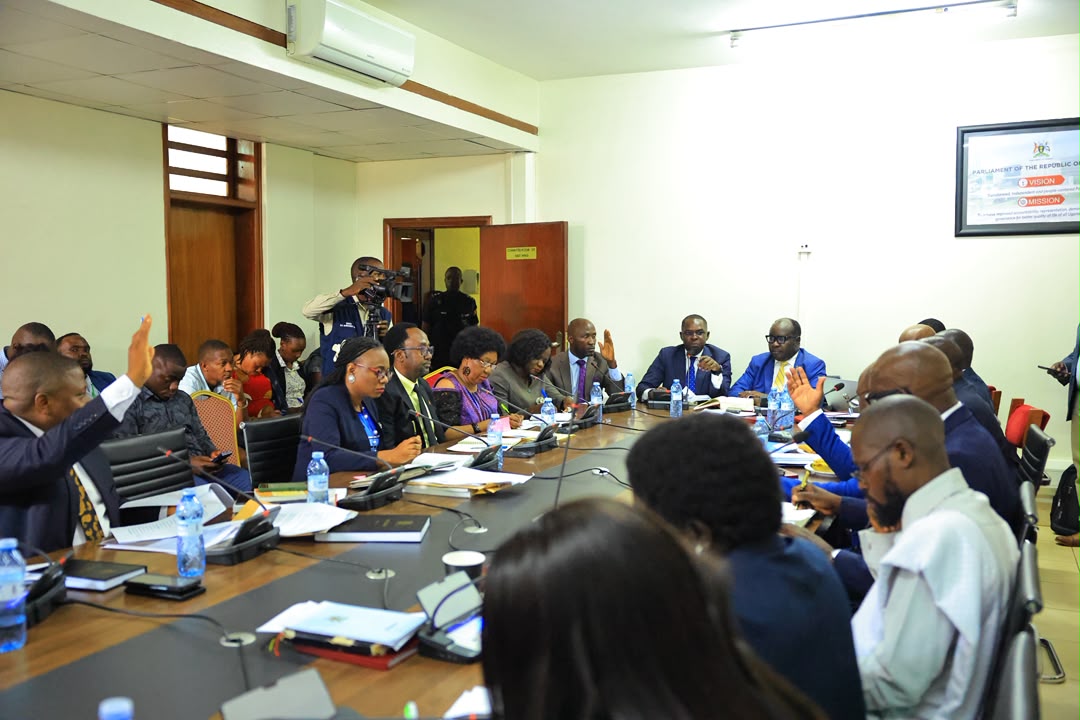
The Uganda Human Rights Commission (UHRC) has defended its procedures for handling human rights complaints following questions arising from a report by Parliament’s Committee on Commissions, Statutory Authorities and State Enterprises (COSASE), chaired by Kyadondo East MP Muwada Nkunyingi. By referring to its 2015 Complaints Handling Procedures Manual, the Commission has highlighted the established powers of its officers to manage, close and review complaints, putting aspects of the parliamentary findings under renewed scrutiny.
The disagreement follows COSASE’s examination of the Auditor General’s report for the financial year ended December 31, 2025. The inquiry covered several areas, including procurement, asset management, revenue performance, implementation of the Commission’s strategic plan, complaints management and inspections of detention facilities.
However, concerns have been raised over whether the committee’s recommendations sufficiently considered the legal and administrative procedures governing UHRC, particularly regarding the closure of complaints and the accountability of individual officers.One of the central issues concerns the role of Pauline Nansamba Mutumba, the Director of Complaints, Investigation and Legal Services, in decisions involving closed cases. Section 6.5 of the Commission’s 2015 manual provides for Regional Human Rights Officers to close complaint files at different stages of the process.
It also requires complainants to receive explanations when the Commission cannot proceed and information about their right to appeal to the Director. Regional offices must additionally submit monthly reports showing the complaints closed and the reasons for those decisions.The manual further establishes the Director’s authority to review recommendations made by regional offices.
Under Section 6.6, the Director may approve a recommendation to proceed with a complaint, modify the proposed action or return a file for further investigation. Section 15.8 outlines additional responsibilities, including reviewing files, supervising the complaints-handling process, monitoring timelines and receiving reports on cases disposed of. These provisions have prompted questions about whether responsibility for closed complaints should be determined by examining the roles of the different officers involved rather than attributing decisions to one individual without reviewing the circumstances of each case.
The Commission’s procedures also provide a mechanism for challenging decisions involving complaints. Sections 13.1.1 and 13.1.2 outline circumstances in which complainants can appeal decisions made by regional officers or the Director, including decisions to close files or offer alternative remedies. The appeals process allows certain decisions to be reviewed at higher administrative levels, including by the Chairperson where applicable. In its public response to questions raised on social media, UHRC maintained that the manual grants regional officers and the Director powers relating to complaint closures. The Commission also said parliamentary committees had been briefed on the procedures and noted that the manual is publicly available.
The COSASE report’s recommendations concerning allegedly irregularly closed complaints have also raised questions about the evidence used to reach conclusions and the proposed reopening of cases. An analysis challenging aspects of the findings argues that each complaint should be assessed individually, taking into account the reasons for its closure, the procedures followed and the available evidence. It further questions whether reopening cases through a broad recommendation would create difficulties for a commission already managing a backlog of complaints.
Nevertheless, the existence of the manual does not automatically establish that every decision was correct, and the circumstances of individual cases remain important in determining whether the procedures were properly applied.Beyond complaints management, the debate has extended to recommendations concerning the Commission’s leadership and the scope of COSASE’s inquiry. The committee reportedly recommended the retirement of the Chairperson and other commissioners in the public interest, citing concerns about conflict within the institution. Questions have since been raised about the legal and public service requirements governing such recommendations. Rule 187 of Parliament’s Rules of Procedure provides for the examination of audited accounts and reports of statutory authorities, consideration of the Auditor General’s recommendations and submission of findings to Parliament.
The extent to which the inquiry addressed administrative and legal questions beyond these responsibilities has consequently become part of the discussion.The report is expected to be considered by the full Parliament alongside findings from the Legal and Parliamentary Affairs Committee, giving lawmakers an opportunity to assess the recommendations, the Commission’s explanation and the applicable legal framework. The outcome will depend on the evidence supporting the findings and whether the proposed actions comply with the procedures governing UHRC. While parliamentary oversight is essential for holding public institutions accountable, the Commission’s 2015 manual provides important context for understanding how complaints are handled and reviewed. Ultimately, determining whether any officer acted improperly requires a careful examination of the specific cases, the decisions taken and the evidence available, rather than relying solely on the number of complaints that were closed.
When contacted yesterday for a comment on the findings about the closure of cases, a senior officer who preferred not to be named before the report is debated, shared with us their Human Rights Complaints Handling manual urging that the finding was erroneous.
About the Author