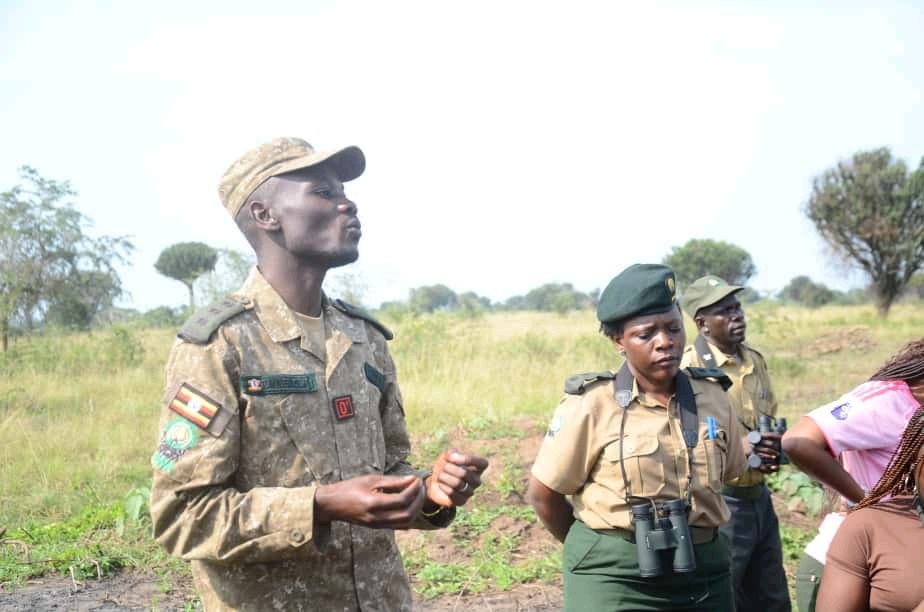
The Uganda Wildlife Authority (UWA) is seeking Shs3 trillion to tackle the rapid spread of an invasive plant species, the sickle bush, locally known as Karema njojo, which has overrun 1,978 square kilometres, representing 40% of Queen Elizabeth National Park’s savannah grasslands.
The invasive plant has formed dense, thorny thickets that are impassable even to elephants. Its proliferation has suppressed natural grass regeneration, displaced key wildlife species, and pushed some animals toward possible extinction due to shrinking habitats.
UWA warns that the growing dominance of Karema njojo threatens the ecological integrity of one of Uganda’s most important wildlife ecosystems, calling for urgent intervention from government, conservationists, private partners, and nature enthusiasts.
Philemon Tumwebaze, Officer in Charge of Ecological Monitoring and Research, said UWA has deployed biological, mechanical, and manual removal strategies. However, mechanical clearing with bulldozers has proven harmful, damaging natural flora and accelerating regrowth of the invasive species.
“Manual removal costs Shs4 million per hectare for the initial clearing and Shs2 million after six months for regrowth removal,” Tumwebaze explained. So far, UWA has manually cleared 200 hectares, successfully restoring grasslands and attracting wildlife back to previously abandoned zones.
Officials note that the invasive species has pushed animals closer to human settlements in search of food, increasing human–wildlife conflict. In response, UWA has installed 126 kilometres of electric fencing, a strategy piloted successfully in Kenya in 2018.
Mike Birungi, Warden for Human–Wildlife Conflict, said the electric fences have significantly reduced tensions, allowing farmers to cultivate up to the park boundary. Previous deterrent methods, including community scouts, scare shooting, beekeeping, trenching, and planting unpalatable crops, failed to provide lasting protection.
The cost of installing one kilometre of electric fencing ranges between Shs60 million and Shs100 million depending on terrain. UWA maintains that such investments are necessary to safeguard both wildlife and local communities.
Despite these ecological challenges, Queen Elizabeth National Park has recorded growth in tourism. Visitor numbers increased from 90,851 in FY 2023/24 to 128,804 in FY 2024/25, while revenue rose from Shs7.73 billion to Shs8.76 billion.
UWA emphasizes that saving the park is essential not only for preserving biodiversity but also for sustaining tourism income and the livelihoods of surrounding communities, making the Shs3 trillion restoration project a critical national priority.
About the Author