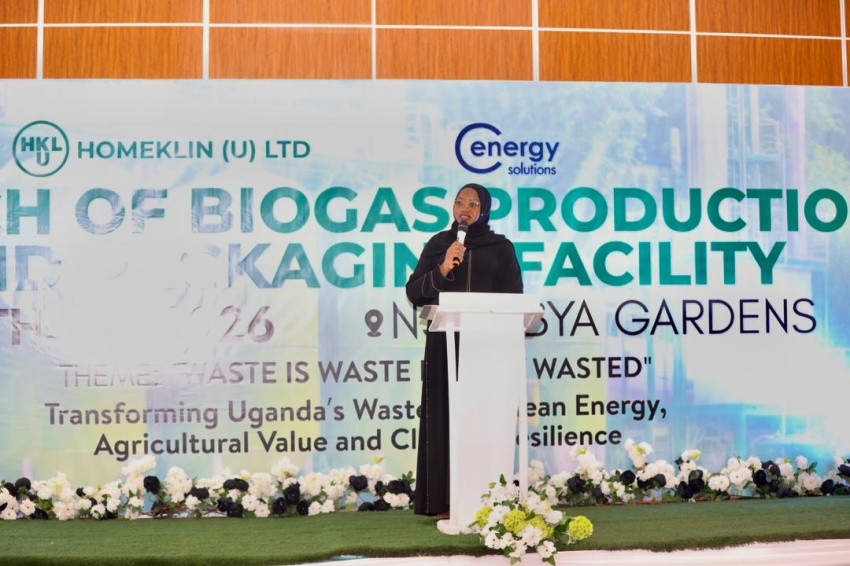
The Kampala Capital City Authority (KCCA) has taken a bold step toward sustainable waste management with the launch of a biogas production and packaging plant by Homeklin Uganda Limited. The facility, inaugurated by KCCA Executive Director Sharifah Buzeki on Wednesday, marks a strategic move away from traditional landfill reliance toward renewable energy solutions.
Located at Nsambya Gardens in Makindye Division, the plant converts organic waste from households, hotels, and food-processing industries into clean cooking gas. Homeklin’s proprietary technology ensures that biodegradable waste is transformed efficiently, producing energy while reducing environmental impact.
Buzeki emphasized that Kampala’s growing waste challenge demands innovative approaches. “The city generates between 2,000 and 2,500 tons of waste daily, yet only a fraction—1,300 to 1,500 tons—is properly collected and disposed of,” she said, highlighting the urgency of diverting waste from landfills.
She noted that a significant portion of Kampala’s waste—between 70% and 85%—is organic, offering immense potential for conversion into biogas, compost, and other useful by-products. This creates an opportunity to turn a persistent environmental burden into a valuable resource.
The Executive Director drew attention to the strain on the Kiteezi Landfill, which receives up to 1,400 tons of waste daily and has accumulated over 400,000 tons annually. Reducing waste sent to dumping sites is critical to extending landfill lifespan and mitigating environmental risks.
“Every ton of organic waste converted into biogas cuts methane emissions and produces clean energy for households and businesses,” Buzeki said. She stressed that this initiative aligns with Kampala’s broader strategy to modernize waste management and transition toward a circular economy.
Buzeki reaffirmed KCCA’s commitment to supporting private sector partners advancing waste recovery and renewable energy initiatives. She urged residents to embrace waste sorting and compliance with regulations, noting that collective action is essential for sustainable development.
Homeklin officials described the new plant as a milestone in the company’s 25-year evolution from waste collection to resource recovery. By producing clean cooking gas, the facility offers a sustainable alternative to open dumping, demonstrating how innovative waste management can drive economic growth and environmental stewardship in Uganda’s capital.
About the Author