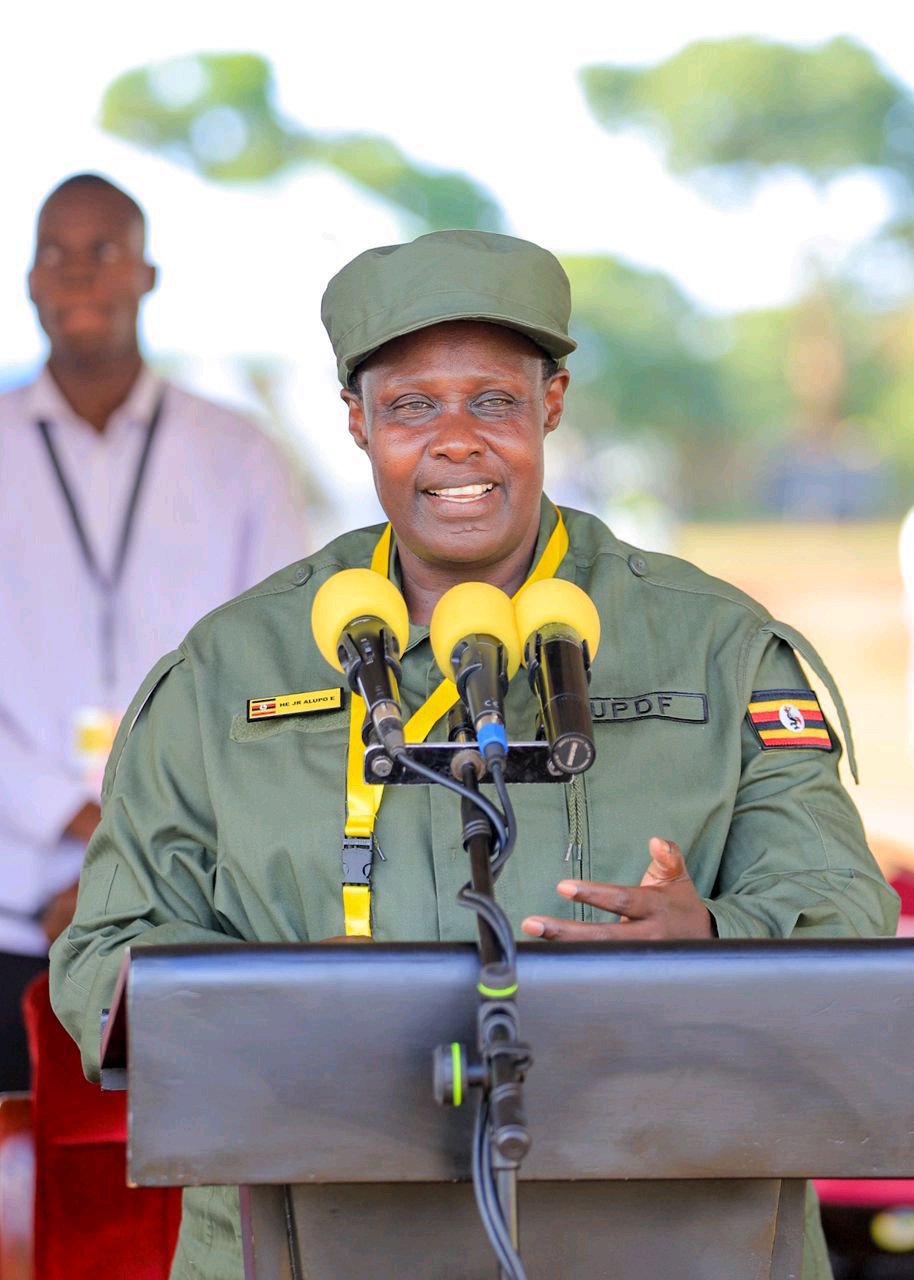
Vice President Maj. (Rtd) Jessica Alupo has urged Uganda’s leaders to strengthen cooperation among the Executive, Legislature, and Judiciary, emphasizing that each branch, while constitutionally independent, must work in tandem to serve the nation effectively. Addressing participants on the fifth day of the National Resistance Movement (NRM) retreat at the National Leadership Institute in Kyankwanzi, she stressed that collaboration, not division, is essential for meaningful governance.
Alupo called on legislators to prioritize national interest over personal or identity-based agendas.
She urged them to avoid extreme positions, emphasizing that unity across government institutions is critical for delivering results that benefit all Ugandans. “Our mandate is to stand together, work together, and put people first,” she said.
Highlighting the transformative power of science, technology, and innovation, Alupo encouraged support for investments in emerging sectors such as artificial intelligence, the automotive industry, the pathogen economy, and other areas that drive productivity in agriculture, manufacturing, and services.
She stressed that embracing innovation is key to positioning Uganda for long-term growth.
The Vice President also emphasized engagement with social development programmes, urging MPs to actively connect constituents with initiatives supporting women, youth, the elderly, and persons with disabilities. She called for accountability in resource use, stressing that leadership must translate support into tangible community benefits.
On education, Alupo stressed expanding access to higher learning to reduce brain drain and produce skilled professionals for both domestic and global markets. She advocated for the rapid establishment of public universities in all regions to ensure equitable educational opportunities for Uganda’s youth.
Turning to infrastructure, Alupo noted ongoing service delivery gaps, particularly in electricity distribution, where some areas have poles without wires and wires without poles. She urged immediate action to resolve such challenges and ensure citizens can access essential services equitably.
Prime Minister Robinah Nabbanja outlined her role as Leader of Government Business in Parliament, describing how government policies are coordinated across ministries, agencies, and local governments.
She emphasized consensus-building, continuous engagement, and a bottom-up approach to policymaking that incorporates community perspectives into national decision-making.
NRM Secretary General Richard Todwong highlighted the retreat’s significance in equipping legislators with the knowledge to govern effectively. He praised evening campfire sessions as a platform for mentorship, experience-sharing, and building cohesion among MPs, stressing that the retreat fosters understanding of governance principles and prepares leaders to drive Uganda’s development agenda.
About the Author