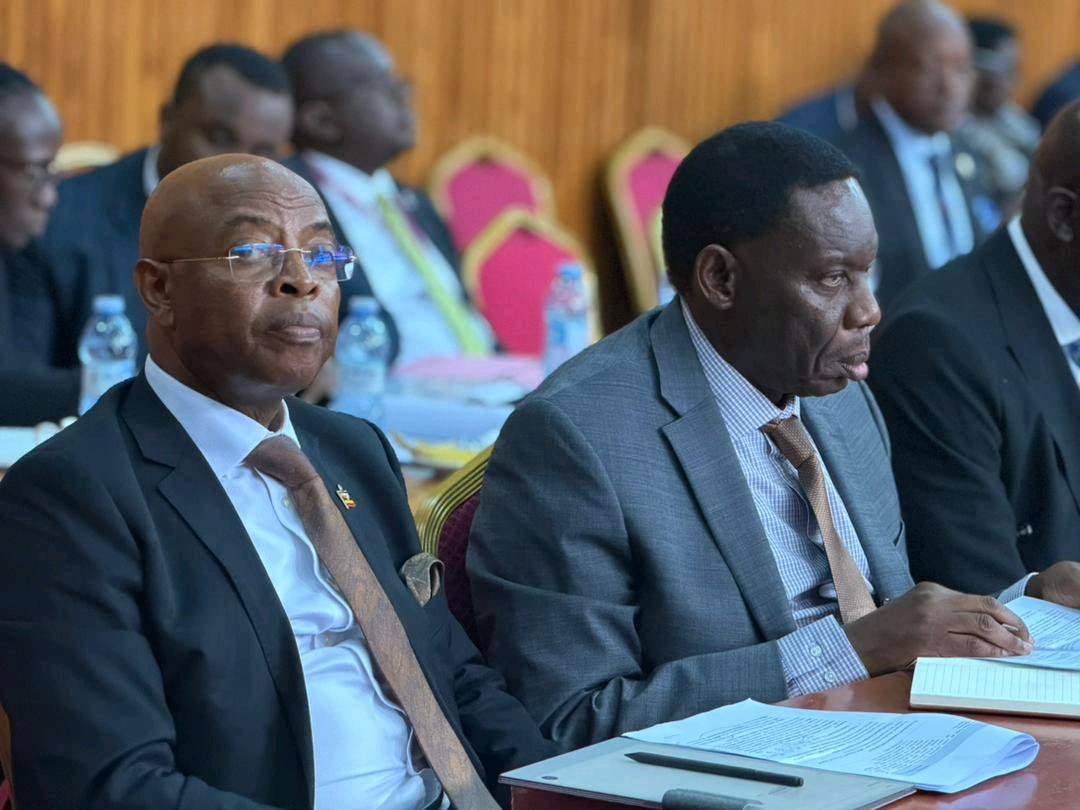
The Governor of the Bank of Uganda, Michael Atingi-Ego, has raised a strong alarm about the potential negative impact of the proposed Protection of Sovereignty Bill 2026, urging lawmakers to reconsider provisions that could destabilize the country’s economy. He warned that if passed in its current form, the bill could undo the significant economic strides Uganda has made over the past three decades and disrupt the country’s long-term growth agenda.
In a detailed presentation to the Joint Committee on Defence and Internal Affairs, Atingi-Ego stressed that the legislation, although aimed at safeguarding national sovereignty, poses serious risks to the financial system and could trigger capital flight. He argued that the bill introduces an element of “radical uncertainty” that could undermine Uganda’s ability to attract and retain investment, ultimately affecting economic stability and growth.
One of the bill’s most controversial clauses is the broad definition of “agents of foreigners.” This provision would require individuals or organizations receiving foreign funding to register with the Ministry of Internal Affairs, a move that could unintentionally ensnare millions of Ugandans living abroad. Atingi-Ego cautioned that such a classification could disrupt the flow of remittances, which are projected to reach USD 1.5 billion by 2025, thereby causing exchange rate volatility and weakening the Ugandan shilling.
Atingi-Ego also expressed concerns over Clause 22, which proposes a cap of UGX 400 million (about USD 106,000) on foreign financial support without prior ministerial approval. The Governor argued that such a limit would hinder the flow of crucial financial resources like capital injections,
intercompany loans, and correspondent banking, all of which are vital for maintaining liquidity in Uganda’s financial system. He further warned that international banks might sever their relationships with Ugandan institutions to avoid potential regulatory risks, which could isolate Uganda from global payment systems and restrict trade finance.
Another key issue raised by the Governor is Clause 13, which criminalizes the publication of information deemed to harm the economic system. This clause, carrying penalties of up to 20 years in prison, could severely hinder economic research and transparency. Atingi-Ego pointed out that this provision could potentially silence vital economic reports from the central bank, particularly in situations where data reveals fiscal instability, such as rising inflation or currency depreciation. By criminalizing such transparency, the bill would discourage informed policy-making and price discovery.
The Governor further criticized the bill’s intrusive provisions, such as the requirement to assess the physical and mental health of bank directors. He argued that these provisions are unnecessary and could create additional burdens on Uganda’s financial institutions. Atingi-Ego urged lawmakers to remove these provisions and to exempt regulated financial institutions from the bill’s scope, ensuring that the financial sector remains stable and effective in supporting the country’s economic growth.
Atingi-Ego concluded his statement by emphasizing the importance of policy consistency and access to global capital markets for Uganda’s “Tenfold Growth” strategy, which aims to achieve a USD 500 billion economy by 2040. He warned that any disruptions to Uganda’s financial infrastructure could delay or derail this ambitious goal. The Governor made it clear that true sovereignty is rooted in economic strength, which can only be achieved through financial independence and a stable regulatory environment.
The Governor’s warning underscores the need for a careful balance between national sovereignty and economic stability. He urged Parliament to reconsider the provisions of the bill that could undermine investor confidence and hinder Uganda’s progress toward becoming a leading economy in Africa.
About the Author