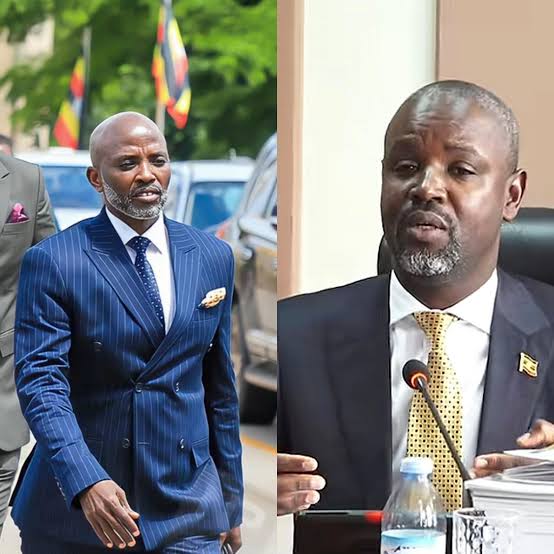
The rejection of Prof. Lawrence Muganga’s nomination for the position of State Minister for Internal Affairs has ignited a fresh political and legal debate over dual citizenship and eligibility for high public office in Uganda. What was expected to be a routine vetting process instead evolved into one of the most closely watched controversies surrounding President Museveni’s latest cabinet appointments.
At the center of the dispute is the question of whether Muganga had properly renounced his foreign citizenship in accordance with the legal requirements governing public officials. Members of Parliament on the Appointments Committee reportedly found his explanations insufficient, leading to the rejection of his nomination.
The controversy gained even greater attention after outspoken legislator Daudi Kabanda publicly challenged Muganga’s actions, arguing that the process followed to relinquish his alleged Rwandan citizenship did not meet the standards required by law.
Kabanda claimed that renouncing citizenship is not a simple administrative exercise and must follow a clearly established legal procedure within the country whose citizenship is being surrendered. According to him, the process involves submitting a formal application to the relevant immigration authorities, obtaining government approval, and receiving official certification before the renunciation becomes valid.

Using a colorful analogy, Kabanda compared the alleged process followed by Muganga to marrying someone’s daughter before a lawyer without first approaching her parents. The comparison quickly circulated across political circles and social media, drawing reactions from supporters and critics alike.
He further alleged that any attempt to process such a renunciation through institutions outside the proper jurisdiction would be invalid. Kabanda maintained that legal procedures must be respected in full and argued that shortcuts could not substitute for official state processes.
The issue became particularly significant because the position of State Minister for Internal Affairs falls within a category of public offices that require strict compliance with constitutional provisions relating to citizenship and national allegiance.
During the vetting process, committee members reportedly questioned Muganga extensively regarding his citizenship status and the steps he had taken to resolve any potential legal conflicts before assuming office.
Despite assurances that he was prepared to comply with all legal requirements, a majority of committee members remained unconvinced. Their concerns ultimately resulted in the rejection of his nomination.
The decision was notable because several other nominees facing similar scrutiny over dual citizenship were able to secure parliamentary approval after providing commitments to renounce their foreign citizenship.

Among those approved was Adonia Ayebare, who acknowledged holding American citizenship in addition to Ugandan citizenship and reportedly assured lawmakers that he would complete the necessary legal processes.
Businessman and entrepreneur Calvin Echodu also faced questions regarding his citizenship status. Like Ayebare, he reportedly informed the committee that he would renounce his American citizenship if his appointment was confirmed.
While concerns were raised about both nominees, supporters within the committee argued that their commitments demonstrated good faith and willingness to comply with constitutional requirements. Their explanations were ultimately accepted by a majority of legislators.
Muganga, however, found himself in a different position. His responses failed to convince enough committee members that all legal concerns had been adequately addressed, making him the only dual-citizenship nominee to be rejected during the exercise.
The outcome has fueled broader discussions about whether a promise to renounce foreign citizenship should be considered sufficient during vetting or whether the process should be fully completed before an individual is considered eligible for appointment.
Legal analysts have noted that Uganda’s constitutional framework contains specific restrictions regarding certain public offices and dual citizenship, but interpretation and implementation of those provisions have often generated controversy.
For Muganga, the decision represents a significant setback. Widely recognized for his work in higher education and digital transformation, he currently serves as Vice Chancellor of Victoria University and has built a reputation as a leading advocate for educational reform.
His nomination had been viewed by some observers as an effort to bring technocratic expertise into government. The rejection therefore surprised many who expected his academic credentials and administrative experience to strengthen his chances of approval.
Meanwhile, the approval of Ayebare and Echodu clears the path for their formal appointment and eventual swearing-in once all remaining constitutional procedures are completed. Their successful vetting stands in sharp contrast to the hurdles faced by Muganga.
As political debate continues, attention is increasingly turning toward the legal interpretation of citizenship requirements and whether existing laws provide sufficient clarity. The controversy has exposed lingering uncertainties that may require future legislative or judicial clarification.
For now, Muganga’s rejection leaves a vacancy in the State Minister for Internal Affairs position and raises important questions about citizenship, constitutional compliance, and the standards applied to public appointments. The dispute has become more than a single nomination battle—it has evolved into a national conversation about law, loyalty, and eligibility for public service.
About the Author