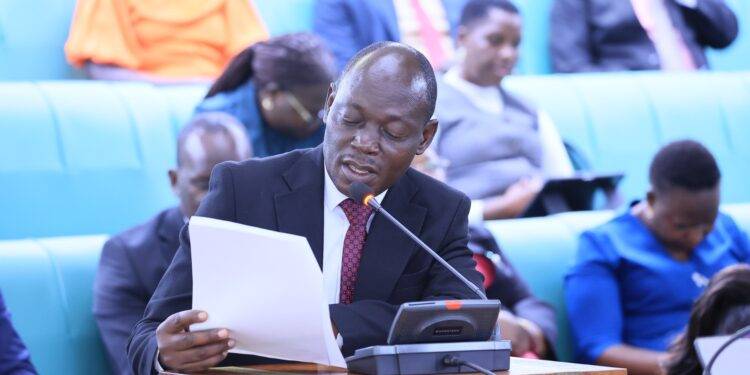
Daudi Kabanda has expressed strong criticism over what he describes as inconsistent application of justice in Uganda’s handling of corruption cases, arguing that selective accountability undermines public trust in the legal system.
Kabanda said it is unacceptable for the state to aggressively prosecute some individuals accused of relatively smaller offenses while allegedly treating more serious cases with leniency or political caution.
He argued that justice must be applied equally regardless of the scale of the alleged offense or the political status of the individuals involved, insisting that fairness is essential for credibility in the fight against corruption.
In his remarks, Kabanda drew comparisons between different corruption-related cases that have recently been handled by authorities, suggesting that inconsistency in outcomes risks weakening public confidence.

He specifically referenced the conviction of former minister Agnes Nandutu in the Karamoja iron sheets scandal, which involved allegations of misappropriating relief items intended for vulnerable communities.
Kabanda contrasted such cases with ongoing public debates surrounding more senior political figures, arguing that perceived disparities in accountability send the wrong message to both citizens and officials.
His comments come amid continued national discussion over how corruption cases involving high-ranking officials are handled from investigation through prosecution and sentencing.
The legislator insisted that the fight against corruption should not be reduced to public displays such as arrests, searches, or media briefings that do not necessarily result in convictions.
He emphasized that meaningful deterrence can only be achieved when individuals found guilty of corruption face legal consequences in accordance with the law.
Kabanda further argued that repeated forgiveness of powerful individuals risks creating a perception that some people are above the law, which he said is dangerous for governance and public trust.

His remarks follow ongoing investigations into alleged corruption networks involving former Speaker of Parliament Anita Among and other officials connected to parliamentary operations.
The investigations reportedly cover allegations of corruption, money laundering, and illicit enrichment, with multiple government agencies involved in the inquiry.
Security and investigative units are said to have carried out coordinated searches at several properties linked to the former Speaker, recovering various items considered relevant to the case.
Reports indicate that the probe has expanded beyond initial targets to include financial transactions involving parliamentary staff across different departments.
Authorities are reportedly examining bank accounts belonging to individuals suspected of facilitating or participating in the movement of funds under investigation.
Some officials have already been summoned to record statements, while others are expected to appear before investigators as the inquiry progresses.

The investigation is also said to involve scrutiny of financial flows that allegedly passed through multiple accounts in an attempt to obscure their origin.
There are claims that lower-level parliamentary employees may have been used in handling transactions that are now part of the ongoing investigation.
Kabanda maintains that the credibility of Uganda’s anti-corruption campaign depends on ensuring that all individuals, regardless of rank or influence, are held to the same legal standards.
He concluded that if justice is applied selectively, the broader effort to fight corruption risks losing legitimacy in the eyes of the public.
About the Author