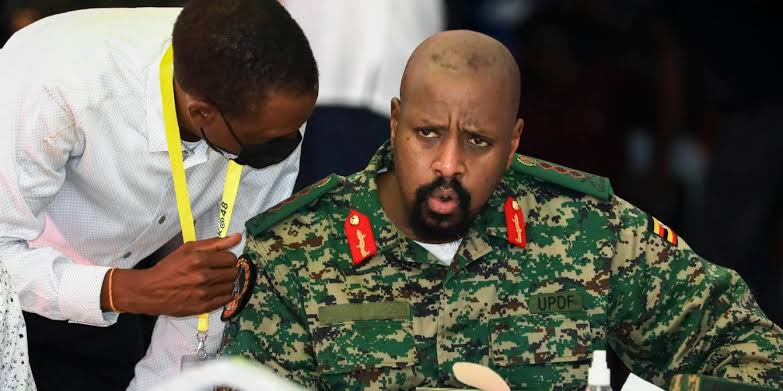
A new development has emerged in the ongoing controversy surrounding the suspension of operations at Daily Monitor and NTV Uganda after Chief of Defence Forces Muhoozi Kainerugaba indicated that discussions are underway regarding the possible reopening of the two media outlets. The announcement has generated widespread attention across Uganda’s political and media landscape.
In a message shared on social media, Gen Muhoozi stated that consultations are currently taking place with what he described as allies in the United Kingdom and Europe concerning the future of both media organizations. The statement immediately attracted public interest because it suggested that efforts are being made to find a path toward restoring the operations of the affected outlets.
According to the CDF, the outcome of the ongoing discussions will eventually be presented to President Yoweri Museveni, whom he referred to as “Mzee,” for final consideration and approval. His remarks have been interpreted by many observers as an indication that progress may be taking place behind the scenes.
The announcement followed earlier comments by journalist and political commentator Andrew Mwenda, who revealed that discussions had already been held regarding the future of Daily Monitor and NTV. Mwenda indicated that engagements involving key stakeholders were aimed at finding a solution that could lead to the resumption of normal operations.
For many Ugandans, the latest statement represents one of the strongest indications yet that the impasse could eventually be resolved. Since the shutdown of the media outlets, there has been significant public debate regarding the circumstances surrounding the action and its implications for the country’s media sector.
The closure of Daily Monitor and NTV sparked reactions from journalists, politicians, civil society organizations, and international observers. Many expressed concern about the effect the disruption could have on access to information and the broader media environment in Uganda.

Supporters of the government’s position have argued that national security concerns must always be taken seriously and that authorities have a responsibility to investigate matters they consider important to the country’s stability. They maintain that any actions taken were intended to address specific concerns rather than permanently silence media organizations.
Critics, on the other hand, have called for greater transparency regarding the reasons behind the shutdown. They have emphasized the importance of ensuring that media institutions are allowed to operate freely while respecting the country’s laws and regulations.
Gen Muhoozi’s latest statement appears to suggest that international consultations are playing a role in efforts to resolve the matter. Although details regarding the discussions remain limited, the mention of allies in Europe and the United Kingdom has attracted particular attention among political analysts.
Observers note that Uganda maintains important diplomatic, economic, and development partnerships with countries across Europe. As a result, developments involving major media organizations often attract interest beyond the country’s borders.
The possibility of reopening the affected outlets has also been welcomed by many journalists and media practitioners who view the return of Daily Monitor and NTV as an important step toward restoring normalcy within the industry. The two organizations are among the most recognized media brands in Uganda.
Employees and audiences associated with the media houses have been closely following developments, hoping for a resolution that would allow operations to resume. The uncertainty surrounding the situation has remained a major topic of discussion in newsrooms and public forums alike.
Political analysts believe the ongoing discussions could serve as an opportunity to rebuild trust between various stakeholders. They argue that dialogue often provides a more sustainable path toward resolving disagreements than prolonged confrontation.
The involvement of President Museveni in the final decision-making process underscores the significance of the issue. Many observers believe that any eventual resolution will require careful consideration of legal, political, and institutional factors.

Meanwhile, social media platforms have been flooded with reactions from Ugandans expressing both optimism and caution. While some users celebrated the possibility of a reopening, others emphasized the need for official confirmation before drawing conclusions.
The situation has also reignited broader conversations about the relationship between governments and media institutions in modern democracies. Questions regarding press freedom, regulation, accountability, and national security continue to feature prominently in public discussions.
Several commentators have argued that a successful resolution would benefit all parties involved. They contend that restoring operations could help ease tensions while reinforcing confidence in dialogue as a mechanism for addressing disputes.
Others have stressed that the eventual outcome should be accompanied by clear communication to the public. Transparency, they argue, is essential for maintaining trust and preventing speculation regarding the circumstances that led to the disruption.
As consultations reportedly continue, attention remains focused on the next steps that will be taken by the relevant stakeholders. The outcome of the discussions could have a significant impact on Uganda’s media environment and the country’s broader political discourse.
For now, many Ugandans remain hopeful that the ongoing engagements will produce a positive outcome. Whether the discussions ultimately lead to the reopening of Daily Monitor and NTV will depend on the decisions made in the coming days, but Gen Muhoozi’s latest remarks have undoubtedly fueled expectations that a resolution may be on the horizon.
About the Author