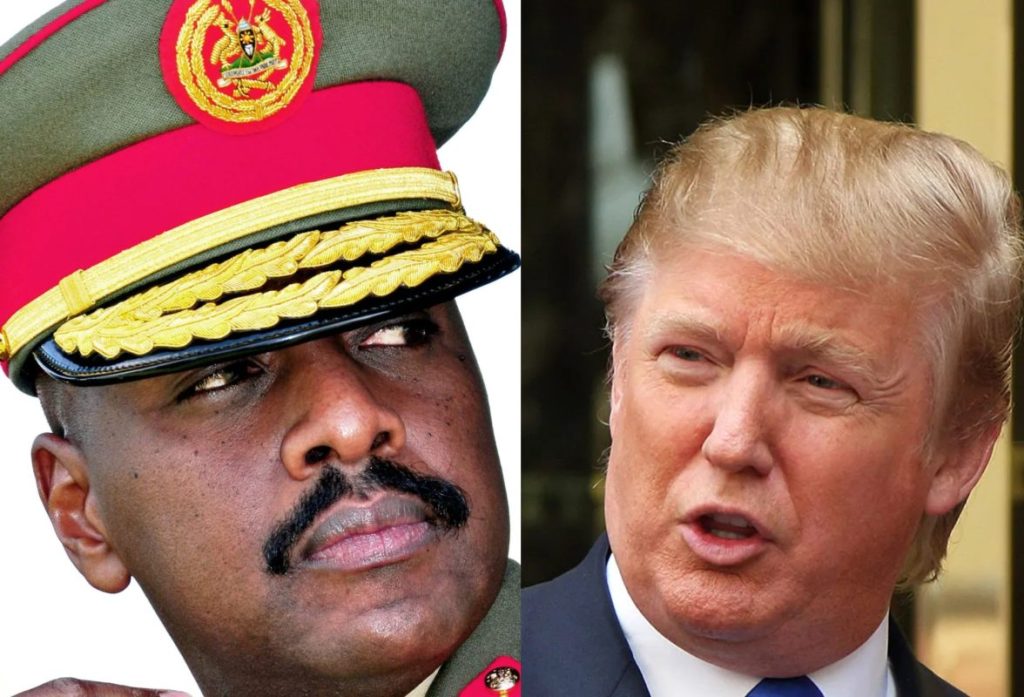
A fresh diplomatic debate has emerged between Ugandan officials and influential voices in the United States after senior American lawmaker Jim Risch raised concerns about Uganda’s Chief of Defence Forces, Muhoozi Kainerugaba, and the country’s commitment to free speech. The controversy has since sparked strong reactions from government supporters and political commentators in both countries.
Senator Risch, who chairs the powerful United States Senate Committee on Foreign Relations, publicly questioned whether Uganda’s military leadership remains a suitable partner for the United States following recent developments involving media freedom and political expression in Uganda.
The senator’s comments were reportedly prompted by reports surrounding actions taken against media organizations and concerns raised by international observers regarding freedom of the press. In his remarks, Risch argued that countries and institutions that undermine free speech risk weakening their standing among democratic partners.
According to the American lawmaker, strategic partnerships should be based not only on security cooperation but also on shared values such as respect for civil liberties, freedom of expression, and democratic governance. He suggested that Washington should carefully evaluate its relationships with partners whose actions appear inconsistent with those principles.
The statement immediately attracted attention because Senator Risch is a senior Republican figure whose views often carry weight in foreign policy discussions. Analysts noted that comments from the chairman of the Senate Foreign Relations Committee can influence debate within the U.S. government regarding diplomatic and security relationships.
Observers also pointed out that the senator’s remarks came at a time when Uganda remains an important security partner in East Africa. The country has played a significant role in regional peacekeeping missions and counterterrorism operations, making any discussion about bilateral relations particularly significant.

The controversy has generated concern among some Ugandan political observers who fear that escalating disagreements with influential American lawmakers could potentially affect diplomatic engagement between Kampala and Washington. Others, however, argue that Uganda has the sovereign right to determine its own domestic policies without external pressure.
One of the first Ugandan leaders to respond was Balaam Barugahara, who defended Gen Muhoozi and urged Senator Risch to avoid making what he described as broad generalizations about Uganda’s security leadership.
Barugahara argued that Uganda’s military leadership is primarily focused on protecting national security and safeguarding the country’s interests. He maintained that decisions taken by Ugandan authorities should be understood within the context of national priorities rather than through external political interpretations.
The minister further called for mutual respect between nations, emphasizing that Uganda and the United States have enjoyed years of cooperation in several sectors. He suggested that constructive engagement is more beneficial than public criticism when disagreements arise between partners.
Another strong response came from David Kabanda, who openly challenged the senator’s remarks and accused Western leaders of applying double standards when discussing governance and human rights issues in developing countries.
Kabanda argued that many powerful countries have themselves faced criticism over military interventions and foreign policy decisions. He questioned whether those governments would welcome public criticism from Ugandan officials regarding their own domestic and international actions.
The lawmaker’s comments reflected a broader argument often advanced by supporters of Uganda’s government, namely that external actors should avoid interfering in matters they consider internal affairs. According to this perspective, Ugandans should be allowed to address their political challenges without foreign pressure.
Meanwhile, supporters of Gen Muhoozi and the Patriotic League of Uganda (PLU) quickly rallied behind the CDF on social media. Many defended his leadership record and rejected suggestions that Uganda’s security institutions should be judged by foreign political standards.
The online debate soon expanded beyond the original comments, drawing thousands of participants into discussions about sovereignty, democracy, media freedom, and Uganda’s strategic relationship with Western nations. The exchanges highlighted the increasingly influential role social media plays in shaping political narratives.

Political analysts say the issue demonstrates how domestic developments in Uganda can quickly attract international attention, particularly when they involve questions of governance, security, and human rights. In today’s interconnected world, statements made in Kampala can rapidly become subjects of debate in Washington and beyond.
Some observers have warned that prolonged diplomatic disagreements could complicate Uganda’s efforts to maintain strong relationships with key Western partners. They note that international investors and development agencies often pay close attention to political developments and governance concerns.
Others argue that fears of a major diplomatic fallout may be overstated. They point out that Uganda and the United States have maintained cooperation through previous disagreements and that both countries continue to share important interests in regional stability and security.
The debate has also revived discussions about the balance between national sovereignty and international accountability. While governments often insist on their right to manage internal affairs independently, critics contend that issues involving free speech and human rights inevitably attract global scrutiny.
As the controversy continues to unfold, there has been no indication of immediate policy changes from either side. However, many observers are closely monitoring whether the discussion will remain a social media dispute or evolve into a broader diplomatic issue involving senior officials from both governments.
For now, the exchange between Senator Jim Risch and supporters of Gen Muhoozi Kainerugaba has underscored the growing intersection of domestic politics, international diplomacy, and digital communication. Whether it results in deeper tensions or renewed dialogue, the episode has once again highlighted the importance of Uganda’s relationship with its international partners and the scrutiny that accompanies leadership decisions in an increasingly connected world.
About the Author