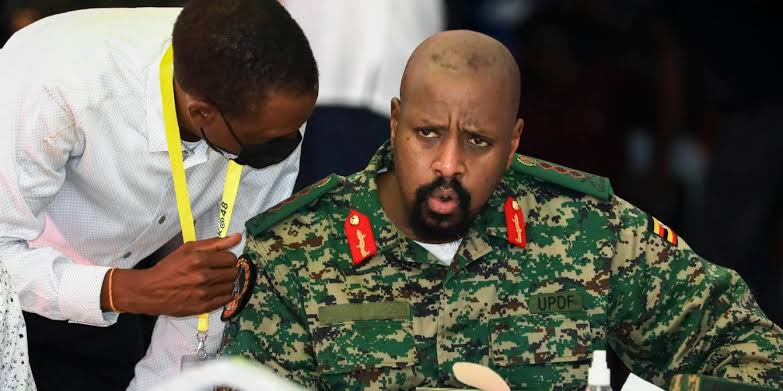
Uganda’s Chief of Defence Forces, Muhoozi Kainerugaba, has sparked widespread discussion after making a statement regarding thousands of prisoners of war reportedly linked to the ongoing conflict in eastern Democratic Republic of the Congo.
In remarks shared publicly, Gen. Muhoozi stated that he had agreed to receive more than 4,000 prisoners of war from the rebel movement M23. The statement quickly attracted attention from political observers, humanitarian organizations, and citizens across the region.
According to Muhoozi, the prisoners involved are Congolese nationals who were allegedly being held in areas affected by the conflict. He suggested that accepting them could help prevent a potential humanitarian tragedy.
The Chief of Defence Forces indicated that his decision was motivated by concerns for human life. He argued that without intervention, the prisoners could face serious risks, including the possibility of being killed amid the ongoing hostilities.
His statement also included an appeal to the International Committee of the Red Cross (ICRC), expressing hope that the humanitarian body would be prepared to receive and assist the prisoners if the transfer proceeds.
The announcement comes at a time when eastern Democratic Republic of the Congo continues to experience instability involving armed groups, government forces, and various regional actors. The situation has displaced large numbers of civilians and created significant humanitarian challenges.

For years, the conflict in eastern Congo has attracted international concern due to its impact on communities living in the region. Human rights organizations have repeatedly called for greater protection of civilians and adherence to international humanitarian law.
Muhoozi’s remarks immediately generated mixed reactions online. Some supporters praised what they viewed as a humanitarian effort aimed at saving lives and preventing further bloodshed.
Others questioned the practical and legal implications of such a move, including how the prisoners would be transported, housed, processed, and eventually returned or resettled if necessary.
Several commentators also emphasized the importance of involving international humanitarian agencies in any transfer of prisoners. They argued that organizations such as the ICRC play a critical role in ensuring that detainees are treated according to international standards.
The issue of prisoners of war remains highly sensitive in conflict zones. International conventions require that individuals captured during armed conflicts be protected from abuse, mistreatment, and unlawful punishment.
Analysts noted that if such a transfer were to take place, it would likely require coordination among multiple parties, including military authorities, humanitarian organizations, and relevant government institutions.
The statement has also renewed attention on the wider security situation in eastern Congo, where fighting has periodically intensified despite various regional peace efforts and diplomatic initiatives.
Many observers believe that humanitarian concerns should remain at the center of discussions involving prisoners captured during conflict. They argue that preserving life and ensuring humane treatment should take priority regardless of political or military differences.

The involvement of international organizations would likely be crucial in verifying the condition of the prisoners and ensuring that any transfer is conducted safely and transparently.
Meanwhile, regional leaders continue to face pressure to support peace efforts aimed at ending violence in eastern Congo. The conflict has affected millions of people and remains one of the most challenging security crises in Africa.
Humanitarian groups have consistently warned that prolonged fighting increases the risk of civilian suffering, food insecurity, displacement, and loss of life. As a result, any developments involving large numbers of prisoners are closely monitored.
The comments by Muhoozi have therefore attracted attention not only because of the number of individuals reportedly involved but also because of the potential humanitarian implications associated with such a move.
Political and security experts say further clarification would likely be needed regarding the status of the prisoners, the mechanisms for their transfer, and the role of international agencies in managing the process.
For now, Muhoozi’s statement has added another significant dimension to ongoing discussions about the conflict in eastern Congo, highlighting the complex intersection of military operations, humanitarian concerns, and regional security as efforts continue to seek stability and peace in the region.
About the Author