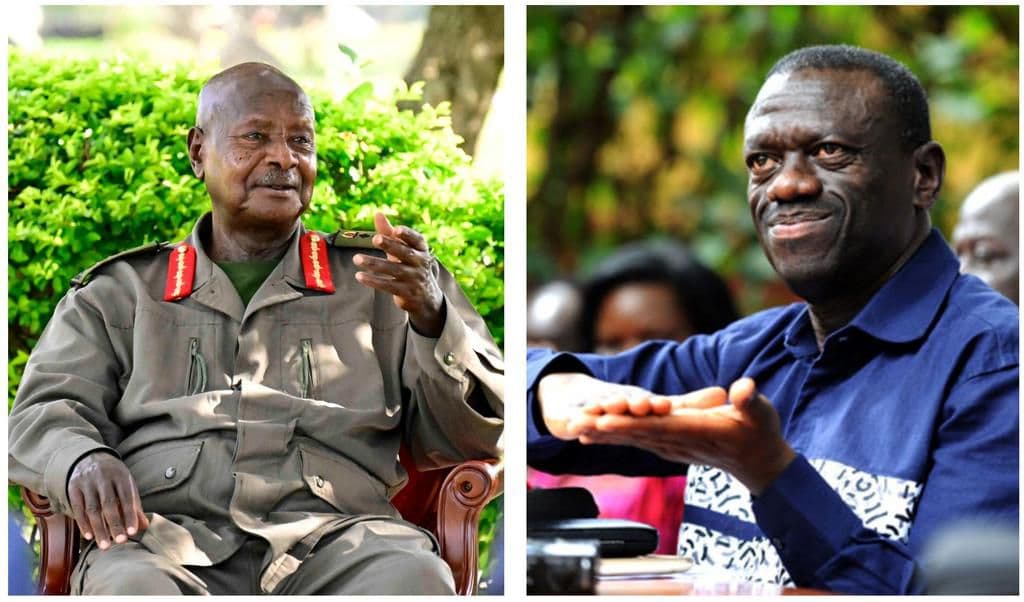
President Museveni has spoken out about the ongoing legal proceedings involving opposition politician Dr. Kizza Besigye, accusing him of deliberately delaying the judicial process and preventing his case from being concluded.
The President made the remarks while addressing concerns surrounding the lengthy nature of the case, arguing that the matter would have been resolved long ago if all parties had cooperated with the legal process.
Museveni said there has been a growing tendency by some individuals to blame the government for delays in court proceedings, yet in his view, some of the delays are caused by actions taken by the accused persons themselves.
Referring specifically to Besigye’s case, the President argued that the opposition figure has repeatedly avoided opportunities to have the matter fully heard and determined by the courts.
“Take the case of Dr Besigye. He was arrested on November 17, 2024. It has been almost two years now. All this time, however, he’s been refusing trial; misusing the legal system,” Museveni said.
The President’s remarks have reignited debate over one of Uganda’s most closely followed political and legal cases, attracting reactions from both government supporters and opposition figures.

Museveni maintained that Uganda’s judicial institutions are capable of handling cases fairly and efficiently when parties cooperate with the process and allow the courts to perform their duties.
According to the President, prolonged legal disputes often create unnecessary public speculation and can undermine confidence in institutions when the reasons behind delays are not properly understood.
He argued that the legal system was established to determine facts, assess evidence, and deliver judgments based on the law, rather than being used as a tool for endless procedural battles.
The President suggested that if the trial process had moved forward as expected, the matter could already have been concluded, bringing clarity to all parties involved.
Museveni further emphasized that every accused person has a right to defend themselves before the courts but argued that such rights should not be used to indefinitely postpone proceedings.
His comments come at a time when discussions about justice, political freedoms, and judicial independence continue to feature prominently in Uganda’s national conversation.
Supporters of the government have welcomed Museveni’s remarks, arguing that court cases should proceed without unnecessary delays so that the truth can be established through legal channels.
Others, however, maintain that defendants are entitled to utilize all legal avenues available to them under the law, particularly in cases involving complex constitutional and procedural issues.

The debate has highlighted the broader tension between the need for timely justice and the right of accused persons to challenge legal processes they believe may affect their rights.
Political analysts say the case remains significant because of Besigye’s long-standing role in Uganda’s opposition politics and his history of challenging government policies and actions.
Over the years, Besigye has remained one of the country’s most recognizable political figures, frequently drawing national and international attention whenever legal proceedings involving him arise.
The latest comments from Museveni indicate that the government remains concerned about the pace at which the case is moving and believes the matter should be brought to a conclusion through the courts.
Observers note that the outcome of the case could have important implications not only for the individuals directly involved but also for wider discussions about governance, accountability, and the administration of justice in Uganda.
As legal proceedings continue, attention is likely to remain focused on both the courts and the political responses surrounding the matter, with many Ugandans waiting to see whether the case will finally move toward resolution after months of intense public scrutiny and debate.
About the Author