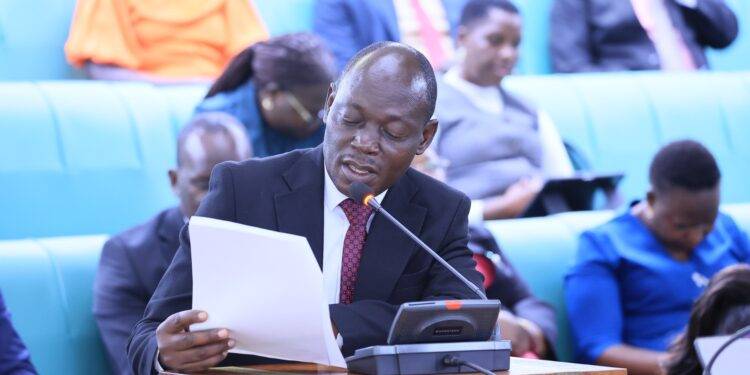
Lawyer Eron Kiiza has raised new questions about the evidence surrounding the treason case against opposition leader Dr. Kizza Besigye after claiming that some audio recordings linked to the case were allegedly destroyed.
Kiiza made the claims while commenting on the ongoing legal proceedings involving Dr. Besigye, his political aide Hajj Obeid Lutale, and UPDF officer Capt. Denis Oola, who are facing treason-related charges.
The lawyer said the audio recordings had been one of the key pieces of evidence discussed in relation to allegations that Besigye and others were involved in plans to overthrow the government.
According to Kiiza, the person who allegedly had the original recordings, identified as Orlando Andy Wilson, reportedly informed police in March 2025 that the files had been destroyed.
Kiiza argued that the reported disappearance of the original recordings raises concerns about the availability and reliability of evidence in the case.
The treason case against Dr. Besigye began after his arrest outside Uganda in November 2024. He and Hajj Obeid Lutale were later brought back to Uganda and charged over allegations of attempting to overthrow the government.

The charges against them include treason and an alternative charge of misprision of treason. Because treason is considered a serious offence under Ugandan law, the matter is being handled through the High Court process.
Prosecutors have alleged that Besigye and his co-accused participated in meetings held in different countries, including Switzerland, Greece, Kenya, and Uganda, between 2023 and 2024.
The prosecution has also claimed that discussions during these meetings involved plans to remove the government and that resources were allegedly mobilised to support the suspected activities.
However, Dr. Besigye and his co-accused have denied the allegations, maintaining that they are innocent and that the charges against them are politically motivated.
Kiiza said that after the arrests, authorities presented a narrative that Besigye had been involved in plans to harm or remove President Yoweri Museveni.
He claimed that the audio recordings were presented as part of the evidence supporting those allegations, but he questioned their current status after reports that the original files had been destroyed.
The lawyer argued that losing the original recordings could affect the ability of the accused to properly challenge the evidence presented against them.
He questioned how evidence that was once considered important in the case could disappear and what impact that would have on the fairness of the trial.
However, the prosecution has not publicly stated that its entire case depends only on the disputed audio recordings. The case continues as both sides prepare their arguments before the court.
The allegations surrounding the recordings have added another layer of controversy to a case that has already attracted national and international attention.

Dr. Kizza Besigye has been one of Uganda’s leading opposition figures for many years and has challenged President Museveni in several presidential elections.
His arrest and the treason charges against him have sparked debates about political freedoms, human rights, and the rule of law in Uganda.
Supporters of Besigye have continued to demand a fair trial and transparency in the handling of the case, while government officials have maintained that legal procedures should be allowed to continue.
The court will ultimately determine the strength of the evidence presented and whether the prosecution has enough material to support the charges against the accused.
As the case moves forward, questions surrounding the alleged destruction of the audio recordings are expected to remain a major point of discussion among legal experts, politicians, and the public.
The outcome of the case could have significant implications for Uganda’s political environment and the future of opposition politics in the country.
About the Author