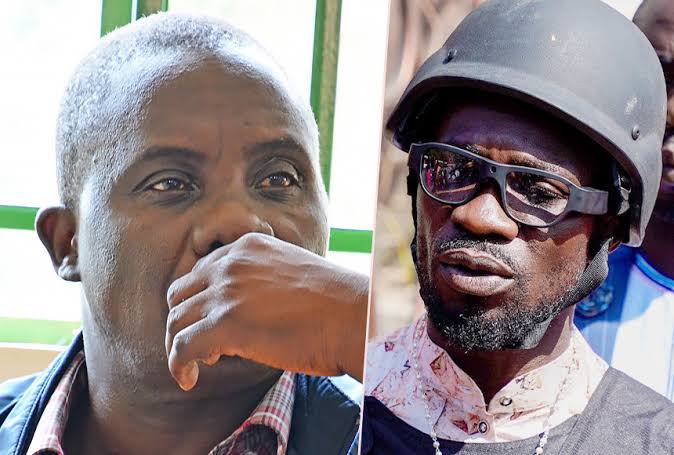
The High Court has issued a fresh directive compelling security agencies to establish the whereabouts of National Unity Platform (NUP) deputy president for Buganda, Muhammad Muwanga Kivumbi, after nearly two weeks of uncertainty surrounding his disappearance.
The court order has intensified public attention on the case, with questions continuing to grow over where Kivumbi is being held and which security agency, if any, is responsible for his detention. His family, lawyers and political colleagues have repeatedly demanded answers since he reportedly went missing shortly after being released on bail.
Justice Collins Acellam, who handled the matter, ordered security authorities to conclude investigations into Kivumbi’s whereabouts and provide a detailed explanation to court within seven days.
The ruling came after Kivumbi’s lawyers filed a habeas corpus application seeking the court’s intervention to compel whoever is holding him to produce him before court and explain the legal basis of his continued detention.
According to court documents, Kivumbi disappeared on July 10 shortly after leaving court where he had been granted bail in a treason-related case. His lawyers allege that armed security personnel intercepted him at a checkpoint in Mpigi District before taking him away in a vehicle.
The lawyers told court that the people who took Kivumbi did not identify themselves, did not present an arrest warrant and did not explain where they were taking him. Since that day, his family members and legal representatives say they have not been allowed access to him.

The disappearance has caused political tension, with the National Unity Platform accusing security agencies of being behind what it described as an enforced disappearance.
Party president Robert Kyagulanyi Ssentamu, popularly known as Bobi Wine, has repeatedly raised concerns about Kivumbi’s safety, claiming that reports reaching the party indicate that he may have suffered mistreatment while in custody.
The allegations of torture have not been confirmed by security agencies, and authorities have not publicly provided details about Kivumbi’s current location or condition.
During court proceedings, government representatives informed the court that the Uganda Police Force was not holding Kivumbi and that investigations were ongoing to establish where he was.
Assistant Commissioner of Police Godwin Tumugumye reportedly swore an affidavit stating that Kivumbi was not in police custody and was not being held at any police facility.
Justice Acellam noted that issuing an immediate habeas corpus order would be difficult without knowing which authority was responsible for Kivumbi’s detention.
The judge explained that the purpose of habeas corpus is to compel the person or institution holding an individual to bring that person before court so that the legality of the detention can be examined.
However, because the court had not yet established who was holding Kivumbi, Justice Acellam ruled that security agencies should first be given a limited period to investigate and provide answers.
The court warned that the matter could not remain unresolved indefinitely, directing the respondents to file an affidavit explaining the outcome of their investigations within seven days.
The case is expected to return before court on July 29, 2026, when security agencies will be required to explain whether they have located Kivumbi and provide details about his situation.

The disappearance of Kivumbi has become one of the most closely watched political cases in Uganda, coming at a time when opposition leaders have continued to raise concerns about arrests and the treatment of political figures.
Bobi Wine and other NUP officials have accused the government of targeting opposition figures, arguing that the continued lack of information about Kivumbi’s whereabouts raises serious concerns.
Government officials, however, have maintained that security institutions are carrying out their duties within the law and that investigations into the matter are ongoing.
The court’s latest order has placed renewed pressure on security agencies to provide clarity on one of the biggest unanswered questions currently facing Uganda’s political scene: where exactly is Muhammad Muwanga Kivumbi?
As the seven-day deadline approaches, attention remains focused on whether authorities will produce answers, reveal his location, or provide further explanation regarding his disappearance.
For Kivumbi’s supporters and family members, the court process represents a crucial step in seeking information about his safety and ensuring that his legal rights are protected.
About the Author