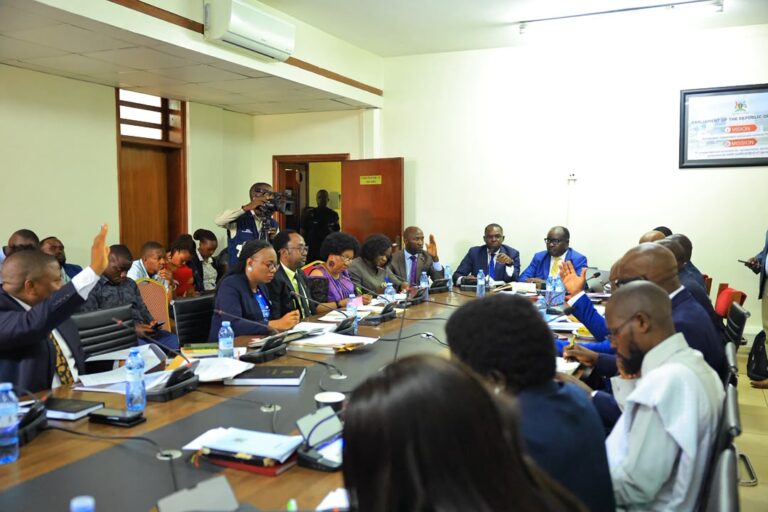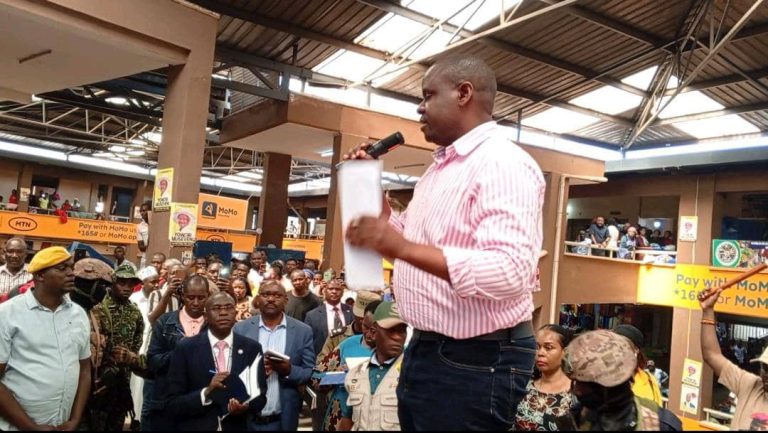
Health Minister Dr Chris Baryomunsi has distanced himself from the aggressive approach being used by Local Government Minister Balaam Barugahara and his deputy Justine Nameere in their ongoing fight against corruption, saying his own method will focus more on solving problems than making arrests.
Baryomunsi said that although corruption and poor service delivery must be addressed, government inspections should not be driven mainly by the desire to arrest officials, but rather by understanding the challenges affecting public institutions and finding lasting solutions.
Speaking during an interview on UBC TV, the Health Minister said he prefers what he described as “supportive supervision”, a method he said he learnt while working in the civil service.
He explained that when he recently carried out a night inspection at Mbarara Regional Referral Hospital and found some patients waiting without receiving immediate attention, some people expected him to order arrests of health workers who were absent.
However, Baryomunsi said he chose a different approach because his main goal was to understand the problems within the health facility and improve service delivery.
“The Minister of Local Government and his Minister of State have used a different style. Because even when I went to Mbarara, people were saying I should cause arrests of the absentee health workers,” he said.

“But I thought my approach should be different because when I used to work in the civil service, we would do what we call support supervision, not necessarily policing or finding faults,” he added.
The minister said leaders visiting government facilities should first identify weaknesses, understand why they exist, and help institutions develop solutions instead of immediately turning every challenge into a criminal matter.
According to Baryomunsi, arrests can be necessary in cases where there is clear evidence of serious wrongdoing, but they should not become the main purpose of government inspections.
“In extreme circumstances where arrests have to be made, they can be made, but to me it is not the driving force bringing me there,” he said.
His comments come amid growing public debate over the methods being used by Balaam Barugahara and Justine Nameere during surprise inspections of government facilities.
The two ministers have gained attention after conducting unannounced visits to schools, health centres and local government projects, where they have confronted officials over alleged absenteeism, misuse of funds and poor service delivery.
The operations have led to several arrests and investigations, with some Ugandans praising the ministers for taking action against officials accused of neglecting their responsibilities.
However, some professionals and government officials have questioned whether public confrontations and immediate arrests are the best way to improve service delivery.
Baryomunsi said he had not personally sat down with Balaam and Nameere to understand the information they gather before carrying out their operations, adding that every case should be judged based on available evidence.
“I have also seen the details in the media causing arrests. But that should depend on the kind of evidence they gather,” he said.
The Health Minister’s remarks come after Balaam and Nameere carried out inspections in several districts, uncovering cases involving alleged payroll irregularities, inflated enrolment figures, absentee workers and questionable public projects.
During one inspection at Naiku Health Centre III in Mbale District, Balaam claimed that only a small number of health workers listed on the payroll were present, leading to further investigations.

The minister also ordered action against officials in some schools after discrepancies were found between reported enrolment figures and the actual number of learners present.
In Bulambuli District, the campaign resulted in arrests of some officials over allegations involving road works and suspected misuse of public funds.
The Uganda Institution of Professional Engineers later raised concerns over what it described as unfair treatment of engineers, arguing that technical matters should first undergo proper professional assessment before arrests are made.
Baryomunsi maintained that his approach will remain focused on improving systems, strengthening accountability and helping government institutions perform better.
He said fighting corruption requires strong action, but also requires leaders to understand the root causes of problems instead of only responding through punishment.
As debate continues over the best way to fight corruption in Uganda, Baryomunsi’s comments highlight the growing difference between a punitive approach centred on arrests and a reform-based approach focused on supervision and correction.
About the Author