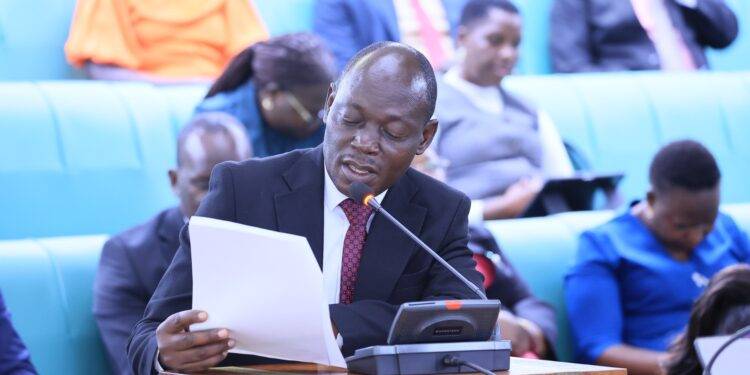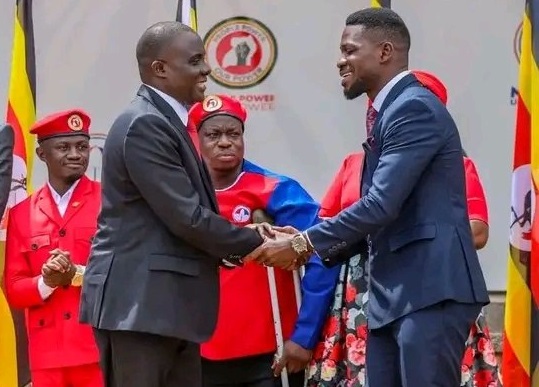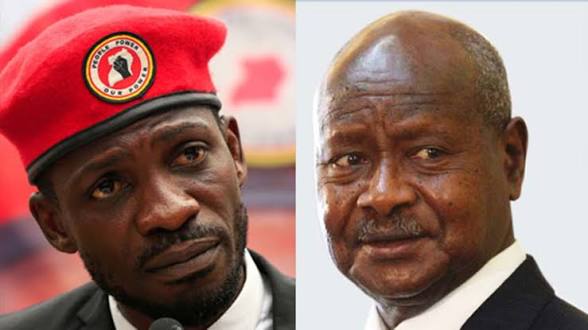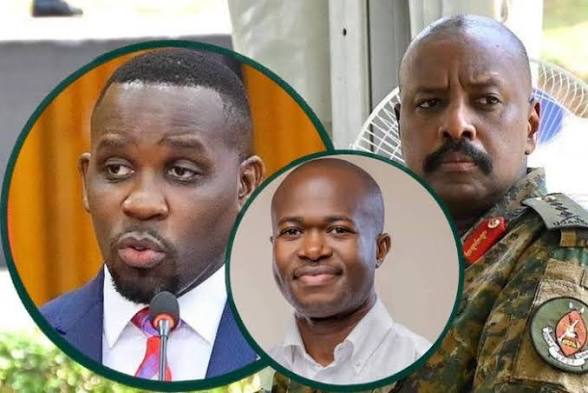
The political debate surrounding Uganda’s opposition leadership has taken a new turn after ruling National Resistance Movement (NRM) legislator Daudi Kabanda questioned the continued stay of National Unity Platform (NUP) members in key opposition positions.
Kabanda argued that the current political situation raises questions about whether NUP should continue occupying influential opposition positions in Parliament following the absence of its party president, Robert Kyagulanyi Ssentamu, commonly known as Bobi Wine.
Speaking about the matter, Kabanda claimed that an opposition party cannot continue leading from Parliament when its top leader is no longer actively operating from within the country.
“You can’t be in the opposition at the top when your party president has run away. Then you claim to be in the opposition in Parliament, where we are also going to remove the Leader of the Opposition,” Kabanda said.
His remarks have sparked fresh debate among political actors, with supporters from different sides interpreting his statement differently.
Kabanda suggested that the leadership structure of the opposition in Parliament should reflect the current political realities and questioned whether NUP still has the moral authority to hold key parliamentary positions.

The comments come after Bobi Wine left Uganda, with his supporters saying he went into exile because of security concerns.
NUP officials have maintained that Bobi Wine remains the party leader and continues guiding the party’s activities despite being outside the country.
However, critics of the opposition party have used his absence to question the effectiveness of its leadership and ability to coordinate political activities locally.
Kabanda’s statement appears to target Joel Ssenyonyi, the current Leader of the Opposition (LOP) in Parliament, who is a senior member of NUP.
The NRM legislator suggested that changes could be made in Parliament to replace Ssenyonyi from the position.
“The Leader of the Opposition is supposed to represent the opposition in Parliament, but we are going to look at the circumstances and make the necessary changes,” Kabanda reportedly argued.
The position of Leader of the Opposition is one of the most influential offices in Parliament, responsible for coordinating opposition legislators and presenting alternative views on government policies.
Ssenyonyi was appointed to the position after NUP became the largest opposition party in Parliament following the 2021 general elections.
Since taking office, he has been one of the most vocal opposition figures, often criticizing government policies and raising accountability concerns.
Kabanda’s comments have therefore triggered discussions about whether political circumstances can affect parliamentary leadership positions.
Opposition supporters have rejected arguments that the absence of a party leader outside the country should affect their representation in Parliament.
They argue that political parties have structures and leadership teams capable of continuing operations even when some leaders face challenges.
Some opposition figures have accused the NRM of attempting to weaken opposition influence by questioning their leadership positions.

On the other hand, NRM supporters say Parliament leadership should be based on political realities and accountability to Ugandans.
The debate comes at a time when Uganda’s political environment remains highly contested, with disagreements between government and opposition leaders continuing over issues of governance, freedom of expression and political space.
Bobi Wine has remained a major figure in Uganda’s opposition politics since entering active politics, attracting millions of supporters across the country.
His continued influence despite being outside Uganda has been a subject of discussion among both supporters and critics.
Meanwhile, Joel Ssenyonyi has not indicated any intention of stepping aside from his role as Leader of the Opposition.
The latest remarks by Daudi Kabanda are expected to fuel more debate about the future direction of opposition leadership in Parliament and the wider political landscape of Uganda.
About the Author