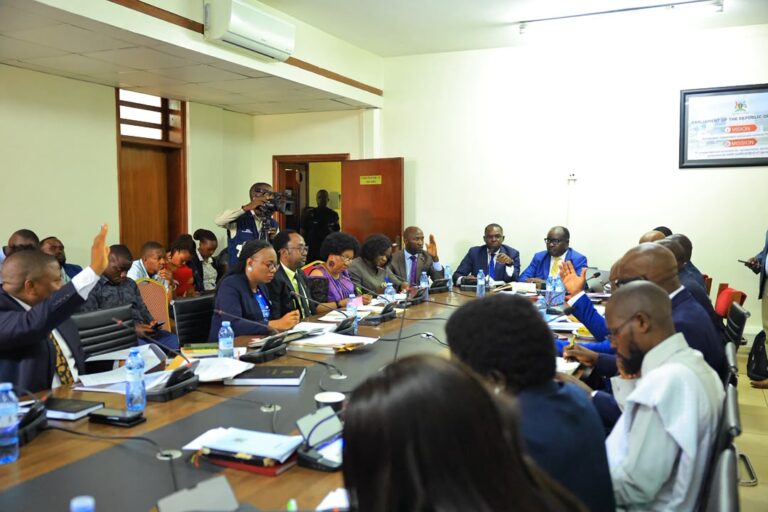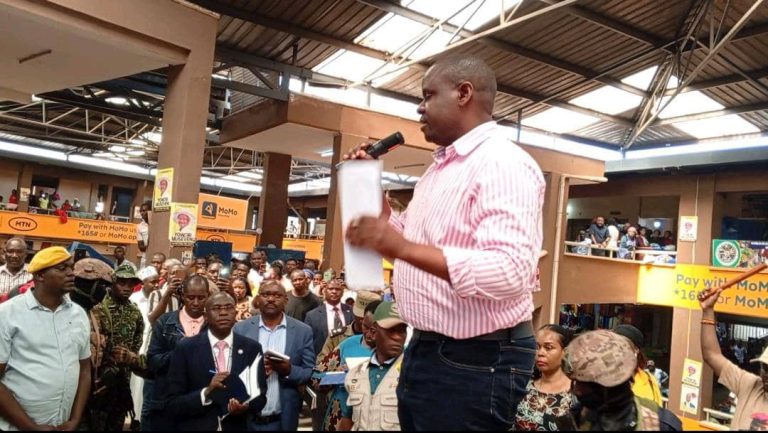
Parliament has heard fresh claims about how former Speaker Anita Among allegedly intervened to stop Kampala Capital City Authority (KCCA) from taking enforcement action against businessman Hamis Kiggundu’s controversial Nakivubo Channel redevelopment project, even as concerns over flooding in Kampala continued to grow.
The revelations emerged during a meeting of Parliament’s Committee on Physical Infrastructure, where officials from KCCA appeared to respond to concerns raised in the Auditor General’s report regarding Kampala’s drainage systems and recurring floods.
The committee, chaired by Mbarara City South MP Mwine Mpaka, questioned KCCA Executive Director Sharifah Buzeki and State Minister for Kampala Kabuye Kyofatogabye Kabanda over the city’s persistent flooding despite billions of shillings invested in drainage improvement projects.
Members of Parliament expressed concern that heavy rains continue to cause widespread flooding across Kampala, destroying businesses, homes and public infrastructure every rainy season.
Several legislators warned that unless immediate action is taken to restore the integrity of the Nakivubo Channel and protect the city’s drainage network, Kampala could once again experience devastating floods in the coming months.
Lawmakers questioned why government continues to spend billions of shillings compensating victims of floods while developments that allegedly interfere with natural water channels continue without decisive intervention.

During the meeting, Minister Kabanda disclosed that KCCA had initially planned to carry out enforcement operations concerning developments along the Nakivubo Channel but those plans were reportedly halted following communication from the Office of the Speaker during Anita Among’s tenure.
According to Kabanda, KCCA received a letter from Parliament indicating that the then Speaker had constituted a special parliamentary committee to oversee issues concerning the Nakivubo Channel, effectively stopping the Authority’s intended enforcement activities.
Kabanda explained that the communication informed KCCA that three Members of Parliament had been appointed to supervise matters relating to the channel, changing the course of the planned enforcement exercise.
When legislators asked whether KCCA had been restrained by a court order from taking action against the project, Kabanda clarified that there had been no such court directive.
Instead, she explained that the Authority acted following the parliamentary communication received from the Office of the Speaker, which redirected how the matter would be handled.
Her remarks echoed events that occurred in August 2025 when Anita Among reportedly directed that investigations into the Nakivubo Channel redevelopment be transferred from Parliament’s COSASE Committee to the Committee on Physical Infrastructure.
Following that directive, COSASE suspended its planned inquiry into the project after acknowledging that another parliamentary committee had been assigned responsibility for handling the matter.
The Nakivubo Channel redevelopment has remained one of the country’s most debated infrastructure projects, with engineers, environmental experts and some lawmakers questioning whether the construction could affect the channel’s ability to carry storm water.

Critics have argued that commercial developments over sections of the drainage channel may have reduced its capacity, contributing to frequent flooding experienced in several parts of Kampala during heavy rains.
During the committee session, legislators also questioned whether technical recommendations previously raised by engineers from the Ministry of Works and Transport had been fully implemented before construction continued.
Some MPs specifically asked whether structural defects reportedly identified during earlier technical inspections had since been corrected to ensure the project met the required engineering standards.
Kabanda admitted that she was not in a position to confirm whether all the technical concerns raised by engineers had been addressed, prompting further concern among committee members.
Committee chairperson Mwine Mpaka emphasized that Parliament’s investigation seeks to establish whether the ongoing works comply with engineering, environmental and hydrological standards required to effectively manage Kampala’s drainage system.
He noted that the committee intends to compile a comprehensive report before making recommendations on whether government should allow the project to continue, require corrective works or halt sections of the development in order to safeguard Kampala from future flooding.
About the Author