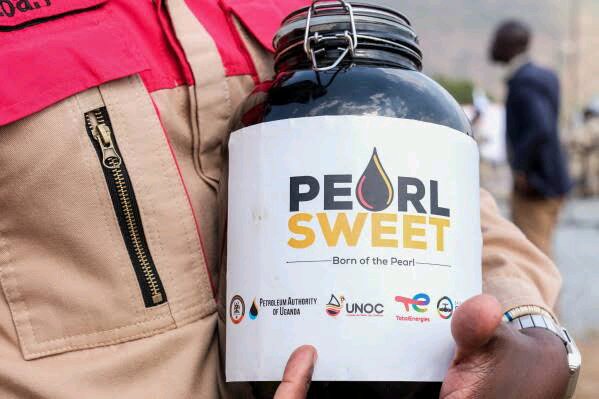
The Petroleum Authority of Uganda (PAU) has provided an explanation for the name “Pearl Sweet,” chosen as the official name of Uganda’s crude oil blend as the country prepares to enter the international oil market.
The name was unveiled by President Yoweri Museveni on September 2, 2026, during his visit to the Kingfisher Development Area in Kikuube District.
The decision to call Uganda’s crude “Pearl Sweet” has generated discussion among members of the public, particularly on social media, with some Ugandans questioning why a more traditionally local name was not selected.
However, Ali Ssekatawa, the PAU Director of Legal and Corporate Affairs, said the name was deliberately chosen to combine Uganda’s national identity with an important technical characteristic of its crude.
According to Ssekatawa, the first part of the name, “Pearl,” is linked to Uganda’s well-known description as the “Pearl of Africa.”
The second part, “Sweet,” has a technical meaning in the petroleum industry and refers to the relatively low sulphur content found in Uganda’s crude oil.
In petroleum terminology, crude oil with low levels of sulphur is generally classified as “sweet,” while crude containing higher levels of sulphur is commonly referred to as “sour.”
Uganda’s crude has been reported to contain approximately 0.16 per cent sulphur, making its low sulphur content one of the characteristics used in describing the crude.
The sulphur level is important in the petroleum industry because refiners consider it when determining how crude oil will be processed and what treatment may be required before producing refined petroleum products.
Ssekatawa stressed that “sweet” should therefore not be understood in its ordinary meaning. In this case, it is a technical petroleum term used to identify a characteristic of Uganda’s crude.
He also explained that crude oil is assessed using several other technical properties, including API gravity.
API gravity is a measurement used by the petroleum industry to indicate the density of crude oil compared with water and is among the characteristics considered when crude grades are classified and traded.
Uganda’s crude has been described as sweet and ranging from medium to heavy, although published API gravity figures can vary depending on the particular crude stream and classification being used.
The Ministry of Energy and Mineral Development has previously given an API gravity range of about 21 to 37 degrees for Uganda’s crude.
Ssekatawa further distinguished the name of the crude blend from the names given to Uganda’s individual oil wells.
A number of oil wells in the Albertine Graben already carry names linked to Uganda’s cultural and environmental heritage.
These include Kajubiriz, Jobi-Rii, Mpuuta, Gunya, Kigogole and Kasemene.
According to Ssekatawa, “Pearl Sweet” was intended to serve a different purpose by giving Uganda’s crude a recognisable commercial identity in international petroleum markets.
Crude oil is traded according to identifiable grades, with buyers and refiners examining characteristics such as sulphur content, density, refining yields and other specifications.
As Uganda prepares for oil production and exports, its crude will need to be recognised and differentiated in the international market.
The planned export route will involve the East African Crude Oil Pipeline, commonly known as EACOP, which is being developed to transport Uganda’s crude to Tanga Port in Tanzania.
Uganda’s crude has another notable characteristic: it is highly waxy.
Because of its high wax content and high pour point, the crude needs to remain heated during transportation to prevent it from becoming too viscous or solidifying.
EACOP has consequently been designed as a heated pipeline to facilitate the transportation of the crude from Uganda’s oil-producing areas to the Tanzanian coast.
The technical characteristics of the crude are therefore important not only for its classification but also for its transportation and eventual marketing.
The Petroleum Authority has also sought to clear up confusion surrounding the use of the word “sweet,” particularly jokes circulating on social media about future products being called “sweet petrol” or “sweet paraffin.”
The designation applies to the crude oil itself and does not mean that refined petroleum products produced from it will carry the word “sweet” in their names.
For Ssekatawa, the debate over the name is also a reflection of Uganda’s changing position in the petroleum industry.
The country has moved from years of exploration and development towards preparing to produce, transport and eventually market its crude oil internationally.
The name “Pearl Sweet” is consequently expected to become an important identifier for Uganda’s crude as it enters the international petroleum market.
By combining the “Pearl of Africa” identity with the technical term “sweet,” PAU says the name is intended to communicate both where the crude comes from and one of its key characteristics.
Uganda is now moving closer to the stage where its crude will be introduced to international buyers, refiners and traders, making the issue of how the crude is identified increasingly important.
The discussion surrounding “Pearl Sweet” therefore goes beyond the name itself, highlighting Uganda’s transition into the international crude oil market.
About the Author