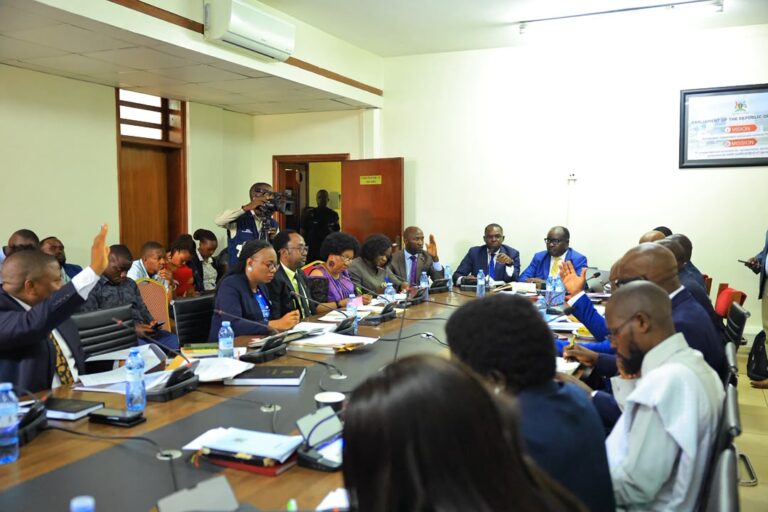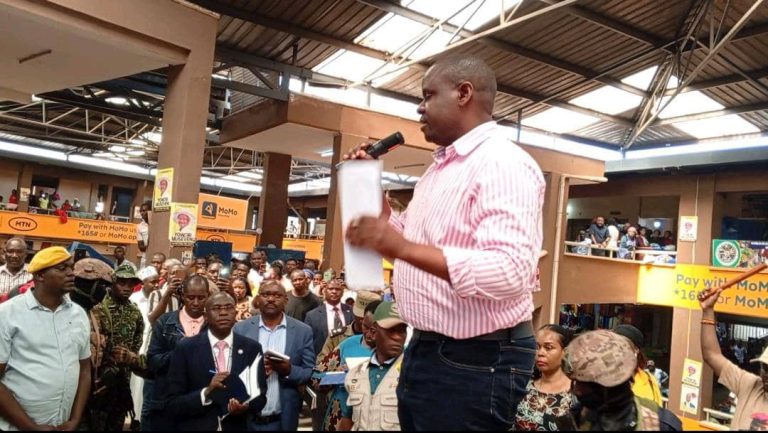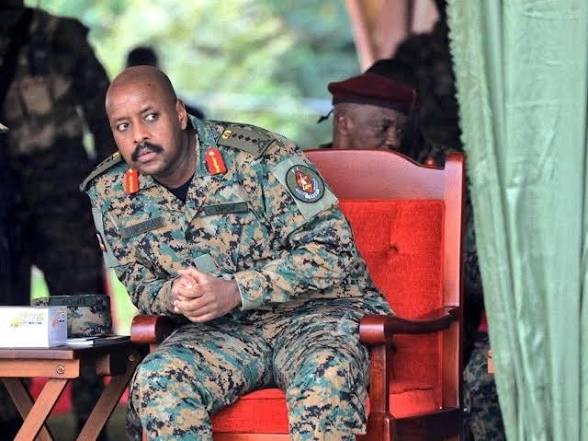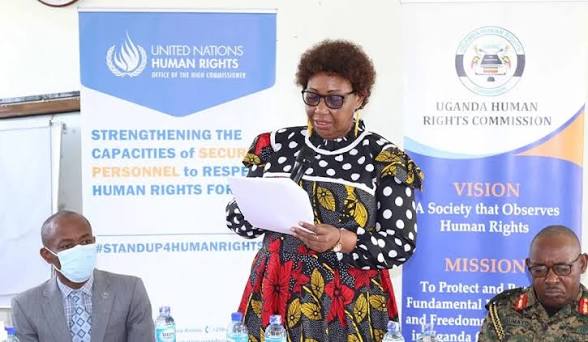
In the past few weeks, two high-profile figures in Uganda’s judiciary, Justice Musa Ssekaana of the Court of Appeal and Hon. Mariam Wangadya, Chairperson of the Uganda Human Rights Commission (UHRC), have become the subjects of intense online smear campaigns. These campaigns, largely spread by certain media blogs, have painted both of them in a negative light. But sources within political circles have revealed that there is a deeper reason behind this surge of negative publicity, especially targeting Wangadya.
The root cause of this online attack seems to lie in the competition for the Deputy Chief Justice (DCJ) position, which has been vacant since Dr. Flavian Zeija was promoted to Chief Justice. Following the vacancy, the Judicial Service Commission (JSC) officially launched a search for a new Deputy Chief Justice, which has sparked a fierce race among Uganda’s legal professionals, including senior judges, legal experts, and private lawyers. Although both Justice Ssekaana and Wangadya have not publicly expressed their desire for the position, they are widely considered to be among the top candidates for this prestigious post.
Adding fuel to the fire, there are reports that leaders within the Muslim community, both from the Uganda Muslim Supreme Council and the Kibuli-based Supreme Mufti leadership, have been lobbying to ensure that a Muslim lawyer is appointed to the Deputy Chief Justice role. However, President Yoweri Museveni is said to be more focused on appointing someone with a proven record of integrity—specifically someone with no ties to corruption. This makes it difficult to find suitable candidates, as many of the career judicial officers have been linked to corruption scandals.
Wangadya, a former Deputy Inspector General of Government (IGG) and the current head of the UHRC, has emerged as a strong contender for the role, mainly due to her anti-corruption stance and her reputation for efficiency. The president is reportedly keen on appointing a figure who can help clean up Uganda’s judiciary, and Wangadya, with her track record, is seen as a capable candidate. However, her success has led to a series of smear tactics aimed at discrediting her, including a recently circulated whistleblower’s report alleging corruption. The report, which was filed with the IGG’s office, State House Anti-Corruption Unit, and the Police Criminal Investigation Department, has been widely disseminated among online media outlets, although most have held off on making any conclusions until investigations are formally conducted.
Why Wangadya?
According to sources close to the situation, Wangadya’s strong work ethic and impressive track record make her a leading candidate for the Deputy Chief Justice position. As Chairperson of the UHRC, she has managed to speed up the delivery of decisions in human rights cases, with an average of 20 decisions made during a two-day sitting of the commission. In contrast, judges in the Court of Appeal are expected to deliver just 20 decisions over a four-month period. This efficiency and her reputation for getting things done have given her an edge.
Another factor working in Wangadya’s favor is President Museveni’s apparent preference for a female Deputy Chief Justice. Historical comparisons of previous female DCJs, such as Justice Alice Mpagi Bahegeine and Justice Constance Btamugisha, show that under their leadership, the jurisprudence of Uganda’s appellate courts was notably stronger, and their work often attracted international citations. Many critics have pointed to the tenure of male Deputy Chief Justices, arguing that they deepened the divide between the Bar and the Bench, leading to a situation where, for the first time in Uganda’s history, the President of the Uganda Law Society was exiled. This has led some to believe that appointing a female DCJ could restore balance and improve relations between the judiciary and the legal profession.
Wangadya’s career in exposing corruption, particularly within Parliament, has also made her a target of some powerful individuals. She played a key role in uncovering corruption syndicates during the budget-making process, which led to the arrest of several members of Parliament, including Lwengo District Woman MP Cissy Namujju and Paul Akampa. Wangadya’s testimony against the accused parties revealed a corrupt network that reached into the heart of government. However, after the charges were dropped, the government faced criticism over its failure to follow through with its anti-corruption efforts, which has likely angered some factions within the political establishment.
Justice Musa Ssekaana
Justice Musa Ssekaana, who has long been seen as a potential candidate for the position of Chief Justice, has also been caught in the crossfire of these political struggles. For years, many in the Muslim community expected Ssekaana to become the first-ever Muslim Chief Justice of Uganda. However, as his name grew in prominence, his detractors began to leak negative reports about him, and complaints about his conduct were filed with the Judicial Service Commission (JSC). These complaints are now being fast-tracked for hearing as part of the process to appoint a new Deputy Chief Justice.
The Kibuli Muslim leadership has also expressed dissatisfaction with Ssekaana over his handling of a case involving Juma Zukuli, in which they accused him of bias. Ssekaana’s decision to imprison Sheikh Khalifa Lutaaya and Sheikh Hassan Kinene for contempt of court further fueled criticism from certain factions within the Muslim community. On top of this, Ssekaana has been accused of being intolerant toward social media critics and of personalizing disputes with lawyers during court hearings.
The Process of Appointing the Deputy Chief Justice
President Museveni has historically appointed Deputy Chief Justices from the Court of Appeal, with previous appointments including Justice Geoffrey Kiryabwire, Justice Barishaki Cheborion, and Justice Egonda-Ntende. To be eligible for the position of Deputy Chief Justice, candidates must hold a Bachelor’s degree in law, be serving as judges at the Court of Appeal, Supreme Court, or High Court, or have practiced law for at least 15 years.
Sources close to the President indicate that he is eager to make the appointment soon, ideally before the next term of office begins, to avoid a vacuum in the judiciary’s leadership. Additionally, the president has directed that local village leadership elections be concluded by May 2026, signaling the importance of swift and decisive action.
The competition for the Deputy Chief Justice position is heating up, and the ongoing smear campaigns against Wangadya and Ssekaana are only intensifying the political maneuvering. As the president weighs his options, the outcome of this race will shape the future of Uganda’s judiciary, with both Wangadya and Ssekaana likely to play central roles in the coming weeks.
About the Author