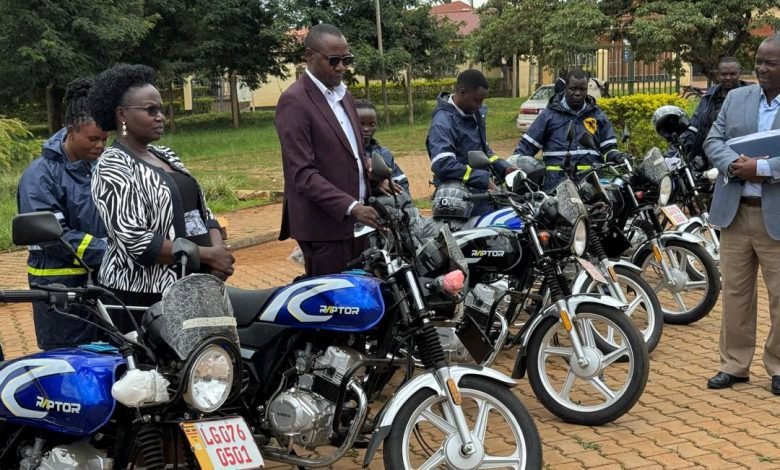
Mbale District has taken a bold step to revolutionize healthcare at the grassroots level by equipping community health workers with motorcycles, enhancing their ability to reach every corner of the district. The handover ceremony took place on Tuesday, 31st March 2026, at the Malukhu district headquarters and drew top district officials.
The initiative, led by Resident District Commissioner (RDC) Mr. Bayole Stanley, is designed to shift the focus from expensive treatments to proactive disease prevention. According to Mr. Bayole, the motorcycles are essential tools that will bridge the gap between health facilities and households in remote areas.
“These motorcycles are not mere vehicles; they are instruments of health empowerment,” Mr. Bayole stated. “Our goal is to prevent illnesses before they become crises. Prevention is far cheaper than cure, and it saves countless lives.” He urged community health workers to utilize the motorcycles fully in their outreach activities.
The event was attended by Chief Administrative Officer (CAO) Angella Akurut and District Health Officer (DHO) Dr. Wangisi, who both praised the district’s commitment to strengthening field healthcare. Their presence underlined the collaborative effort required to ensure the success of this initiative.
The RDC revealed that the seven motorcycles, each costing six million shillings, were purchased using Primary Health Care (PHC) development funds. With a total PHC allocation of 40 million shillings, additional motorcycles are expected to join the fleet, further expanding the reach of community health workers.
Bayole also commended the Health Department for its transparent handling of the procurement process, emphasizing the need for other departments to uphold the same standards. “When public funds are used correctly, everyone benefits,” he said, highlighting the importance of accountability.
Dr. Wangisi reiterated the value of prevention over treatment, noting that managing outbreaks is far costlier than preventing them. He outlined a three-pronged strategy to achieve “Total Better Services”: recognizing and empowering health teams, providing them with training and authority, and removing logistical barriers that hinder service delivery.
The ceremony concluded with a call for unified leadership, stressing that the CAO, DHO, and RDC must work in harmony. Together, they aim to ensure efficient service delivery across the district, empowering community health workers to reach the most vulnerable and create a healthier Mbale for all.
About the Author