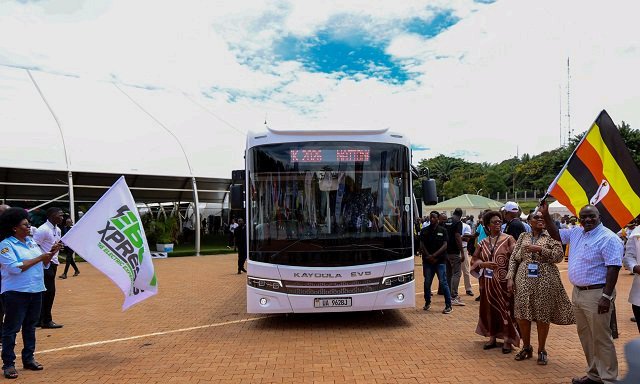
Uganda has officially entered a new era of urban transport after the launch of its first electric commuter bus system in the capital, marking a major shift toward cleaner and more modern mobility solutions in the country.
The new service was unveiled in Kampala by Works and Transport Minister Edward Katumba Wamala, who described it as a key milestone in Uganda’s long-term strategy to reduce emissions and modernise public transport systems.
The electric bus route currently connects Ntinda and City Square along Kampala Road, forming the first operational circuit under a wider plan targeting several routes across the Greater Kampala Metropolitan Area.
The service is operated by E-Bus Xpress, a subsidiary of the state-linked Kiira Motors Corporation, and has begun operations with an initial fleet of eight electric buses designed to run at regular 15-minute intervals.
Officials say the system is fully cashless, reflecting a broader push to digitise transport services and improve efficiency, transparency, and convenience for commuters across the city.
The rollout in Kampala follows a pilot phase conducted earlier in Jinja, positioning Uganda alongside other East African countries that are gradually adopting electric public transport technologies.
Government projections indicate that up to 1,500 electric buses could be deployed across 14 cities by 2030, supported by a network of fast-charging stations intended to ensure reliable operations and reduce dependence on fuel imports.
Authorities have described the initiative as both an environmental and economic intervention, expected to ease congestion, lower commuter costs, create new jobs in transport services, and support Uganda’s broader industrialisation and urban development goals.
About the Author