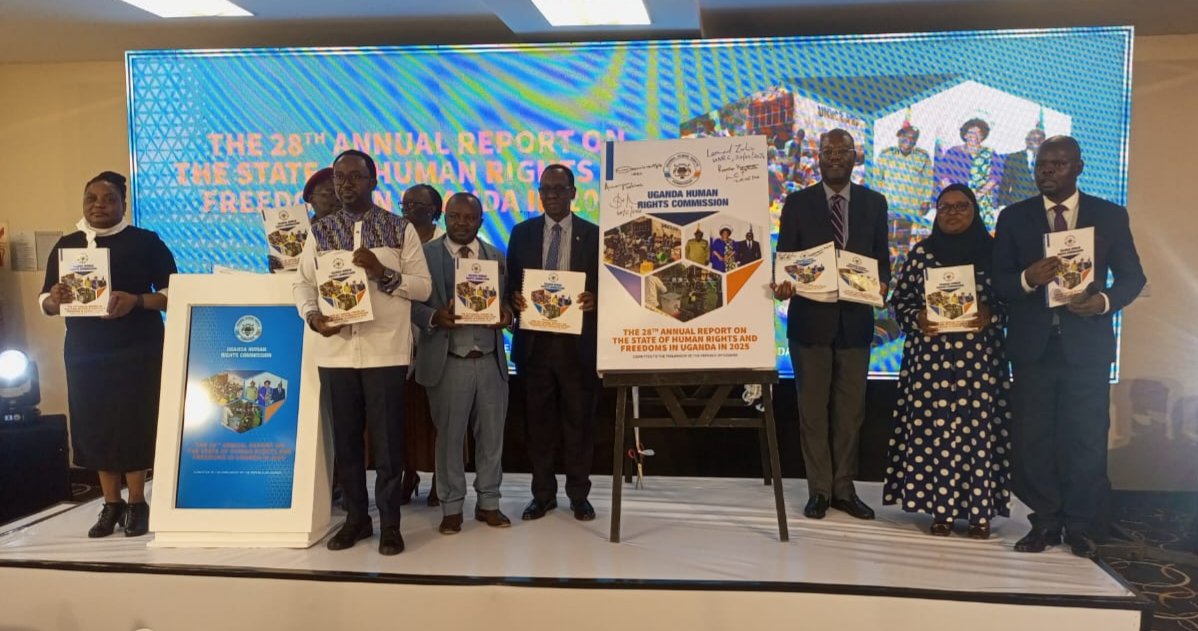
Uganda is confronting a widening social and human rights crisis following the release of the Uganda Human Rights Commission’s 28th Annual Report, which highlights a troubling rise in violations, substance abuse among young people, and deepening mental health challenges. The report paints a picture of a country grappling with structural weaknesses that are increasingly affecting the most vulnerable citizens, particularly the youth.Presented in Kampala by Hon. Lamex Apitta Omara on behalf of Commission Chairperson Mariam Wangadya, the report was framed as a tool for reform rather than confrontation.
Officials emphasized that its purpose is to promote accountability and improve governance, urging all stakeholders to take the findings seriously and work towards strengthening respect for human rights.The findings reveal that 1,747 complaints were recorded in 2025, with 324 confirmed as human rights violations. The Uganda Police Force emerged as the most frequently cited institution, followed by private individuals and the Uganda People’s Defence Force, with major allegations including torture, unlawful detention, deprivation of liberty, and failure to provide child maintenance.
Despite efforts to deliver justice, the commission’s tribunal awarded about UGX 885 million in compensation to victims over the year. However, the report points to persistent obstacles such as limited funding, slow administrative processes, and reliance on outdated manual systems, all of which continue to delay timely resolution of cases and compensation for victims.A major concern highlighted in the report is the growing prevalence of drug and alcohol abuse among Ugandan youth, especially those aged 18 to 30.
The commission warns that addiction is becoming deeply rooted, fueled by unemployment, poverty, social pressure, rural-to-urban migration, and the increasing influence of digital platforms exposing young people to risky behaviors.The report further indicates that substance use is starting at alarmingly early ages, with children as young as 13 to 15 already experimenting with drugs and alcohol. Substances such as marijuana, kush, shisha, and kuba are widely mentioned as common choices among young people seeking escape from stress, hardship, and limited opportunities.Mental health conditions are also rising sharply, with an estimated 3.7 million Ugandans reportedly affected.
Hospitals, including Butabika National Referral Mental Hospital, report that a significant share of admissions is linked to substance abuse, while regional facilities like Soroti continue to struggle with increasing patient numbers requiring psychiatric care.As the nation reflects on the report’s findings, experts and legal scholars are calling for stronger institutional reforms, improved data collection, and stricter adherence to constitutional safeguards such as the 48-hour detention rule. The report ultimately serves as a stark warning that Uganda must urgently address its growing human rights, addiction, and mental health challenges to secure a more stable future for its young population.
About the Author