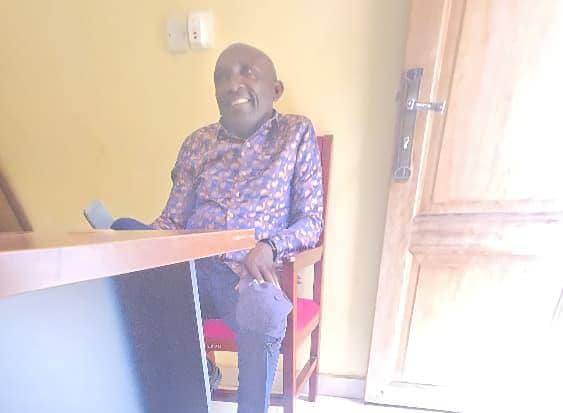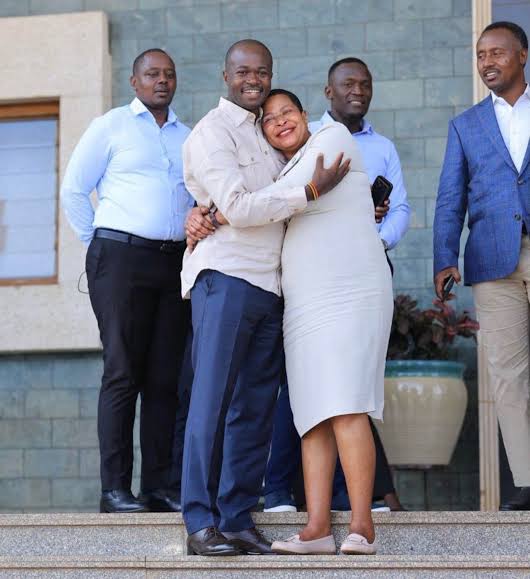
Kasambya County MP David Kabanda has finally addressed one of the most persistent rumours that has followed him for years, dismissing allegations that he impregnated domestic workers employed by former Speaker and challenging critics to provide evidence to support the claims.
Speaking during an appearance on the popular YouTube program The Direct Shot, Kabanda was confronted with the long-standing allegation that has frequently resurfaced in political debates, social media discussions and public exchanges involving some of Uganda’s most outspoken politicians.
Rather than offering an emotional response, the Patriotic League of Uganda Secretary General chose a simple but direct approach, questioning why no child has ever been presented despite years of accusations being circulated against him.
“How come they never give birth?” Kabanda asked, dismissing the allegations as baseless claims that have survived largely through repetition rather than evidence.
The legislator argued that if the accusations were true, there would by now be clear proof in the form of children or individuals coming forward to substantiate the allegations, something he says has never happened despite the rumours being repeated for years.
His remarks come at a time when the claims have once again returned to public discussion following recent political exchanges involving State Minister for Local Government , who reportedly referenced the allegations while responding to political critics.

For Kabanda, however, the matter appears closed, insisting that speculation cannot replace evidence and that repeated allegations do not automatically become facts simply because they are widely circulated.
The interview soon moved beyond the controversy and evolved into a broader conversation about Kabanda’s life story, political rise and the personal struggles that shaped his journey to national prominence.
In a rare moment of candour, the MP openly discussed his academic background, revealing details that many politicians would ordinarily prefer to keep private.
Kabanda admitted that his performance at Ordinary Level was far from impressive, disclosing that he scored several F9 grades during his Uganda Certificate of Education examinations.
Instead of attempting to downplay those results, he embraced them as part of his personal story, explaining that his academic challenges were closely linked to difficult circumstances during his youth.
According to Kabanda, while many of his classmates were concentrating on their studies, he was already working to support himself, holding a job at a radio station while still pursuing his education.
The demanding work schedule, he explained, often left little room for regular classroom attendance and revision, making it difficult to compete academically with students who could devote all their time to school.
Despite those setbacks, Kabanda said he refused to allow poor examination results to define his future, choosing instead to work harder when he advanced to higher levels of education.
His determination paid off at Advanced Level, where he significantly improved his academic performance and obtained 14 points, a result that earned him admission to .
Kabanda described that achievement as one of the most important turning points in his life, proving that initial setbacks do not necessarily determine a person’s long-term success.
However, university life would present a different challenge altogether. As his involvement in political mobilization and public affairs increased, he found himself spending more time on activism and leadership than on academic pursuits.

The legislator revealed that he eventually abandoned his undergraduate studies as political commitments expanded, forcing him to make difficult choices about the direction of his future.
Among the lighter moments of the interview was his recollection of interactions with former university lecturer , whom he described as one of the most memorable educators he encountered during his time at Makerere.
Kabanda recalled being ordered out of class by Tanga Odoi during one lecture, an experience that could have created resentment but instead became one of the stories he now shares with humour and appreciation.
He credited the lecturer with being among the most effective teachers he encountered, saying the experience taught him valuable lessons about discipline, responsibility and perseverance.
As the interview concluded, Kabanda appeared determined to present a more personal side of himself beyond the political battles and controversies that often dominate headlines.
Whether discussing rumours about his private life, reflecting on poor school grades, recounting his struggles as a working student or sharing memories from his university days, the MP used the platform to portray a journey marked by setbacks, resilience and an unwavering determination to tell his own story in his own words.
About the Author