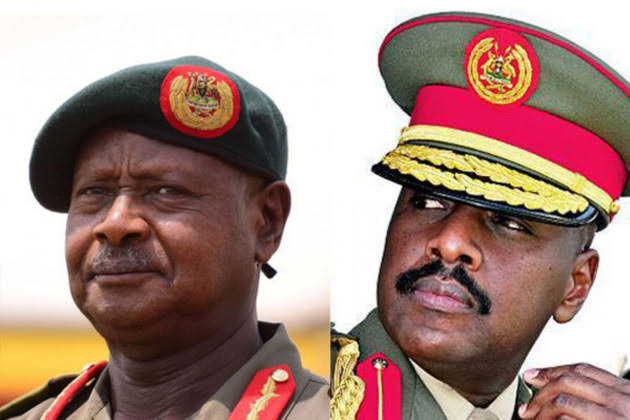
Chief of Defence Forces Muhoozi Kainerugaba has once again sparked widespread political discussion after publicly suggesting that he does not intend to remain in the military’s top office forever.
His remarks immediately attracted attention because they touched on questions surrounding his future ambitions and Uganda’s long-term political leadership.
For years, Muhoozi has occupied a unique position in Uganda’s public life as both the son of President Yoweri Museveni and one of the country’s most influential military figures.
Unlike many senior military officers, he has built a reputation for regularly sharing his views on politics, governance, security, and international affairs through social media.
In his latest comments, Muhoozi suggested that his current role as Chief of Defence Forces would eventually come to an end and that he sees himself pursuing other responsibilities in the future.
The statement reignited long-standing debates about whether he is preparing for a future role in Uganda’s political leadership after years of speculation about his ambitions.

Many analysts believe such remarks are significant because they come amid growing national conversations about succession and the country’s future beyond President Museveni.
Over the past several years, Muhoozi has repeatedly made statements that appear to embrace the possibility of one day occupying Uganda’s highest political office.
His declarations have helped keep alive discussions surrounding what has popularly become known as the “Muhoozi Project,” a theory that he is being positioned to eventually succeed his father.
Although government officials have consistently dismissed claims of an organized succession plan, Muhoozi’s own public statements have often fueled further speculation.
The debate has become even more pronounced due to the growth of the Patriotic League of Uganda, commonly known as PLU, which has expanded rapidly in recent years.
PLU has attracted support from influential political figures, youth leaders, businesspeople, and government supporters across different parts of the country.
Its expansion has led many observers to question whether the movement could eventually become a platform for a larger political project associated with Muhoozi.
At the same time, Muhoozi has continued to strengthen his public profile through regular engagement with supporters and critics alike on social media.

His online presence has become one of the defining features of his leadership style, often generating headlines and national debate.
Supporters describe him as bold, confident, and willing to speak openly about issues that many public officials avoid discussing.
Critics, however, argue that some of his statements blur the traditional distinction between military leadership and political activity.
The latest remarks have also renewed attention on the unresolved question of who will eventually succeed Museveni whenever he leaves office.
While the President remains firmly in control of government and the ruling establishment, discussions about Uganda’s future leadership continue to intensify.
For now, Muhoozi remains one of the most influential figures in both Uganda’s military and political landscape, ensuring that every comment about his future continues to attract significant public interest.
About the Author