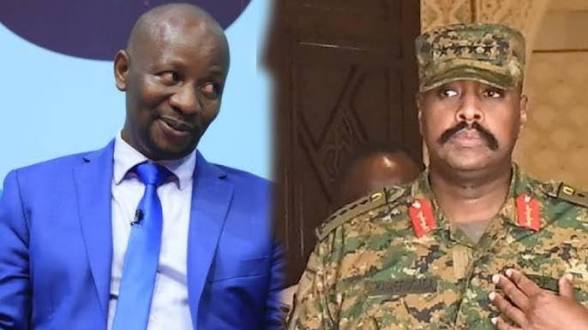
Ibrahim Ssemujju Nganda has issued a strong and defiant message to Chief of Defence Forces Gen. Muhoozi Kainerugaba, insisting that no amount of power or intimidation will silence his political voice.
The former Kira Municipality Member of Parliament said he remains unafraid despite what he described as growing pressure and tension surrounding outspoken opposition figures in the country.
Ssemujju made the remarks while responding to ongoing political developments linked to the arrest and detention of former Kampala Lord Mayor Erias Lukwago, a case that has triggered widespread debate in Uganda’s political space.
He argued that public office holders, including senior military leaders, must always remember that power is temporary and subject to constitutional limits.
In his remarks, Ssemujju directly addressed Gen. Muhoozi Kainerugaba, stating that he is not intimidated by him and will continue speaking out on issues of governance and justice.
He added that he has faced more powerful generals and political figures in the past and therefore cannot be easily silenced by threats or pressure.

Ssemujju emphasized that Uganda does not belong to individuals or families, but to its citizens, who have the right to question authority.
He warned that treating the country as personal property risks undermining democratic principles and public accountability.
The opposition politician further stated that leadership is a responsibility entrusted by the people and not a lifelong entitlement.
His comments come amid heightened political tensions involving opposition leaders and senior government figures, particularly within discussions surrounding security and judicial processes.
Supporters of Ssemujju praised his statement as bold and reflective of political courage in the face of pressure.
They argue that such voices are necessary to maintain checks and balances in governance and to protect democratic space.
However, critics have cautioned that such confrontational language could further inflame already sensitive political tensions.

They argue that public dialogue should remain respectful, even when disagreements over governance and leadership arise.
Political analysts say the exchange reflects deeper divisions in Uganda’s political environment, particularly over accountability and the role of the military in public life.
They also note that increasing personalization of political disputes is contributing to heightened polarization.
Ssemujju maintained that he will not retreat from his position and will continue to speak out on matters he considers unjust or unconstitutional.
At the time of reporting, Gen. Muhoozi Kainerugaba had not publicly responded to the latest remarks.
The debate continues to dominate political discussions, highlighting ongoing tensions between opposition figures and state institutions in Uganda.
About the Author