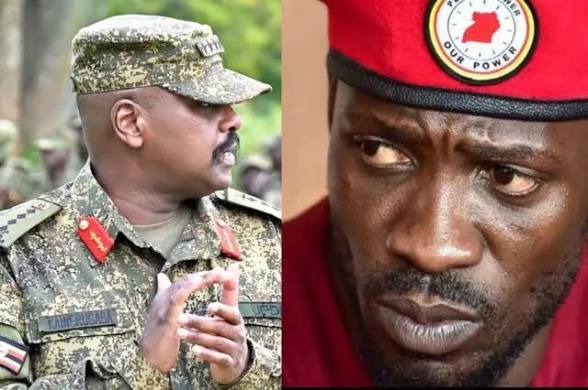
Gen. Muhoozi Kainerugaba has once again stirred national debate after making strong remarks about opposition leader Bobi Wine on social media.
The comments, which quickly spread across various online platforms, attracted widespread attention from supporters and critics across Uganda’s political divide.
In the post, Muhoozi suggested that Bobi Wine could remain abroad or seek support from international allies for as long as he wished, but insisted that he would eventually face arrest.
The statement immediately generated intense discussion, with many Ugandans debating its political and legal implications.
Bobi Wine, whose real name is Robert Kyagulanyi Ssentamu, remains one of Uganda’s most prominent opposition figures and a leading critic of the current government.
Over the years, his political activities have frequently placed him at the center of national controversies and confrontations with state authorities.

Muhoozi’s latest comments have therefore been interpreted by many observers as part of the ongoing political rivalry between government supporters and opposition leaders.
The remarks quickly went viral on social media, where thousands of users shared opinions and reactions.
Supporters of Muhoozi argued that no individual should consider themselves above the law and that legal processes should apply equally to all citizens.
Others viewed the statement as a reflection of the increasingly heated political rhetoric that has characterized Uganda’s political landscape in recent years.
Opposition supporters strongly criticized the remarks, arguing that legal matters should be handled through independent institutions rather than public declarations.
Several commentators noted that statements involving high-profile political figures often generate concern because of their potential impact on public confidence in state institutions.
Political analysts say the exchange highlights the deep divisions that continue to exist between Uganda’s ruling establishment and opposition movements.
According to observers, social media has become one of the primary battlegrounds where political narratives are shaped and amplified.
The latest comments have reignited discussions about the role of public communication by senior government and military figures.
Legal experts emphasize that any arrest or prosecution must follow established constitutional and judicial procedures.
Human rights advocates have similarly called for respect for due process and the rule of law regardless of political affiliation.
Meanwhile, supporters of the ruling establishment argue that public figures should not be shielded from legal accountability simply because of their political status.
The controversy has also renewed attention on Bobi Wine’s political activities and his continued influence among opposition supporters both within Uganda and abroad.

Observers note that interactions involving Muhoozi and Bobi Wine frequently dominate public discussion because both command significant national attention.
Many Ugandans continue to closely follow developments involving the two figures due to their influence on the country’s political discourse.
Analysts say such statements often resonate widely because they touch on broader questions regarding governance, political competition, and the future direction of the country.
The latest episode has once again demonstrated the powerful role social media plays in driving political conversations and shaping public opinion.
As reactions continue to pour in from across the political spectrum, the remarks have reinforced ongoing debates about leadership, accountability, and the nature of political competition in Uganda.
For now, the statement remains one of the most discussed political comments of the day, attracting attention from supporters, critics, and observers alike as Uganda’s political landscape continues to evolve.
About the Author