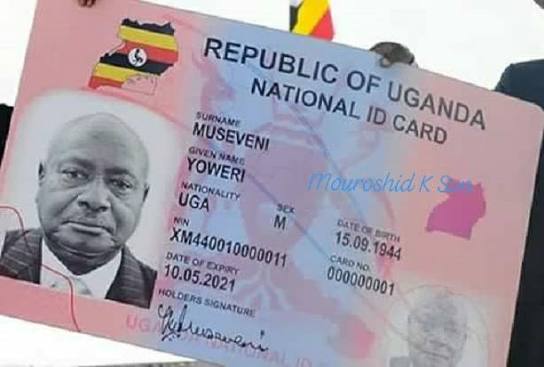
For many Ugandans, the National ID is simply a document carried in a wallet and occasionally presented when opening a bank account, registering a phone number, or verifying identity.
However, as Uganda continues to embrace digital governance and modern public administration systems, the National ID has evolved into one of the most important documents a citizen can possess.
Today, the card serves as a gateway to numerous government and private-sector services that affect millions of people every day.
At the center of this transformation is the National Identification Number (NIN), which has increasingly become the primary reference point for verifying identity across multiple sectors.
Many Ugandans are unaware that their National ID can be used as an official travel document within parts of the East African Community.
Citizens traveling to neighboring countries such as Kenya and Rwanda can often use their National ID instead of a passport, making regional travel faster and more convenient.

The National ID has also become a powerful weapon in the fight against land fraud, one of the country’s most persistent property-related challenges.
By linking land ownership records to verified identities, authorities are increasingly able to identify suspicious transactions and reduce fraudulent land transfers.
Recent improvements to Uganda’s identification system have also strengthened privacy and data protection measures.
Citizens now have greater control over how their personal information is accessed and used by institutions requesting identity verification services.
The Uganda Revenue Authority continues to integrate the National Identification Number into tax administration systems.
This integration helps improve accuracy, reduce duplication, and simplify taxpayer registration and record management processes.
Another important but less-known feature is the inclusion of accessibility enhancements for persons living with visual impairments.
Modern National IDs contain tactile elements that enable visually impaired citizens to identify their cards through touch without requiring assistance from others.
The National ID has also become a critical component of Uganda’s driver licensing system.
Using the NIN helps authorities maintain accurate driver records and reduces the risk of duplicate registrations or identity-related irregularities.
Security experts have praised the introduction of QR technology embedded in modern identification cards.
The QR codes enable rapid verification of identity documents through authorized systems, helping detect counterfeit cards and enhance security.
Educational institutions are also increasingly relying on the National ID during student registration, admissions, and examination processes.
Officials believe the use of verified identity information helps minimize impersonation and ensures that academic records are linked to the correct individuals.
Workers across the country benefit from the National ID’s role in employment and social security management.
Employers use the NIN when registering workers and processing statutory contributions, helping ensure that pension and employment records remain accurate.
The document also plays an important role in birth registration and the establishment of legal identity for children.
Parents are often required to present identification documents when registering newborns, helping create reliable civil registration records from an early age.
Government officials say the growing importance of the National ID reflects Uganda’s broader efforts to build efficient digital public services.

As more institutions integrate identity verification into their operations, the card’s value continues to extend far beyond proving a person’s name and date of birth.
Experts advise citizens to keep their information updated with the National Identification and Registration Authority whenever changes occur.
Failure to update personal details can sometimes create complications when accessing services linked to the National Identification Number.
With digital transformation accelerating across Uganda, the National ID is increasingly becoming the key that unlocks access to essential services and opportunities.
What once appeared to be an ordinary identification document has evolved into one of the most powerful tools connecting Ugandans to modern life, government services, financial systems, and regional opportunities.
As technology continues to reshape public service delivery, the importance of the National ID is expected to grow even further in the years ahead.
About the Author