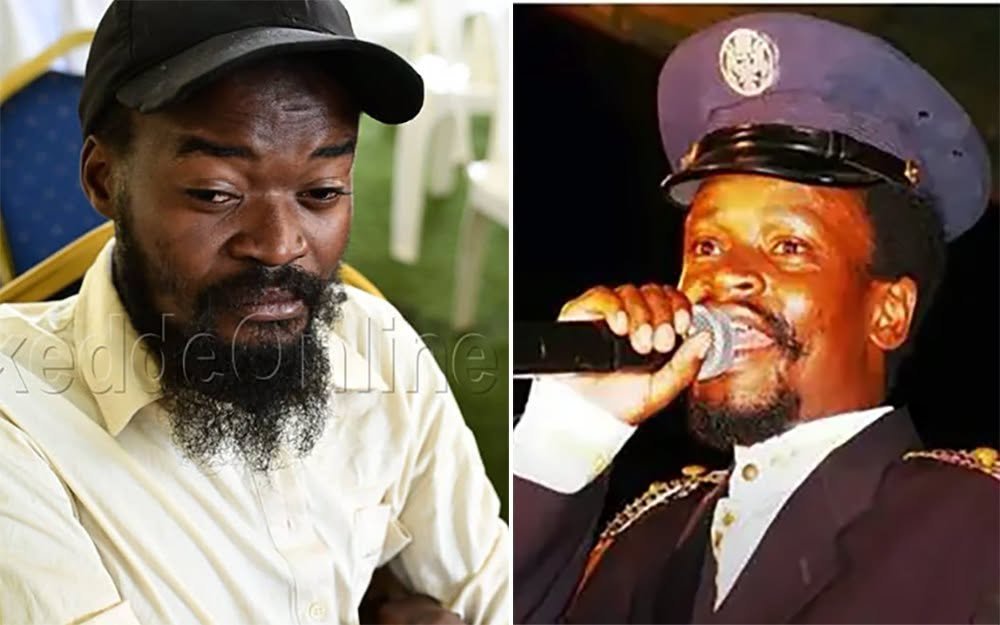
Balaam Barugahara has announced that plans are underway to conduct another round of DNA testing on individuals claiming to be children of the late Kadongo Kamu legend Paul Kafeero, following growing public skepticism surrounding the recently released results from Uganda.
The announcement was made through a post on X (formerly Twitter), where Balaam revealed that General Muhoozi Kainerugaba had agreed to support the process by facilitating confirmatory tests in either South Africa or the United Kingdom.
In his message, Balaam thanked members of the public who had expressed concern about the DNA exercise, specifically mentioning singer Catherine Kusasira, popularly known as Mama Phina, retired General David Sejusa, and many other Ugandans who questioned the outcome of the first tests.
“To the Public, thank you for your concern especially Mama Phina, Gen Ssejusa & many others! With help from General Muhoozi Kainerugaba, we shall send the samples to South Africa or UK for confirmatory test and that will be done soon. Thank you for your attention to this Kafeero matter,” Balaam posted.
The statement immediately attracted widespread attention on social media, with thousands of users weighing in on the latest development surrounding the highly publicized Kafeero family saga.
The initial DNA exercise had generated intense national interest after 25 individuals came forward claiming to be biological children of the late musician.
When the results were released, only four claimants were reportedly confirmed as biological children of Paul Kafeero, leaving many families disappointed and triggering heated public debate.

Particular controversy emerged after several individuals who closely resembled the late singer reportedly failed to establish a biological relationship through DNA analysis.
Many Ugandans expressed disbelief at the findings, arguing that some of the rejected claimants shared striking facial features, body structures, and mannerisms with the legendary musician.
The public reaction intensified on social media, where users questioned whether the testing process had been conducted thoroughly and whether additional verification was necessary.
Some commentators argued that because of the emotional and historical significance of the matter, an independent international laboratory should be involved to eliminate any doubts.
Others insisted that DNA science is generally reliable and that physical resemblance alone cannot be used as proof of biological parentage.
However, despite those arguments, calls for a second opinion continued to grow, eventually prompting discussions about conducting confirmatory tests outside Uganda.
Balaam’s latest announcement appears to be a direct response to those concerns and could potentially reopen one of the country’s most closely followed family disputes in recent years.

Supporters of the new initiative say an independent international laboratory would provide additional credibility and help restore public confidence in the final outcome.
Several social media users welcomed the development, arguing that the matter deserves complete transparency given the number of people affected by the results.
Others praised General Muhoozi Kainerugaba for reportedly stepping in to facilitate the process, describing the move as an opportunity to bring closure to all parties involved.
Meanwhile, some observers have urged the public to remain patient and avoid making premature conclusions until the proposed confirmatory tests are completed and officially released.
Legal and forensic experts note that repeat testing by internationally accredited laboratories is not uncommon in sensitive cases where significant public interest exists.
As preparations for the new DNA exercise reportedly begin, attention is once again turning to the legacy of Paul Kafeero and the question that has captivated many Ugandans for months: who are the true biological children of one of Uganda’s greatest musical icons? The answer may soon be tested once more, this time beyond Uganda’s borders.
About the Author







