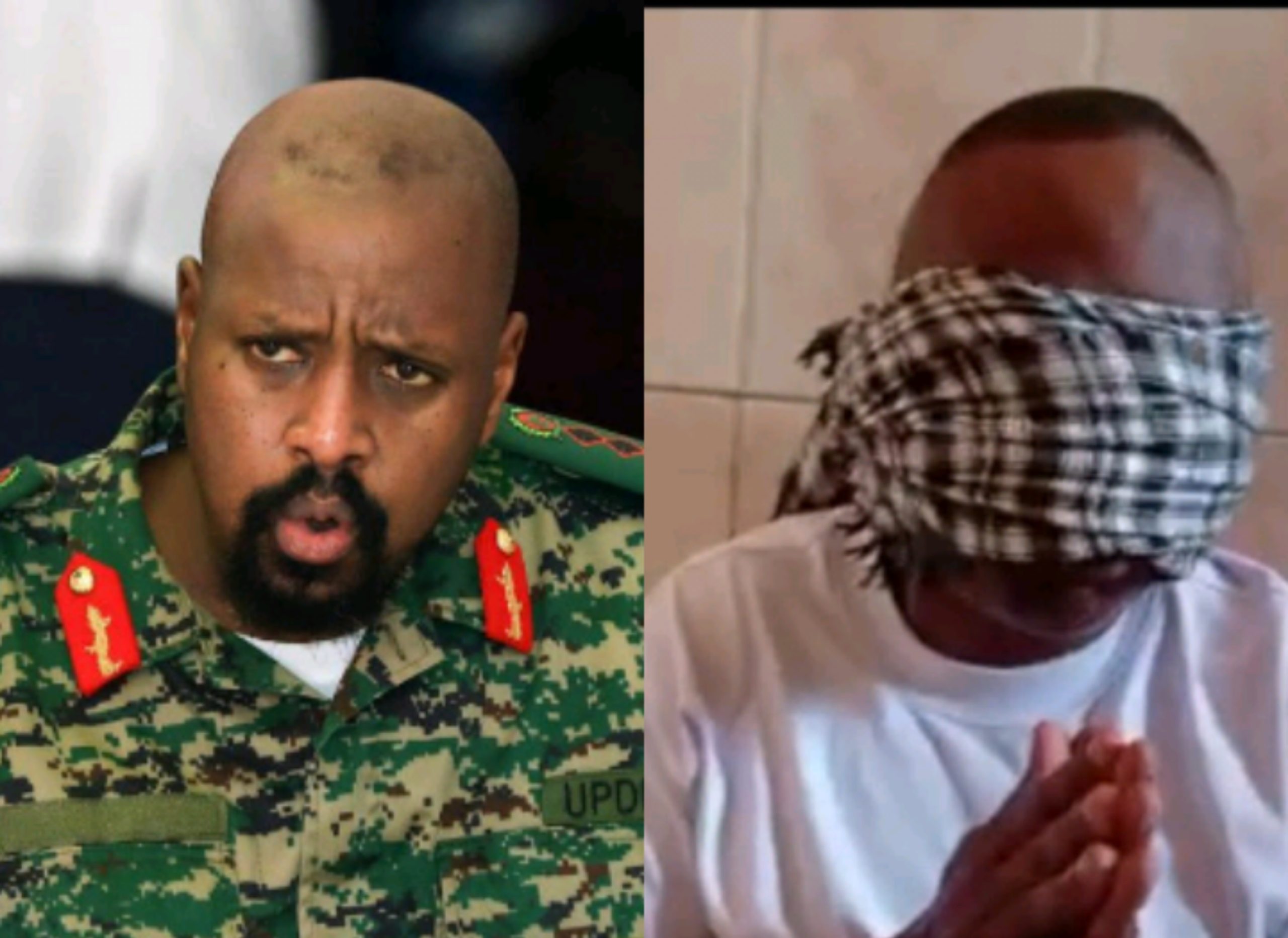
A new political discussion has emerged across Uganda following remarks by Gen. Muhoozi Kainerugaba regarding Kampala Lord Mayor Erias Lukwago, comments that have quickly gained attention on social media and within political circles.
The Chief of Defence Forces and Chairman of the Patriotic League of Uganda (PLU) made the statement while responding to ongoing conversations involving Lukwago, one of the country’s most outspoken opposition leaders. His remarks immediately attracted widespread reactions from supporters and critics alike.
In his statement, Gen. Muhoozi suggested that he would be willing to release Lukwago if the Kabaka of Buganda personally requested him to do so. The comment was delivered in a manner that sparked both amusement and controversy among those who encountered it online.
“If my uncle the Kabaka requests me to release my prisoner… Lukwago, I will do it,” Gen. Muhoozi stated, words that quickly spread across multiple social media platforms and generated thousands of reactions within hours.
The statement comes against the backdrop of Gen. Muhoozi’s long-running online exchanges involving political figures, public officials, and opposition leaders. His social media posts often become national talking points due to their provocative nature and unusual style.
Many observers were particularly drawn to the reference to the Kabaka of Buganda, one of the country’s most respected cultural leaders. The mention of the monarch introduced a cultural dimension to what was otherwise a political conversation.

Supporters of Gen. Muhoozi interpreted the remarks as a lighthearted comment aimed at emphasizing the respect he holds for the Kabaka and the Buganda Kingdom. They argued that the statement reflected the close historical and cultural ties between the First Family and the kingdom.
Critics, however, questioned the implications of describing Lukwago as a “prisoner,” arguing that the wording was likely intended as political satire but nonetheless carried symbolic significance given Uganda’s often heated political environment.
Erias Lukwago remains one of the most prominent opposition figures in the country and has built a reputation as a fierce critic of the government. Throughout his political career, he has frequently clashed with authorities over governance, constitutional matters, and public policy.
As Kampala Lord Mayor, Lukwago has consistently positioned himself as a defender of opposition causes, making him a central figure in Uganda’s political discourse. His popularity among supporters and frequent criticism of government actions have ensured that he remains in the national spotlight.
The latest comments from Gen. Muhoozi have once again highlighted the unusual relationship between the two public figures. Although they occupy opposite ends of the political spectrum, references to Lukwago by Gen. Muhoozi often generate substantial public interest.
Political analysts noted that the remarks are unlikely to have any direct legal or administrative consequences but are significant because of the personalities involved. Statements touching on Lukwago, Buganda, and national politics tend to resonate widely among Ugandan audiences.
The mention of the Kabaka also sparked discussions about the enduring influence of cultural institutions in Uganda’s public affairs. Many citizens pointed out that cultural leaders continue to command enormous respect across communities regardless of political affiliation.
Social media users quickly weighed in on the statement, with some treating it as humor while others interpreted it as a strategic political message. Memes, debates, and commentary soon flooded online platforms as the conversation gained momentum.
Several commentators argued that Gen. Muhoozi has mastered the art of commanding public attention through his social media activity. Whether praised or criticized, his statements often succeed in dominating news cycles and shaping political conversations.
Others suggested that the remarks could be viewed as another example of how political communication is increasingly being conducted through social media rather than traditional platforms. This trend has transformed the way public figures engage with citizens and respond to current events.
Meanwhile, supporters of Lukwago dismissed the comments as political theater, insisting that the Kampala Lord Mayor remains focused on his duties and political agenda. They argued that such statements should not distract from substantive issues affecting the country.
Within Buganda, some observers focused less on the political aspect of the remarks and more on the respect expressed toward the Kabaka. The reference reinforced the monarch’s standing as a unifying cultural figure whose influence extends far beyond traditional affairs.
As debate continued, analysts noted that the episode once again demonstrated the powerful role of personality-driven politics in Uganda. Comments from influential leaders can rapidly become national stories, regardless of whether they are made in formal speeches or on social media.
For now, Gen. Muhoozi’s remarks have added another chapter to Uganda’s ever-evolving political conversation. Whether interpreted as humor, symbolism, or political messaging, the statement has succeeded in capturing public attention and fueling fresh debate about the relationship between politics, culture, and leadership in the country.
About the Author