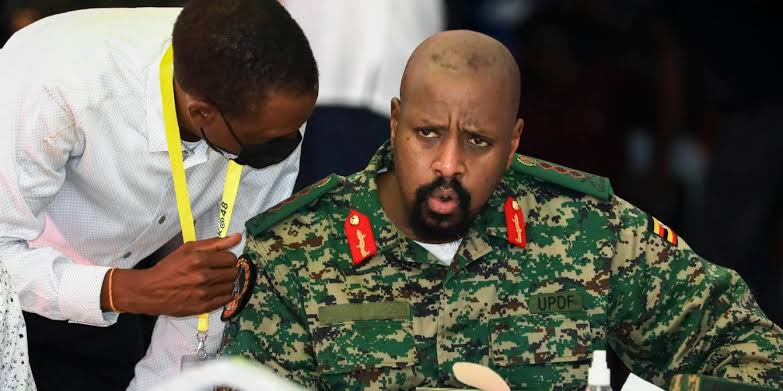
Gen. Muhoozi Kainerugaba has once again found himself at the center of a major national controversy after declaring that NTV Uganda and Daily Monitor would not reopen without his permission, a statement that has generated widespread discussion across the country.
The Chief of Defence Forces made the remarks through social media, where his comments quickly spread and attracted reactions from journalists, politicians, civil society organizations, and ordinary citizens.
His statement came amid ongoing public concern over the status of the two media outlets, which are among the most influential and widely followed news organizations in Uganda.
The declaration immediately triggered debate about the relationship between state institutions, political authority, and independent media in a democratic society.
Many Ugandans expressed surprise at the remarks, noting that decisions affecting major media organizations typically attract significant public interest because of their impact on access to information.
Supporters of Gen. Muhoozi interpreted the statement in different ways, with some arguing that it reflected frustration with certain media practices and coverage.

Others viewed the comments as part of his increasingly direct and uncompromising communication style, which has become a defining feature of his public image.
Critics, however, questioned the implications of the statement, arguing that freedom of the press is a fundamental principle protected under democratic governance.
Several media advocates emphasized that independent journalism plays an essential role in informing citizens, promoting accountability, and encouraging public debate.
Political analysts observed that remarks involving major media houses often attract intense scrutiny because they touch on sensitive issues related to governance and constitutional rights.
The controversy quickly expanded beyond social media, becoming a major topic of discussion on radio talk shows, online forums, and political platforms across the country.
Observers noted that both NTV Uganda and Daily Monitor have spent decades covering some of Uganda’s most important political, economic, and social developments.
As a result, any suggestion regarding their closure or future operations naturally generates widespread public concern and curiosity.
The statement also reignited broader discussions about the growing influence of social media as a platform through which powerful public figures communicate directly with citizens.
Some commentators argued that social media messages can create uncertainty when they address matters of national importance without accompanying official explanations.
Others stressed the need to distinguish between personal statements made online and formal decisions communicated through legally established government channels.
Legal experts pointed out that actions affecting media organizations generally involve regulatory, judicial, or administrative processes that are governed by law.

They emphasized the importance of transparency and due process whenever issues involving press operations arise.
Meanwhile, journalists and media rights organizations continued to closely monitor developments, recognizing the significance of comments directed at major national news outlets.
The debate has also highlighted the broader conversation about balancing national interests, public accountability, and media independence in modern governance.
For many citizens, the issue extends beyond the two media houses and touches on larger questions concerning freedom of expression and access to diverse sources of information.
As discussions continue across the country, many Ugandans remain eager for greater clarity regarding the future of the affected media organizations and the implications of Gen. Muhoozi’s remarks.
Whether viewed as a political statement, a warning, or a reflection of ongoing tensions between media and powerful institutions, the comments have undoubtedly succeeded in reigniting national debate and drawing attention to the critical role of journalism in Uganda’s public life.
About the Author