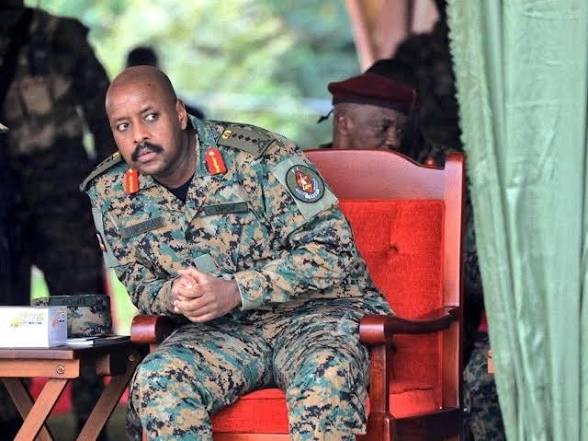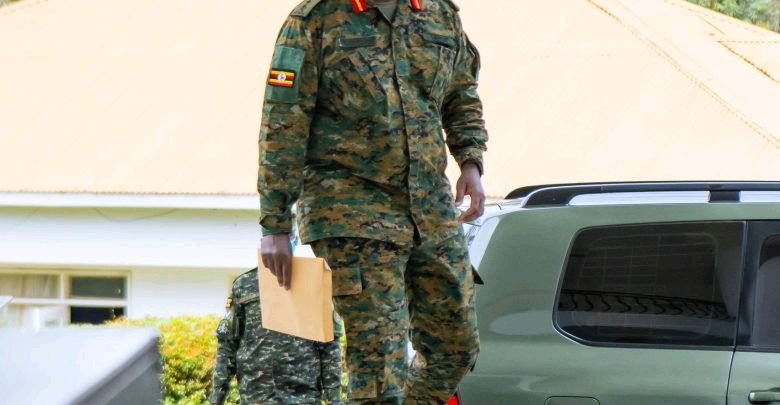
Uganda’s top military commander, General Muhoozi Kainerugaba, has indicated that Ugandan forces in eastern Democratic Republic of Congo could begin pulling out within days, reflecting mounting tensions with local Congolese authorities.
Kainerugaba announced that the Uganda People’s Defence Forces (UPDF) are ready to vacate all positions from Lubero in North Kivu to Mahagi in Ituri. He stated on X that the withdrawal would be coordinated with the Congolese government but could proceed immediately under certain political conditions.
The general made it clear that the trigger for a pullout is the current leadership in Ituri. “All UPDF troops will withdraw from Lubero in the next few days if the Governor of Ituri is not replaced,” he wrote, signaling a direct challenge to local political authority.
The tensions have escalated with Ituri’s military governor, Lieutenant General Johnny Luboya Nkashama, who has imposed strict controls on Ugandan operations. These include limiting access to key border points and insisting that all actions remain under a joint mission framework.
Ugandan officials argue that such restrictions hamper their operational effectiveness against insurgent groups, while Kinshasa continues to back Nkashama’s approach, asserting stronger national oversight and curbing foreign military influence in the region.
The UPDF first entered eastern Congo in 2021 under Operation Shujaa, a joint campaign aimed at dismantling the Allied Democratic Forces (ADF), an Islamist-linked group responsible for cross-border attacks. While the campaign has seen some tactical successes, insecurity has persisted, and the cooperation between the two forces has grown increasingly strained.
Under a state of siege since 2021, Nkashama has also focused on disarming local militias and promoting reintegration programs. His methods highlight a strategic divide with Uganda, emphasizing political control over purely military solutions.
A Ugandan withdrawal could further complicate efforts to counter the ADF and other armed groups while exposing deeper geopolitical fault lines in eastern Congo. At the time of Kainerugaba’s statement, neither the DRC government nor its military had issued a public response, leaving the future of the operation uncertain.
About the Author