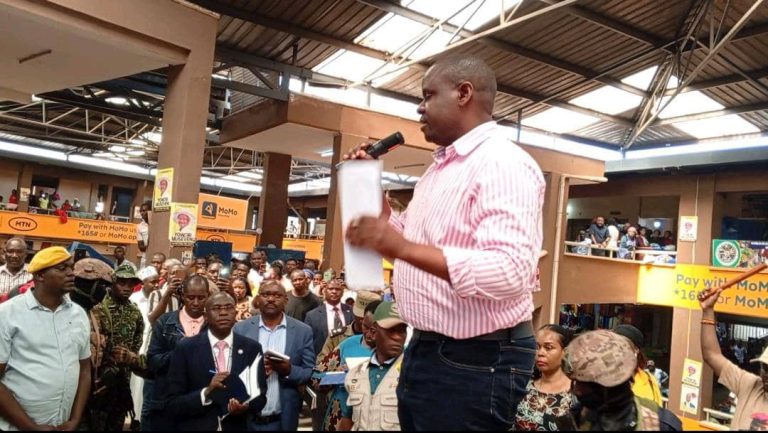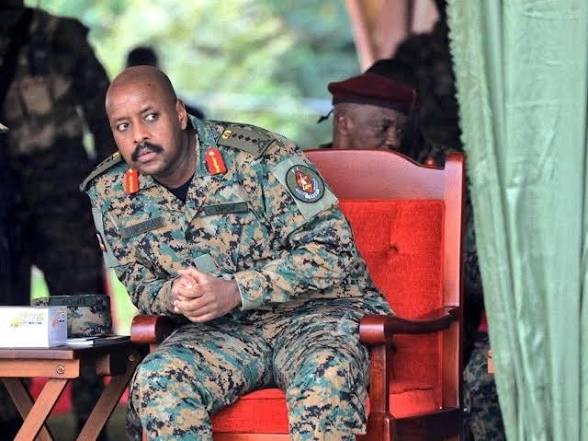
Gen. Muhoozi Kainerugaba has once again generated widespread discussion after making controversial remarks about Kampala Lord Mayor Erias Lukwago on social media.
The comments, which quickly attracted attention across multiple platforms, have become one of the most talked-about political statements of the day.
In the post, Muhoozi suggested that no individual or institution had pressured him regarding Lukwago’s situation, insisting that any decisions associated with the matter were not influenced by external forces.
The remarks immediately sparked intense reactions from both supporters and critics, many of whom sought to interpret the meaning behind the statement.
As one of Uganda’s most prominent military figures, Muhoozi’s social media posts frequently attract significant public attention and media coverage.
His latest comments were no exception, generating thousands of reactions and discussions within a short period of time.

The statement referenced a number of personal and spiritual influences, adding another layer of intrigue to an already widely discussed political issue.
Political observers note that Muhoozi often combines political commentary with historical, cultural, and religious references in his public communications.
The comments have reignited debate about the ongoing public interest surrounding Erias Lukwago, who remains one of Uganda’s most recognizable opposition leaders.
Lukwago’s legal and political challenges have continued to dominate headlines and public conversations in recent weeks.
Supporters of the Kampala Lord Mayor argue that all matters concerning him should be handled strictly through established legal and judicial processes.
They maintain that decisions affecting an individual’s liberty must be determined by courts and relevant institutions operating within the law.
Government supporters, however, have interpreted the remarks in different ways, with some viewing them as political commentary rather than literal statements.
Several analysts say the strong public reaction reflects the significance of both Muhoozi and Lukwago in Uganda’s political landscape.
The two figures represent contrasting political perspectives and frequently find themselves at the center of national debate.
Social media users spent much of the day discussing the implications of the statement and sharing differing interpretations of its meaning.
Legal experts have emphasized the importance of maintaining confidence in constitutional institutions and due process regardless of political disagreements.
Human rights advocates similarly continue to stress that legal matters should be addressed through independent judicial mechanisms.
Meanwhile, political commentators point out that provocative statements often gain traction because they involve high-profile public figures with large followings.

The latest remarks have also renewed discussion about the influence of social media on political communication in Uganda.
Many leaders increasingly use online platforms to communicate directly with citizens without relying solely on traditional media channels.
As a result, posts can quickly shape public discourse and become national talking points within minutes of publication.
The controversy surrounding Muhoozi’s comments once again demonstrates how digital platforms have transformed political engagement and public debate.
For now, reactions continue to emerge from across Uganda’s political spectrum as supporters and critics alike analyze the implications of the latest statement.
Whether viewed as political messaging, personal opinion, or rhetorical commentary, the remarks have succeeded in placing both Muhoozi and Lukwago back at the center of national conversation.
About the Author