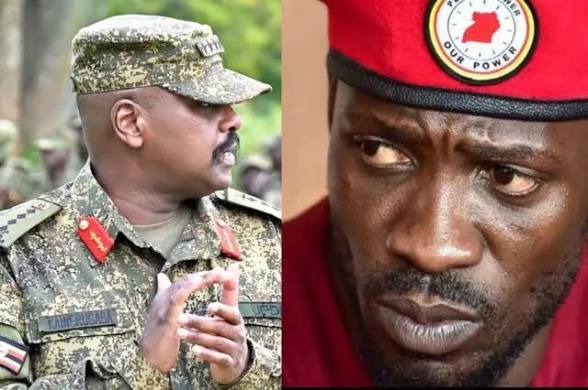
Gen. Muhoozi Kainerugaba has ignited one of the biggest media freedom controversies in Uganda’s recent history after publicly declaring that he does not believe in a free press and subsequently announcing the shutdown of NTV Uganda and Daily Monitor.
The Chief of Defence Forces made the remarks through a series of social media posts that quickly spread across the country, attracting intense debate among journalists, politicians, civil society groups, and ordinary citizens.
In one of his most controversial statements, Gen. Muhoozi declared that the press should be guided by what he described as “cadres of the revolution,” a comment that immediately raised concerns among advocates of independent journalism.
The controversy escalated further when he announced that NTV Uganda and Daily Monitor would be shut down, a statement that many initially interpreted as political rhetoric before events on the ground appeared to give it greater significance.
Shortly after midnight, security personnel reportedly deployed around Nation Media Group Uganda premises in Namuwongo and other operational locations associated with the media organization.
Staff members reportedly found themselves unable to freely move in and out of the premises as security operations continued throughout the night.

By the early hours of Sunday morning, viewers of NTV Uganda and Spark TV were reportedly met with blank screens displaying messages indicating that the channels were unavailable.
Several radio platforms associated with the media group, including KFM and Dembe FM, also reportedly experienced disruptions during the operation.
The developments generated immediate concern because Nation Media Group Uganda is one of the country’s largest and most influential independent media organizations.
Beyond Uganda, the media conglomerate operates across several East African countries and serves millions of readers, viewers, and listeners through its various platforms.
Gen. Muhoozi further intensified the controversy when he stated on social media that the affected outlets would not reopen without his permission.
Those remarks fueled nationwide debate about constitutional governance, freedom of expression, and the limits of authority within public institutions.
Political analysts observed that the statements represented a significant escalation in tensions between powerful political actors and sections of the independent media.
Legal experts and governance observers questioned whether any formal legal process had been followed before the reported shutdown of the media outlets.
By the time news of the operation spread across the country, neither security agencies nor relevant regulatory authorities had publicly released detailed explanations regarding the legal basis of the actions.
The incident also revived memories of previous confrontations involving Nation Media Group Uganda and state authorities over the years.
Many Ugandans recalled the 2013 closure of Daily Monitor and Dembe FM following the publication of reports related to the so-called “Muhoozi Project,” as well as earlier disputes involving NTV Uganda.

Media freedom advocates argued that independent journalism plays a critical role in promoting accountability, transparency, and informed public debate within democratic societies.
Supporters of Gen. Muhoozi, however, defended his position, with some claiming that media organizations should operate responsibly and avoid what they perceive as biased reporting.
The controversy rapidly expanded into a broader national conversation about the relationship between the state, security institutions, political leaders, and independent media organizations.
International observers and regional media stakeholders also followed developments closely because of Nation Media Group’s status as the largest independent media company in East and Central Africa.
With operations spanning Kenya, Uganda, Tanzania, and Rwanda, the organization remains one of the most influential news providers in the region and is listed on multiple East African stock exchanges.
As public debate continues, many Ugandans are demanding clarity regarding the legality, implications, and future of the reported shutdowns, while questions continue to be raised about the balance between state authority and press freedom in Uganda’s evolving political landscape.
About the Author