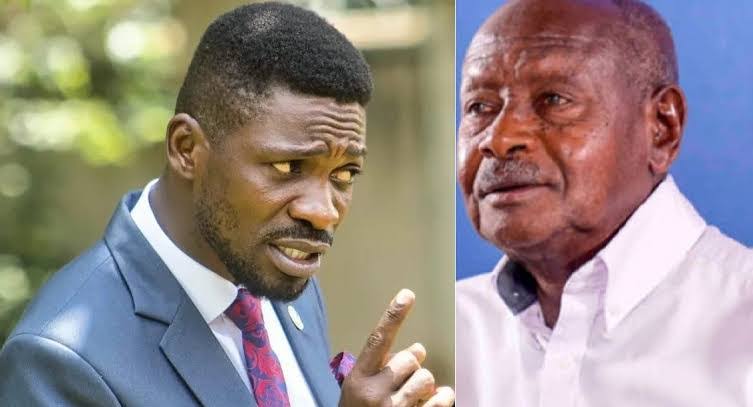
President has once again sparked national discussion after revealing details about his monthly earnings, insisting that his role as Uganda’s leader is more of a service to the nation than a path to personal wealth.
As the Head of State, Commander-in-Chief of the Uganda People’s Defence Forces, and the country’s longest-serving leader, many Ugandans assume that Museveni earns one of the highest salaries in government.
Given the enormous responsibilities attached to the presidency, including overseeing national security, directing government policy, and representing Uganda on the international stage, it would be easy to believe that the office comes with a substantial paycheck.
However, Museveni has consistently maintained that his official salary is surprisingly small compared to what many people expect. According to the President, he earns Shs3.6 million per month before deductions.
Speaking at an NRM gathering, Museveni disclosed that a portion of his salary is automatically deducted as a contribution to the ruling National Resistance Movement (NRM), leaving him with even less money for personal use.
The President explained that after the deductions are made, he remains with a significantly smaller amount than what many senior government officials, business executives, and professionals in the private sector take home every month.

He further revealed that part of the remaining salary is handed over to First Lady for family-related expenses, jokingly noting that little remains after the deductions and household allocations.
The revelation surprised many Ugandans who have long believed that the country’s top political office comes with a much larger salary package and numerous financial benefits.
Museveni, however, insists that government pay has never been the source of his wealth. Instead, he says his financial success comes primarily from commercial agriculture and private farming enterprises.
The President has repeatedly pointed to his agricultural projects as proof that farming can generate substantial income when approached as a business rather than merely a subsistence activity.
During a previous address in Bukedea District, Museveni described himself as one of Africa’s least-paid presidents, emphasizing that his prosperity comes from productive economic activities rather than his government paycheck.
According to him, agriculture has enabled him to earn considerably more than his official presidential salary and has provided financial stability for his family over the years.
Museveni has often used his own farming experience to encourage Ugandans, especially young people, to embrace wealth creation through agriculture, entrepreneurship, and other income-generating ventures.
He argues that many citizens focus too heavily on searching for formal jobs while overlooking opportunities available in sectors such as farming, livestock keeping, and agro-processing.

In another public engagement with student leaders at the International University of East Africa in Kampala, Museveni stressed that leadership should not be viewed as a means of accumulating personal wealth.
The President described his position as a voluntary service offered to the people of Uganda, insisting that his motivation has always been national development rather than financial gain.
“I am only there to help you. It is a voluntary service that I am offering. My job is to be a cattle keeper,” Museveni said while explaining his outlook on public service.
His remarks have continued to generate mixed reactions among Ugandans, with some praising his emphasis on agriculture while others question how the financial realities of high public office compare with the salary figures he cites.
Political analysts note that discussions about presidential earnings often attract public interest because they touch on broader questions regarding government spending, public accountability, and leadership priorities.
Despite the debate surrounding his comments, Museveni remains firm in his position that personal wealth should be built through productive investment and hard work. He continues to present himself as a farmer first and a public servant second, maintaining that his success story is rooted in cattle keeping and commercial agriculture rather than the salary attached to Uganda’s highest office.
About the Author