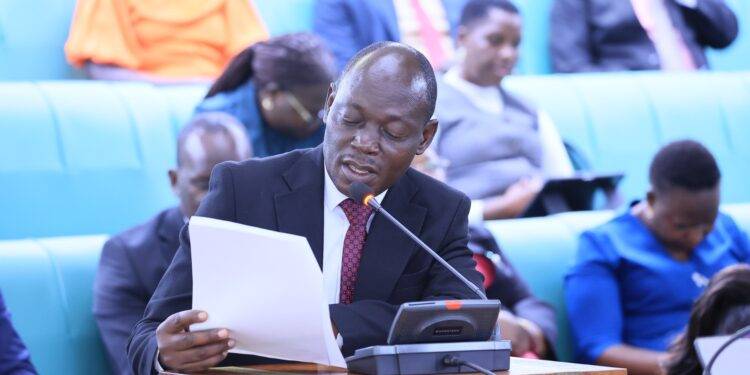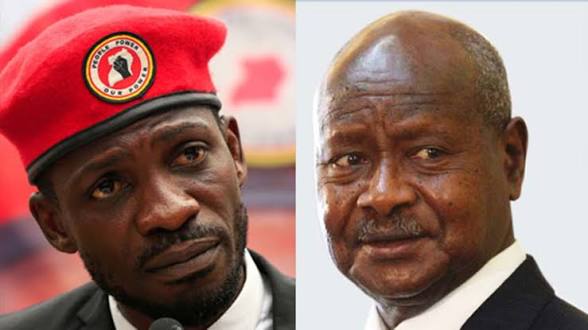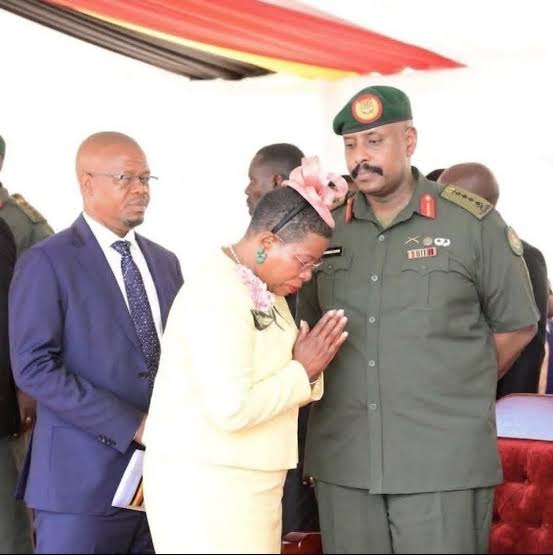
The political storm surrounding former Speaker of Parliament Anita Annet Among has taken a new twist after the president of the Forum for Democratic Change (FDC), Patrick Amuriat Oboi, came out strongly in her defense. Amuriat argued that the attacks directed at Among are not genuinely about fighting corruption but are instead linked to the growing political influence she has accumulated over the years.
Speaking during a recent engagement, Amuriat expressed concern over what he described as a coordinated effort to tarnish the image of the former Speaker. He maintained that while corruption has remained a major challenge in Uganda for decades, the current focus on Among appears selective and politically motivated.
According to the FDC president, corruption did not begin with Anita Among and neither is she the only public official who has faced questions regarding accountability. He noted that the National Resistance Movement (NRM) government has been in power for nearly four decades, during which numerous corruption scandals have emerged and faded without producing meaningful reforms.
Amuriat questioned why the fight against corruption appears to gain momentum only when certain individuals become politically influential. In his view, the timing of the allegations and criticism directed at Among raises questions about the true intentions behind the campaign against her.
The opposition leader suggested that Among’s rise within Uganda’s political establishment may have unsettled powerful interests. Over the years, she transformed from an ordinary legislator into one of the most recognizable and influential figures in the country’s political landscape.
Her tenure as Speaker elevated her profile significantly, giving her access to national decision-making processes and strengthening her connections across different political camps. This influence, according to Amuriat, may have created anxiety among individuals who view powerful emerging figures as potential threats.

Amuriat argued that Uganda’s political history is filled with examples of leaders who were celebrated when they aligned with powerful interests but later faced resistance once they appeared to build independent centers of influence. He believes Among’s situation may fit into this broader pattern.
The FDC president emphasized that every Ugandan deserves justice and fair treatment regardless of political affiliation. He warned against the tendency to convict individuals in the court of public opinion before investigations and legal processes are completed.
He further stated that if authorities possess credible evidence against any public official, such evidence should be presented through the appropriate institutions. However, he cautioned against using allegations as tools for political warfare or character assassination.
Amuriat’s remarks have generated considerable debate among political observers. Some agree with his assessment that Uganda’s anti-corruption efforts have often appeared inconsistent, targeting certain individuals while leaving others untouched despite facing similar accusations.
Supporters of Among welcomed the comments, arguing that she has become a victim of political jealousy and power struggles. They claim that her growing popularity and influence within government circles made her an easy target for opponents seeking to weaken her position.
Others, however, disagreed with Amuriat’s interpretation. Critics insist that allegations of corruption should be investigated thoroughly regardless of an individual’s political status or influence. They argue that public accountability is essential for all leaders entrusted with public resources.
Political analysts note that Amuriat’s defense of Among is particularly interesting given the historical differences between the opposition and senior NRM figures. His comments suggest that concerns about fairness and due process can sometimes transcend traditional political divisions.
The development has also sparked discussions about the nature of power within Uganda’s political system. Many observers believe that influence and political survival often depend on maintaining strategic alliances while avoiding conflicts with more established centers of authority.

For some analysts, Amuriat’s statement reflects broader frustrations with the country’s approach to combating corruption. They argue that anti-corruption campaigns often lose credibility when they appear selective or driven by political considerations rather than principle.
The controversy has further highlighted Among’s continued relevance in national politics despite the challenges she has faced. Even after leaving the Speaker’s office, she remains a prominent figure whose actions and statements continue to attract public attention.
Social media platforms have since become battlegrounds for competing narratives. While some users have praised Amuriat for speaking out against what they view as political persecution, others have accused him of defending individuals who should instead be held accountable.
The debate also underscores the complex relationship between power and accountability in modern politics. Leaders who rise rapidly often attract both admiration and hostility, especially when their influence begins to extend beyond traditional political boundaries.
As discussions continue, many Ugandans are keenly watching whether more political leaders will weigh in on the issue. Their reactions could provide valuable insight into the shifting alliances and rivalries shaping the country’s political future.
For now, Patrick Amuriat Oboi remains firm in his position that the campaign against Anita Among is less about fighting corruption and more about confronting a politician whose growing influence had begun to challenge existing power structures. Whether that argument gains wider acceptance remains to be seen, but it has undoubtedly added a new dimension to an already heated national debate.
About the Author