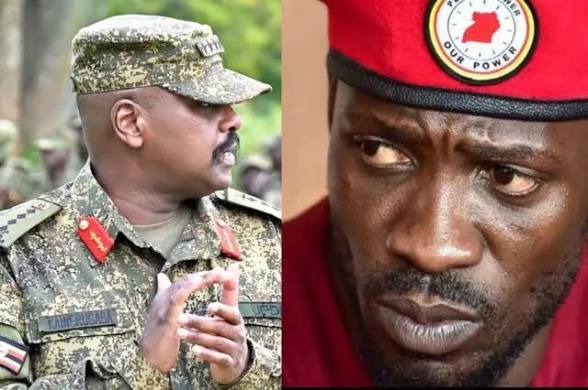
Just days after calling for a change in Uganda’s opposition leadership, Chief of Defence Forces Muhoozi Kainerugaba has once again stirred political debate with a statement that has left both supporters and critics talking.
In a message shared on social media, Muhoozi declared that nothing in Uganda’s laws prevents him from appointing a Leader of the Opposition whom he believes is best suited for the position. The bold statement immediately attracted attention across the country’s political landscape, with many trying to understand what exactly the military chief meant.
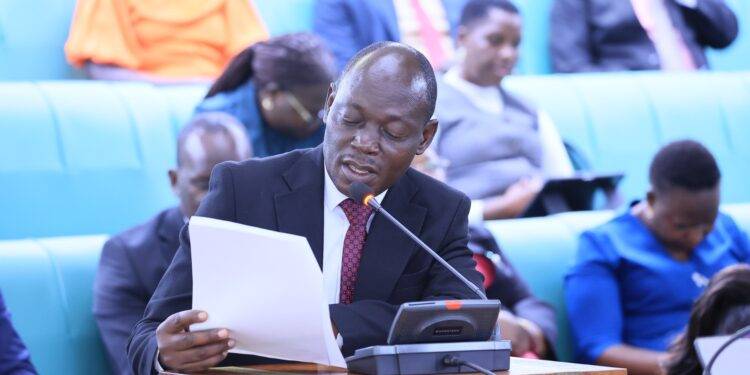
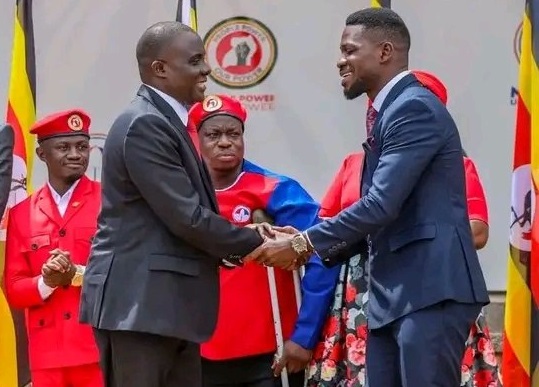
The comments come amid an ongoing exchange between Muhoozi and current Leader of the Opposition Joel Ssenyonyi, a feud that has increasingly played out in public through speeches, interviews, and social media posts.
Unlike previous political disagreements that remained confined to party circles, this latest confrontation has drawn in military, parliamentary, and opposition figures, making it one of the most closely watched political stories in recent weeks.
For many observers, Muhoozi’s latest statement was significant not just because of what he said, but because it touched on one of the most important offices held by the opposition in Uganda’s political system.
The office of the Leader of the Opposition plays a crucial role in scrutinizing government policies, challenging decisions made by the executive, and presenting alternative views on national issues. As a result, any discussion surrounding the position often attracts public interest.

Muhoozi appeared determined to defend his position, insisting that he sees no legal obstacle preventing him from backing or appointing an individual he considers capable of carrying out the role effectively.
His statement quickly generated thousands of reactions online, with supporters praising his confidence while critics questioned whether such a move would align with established parliamentary procedures.
Some political commentators viewed the remarks as part of a broader effort by Muhoozi to increase his influence within national political discussions, something he has done consistently through his highly active social media presence.
Others dismissed the comments as political rhetoric designed to provoke debate and keep attention focused on ongoing disagreements between government supporters and opposition leaders.
Supporters of Ssenyonyi were quick to defend him, arguing that the Leader of the Opposition is not chosen through personal endorsements but through structures established within Parliament and opposition parties.
Several opposition activists described Muhoozi’s comments as an attempt to undermine the independence of an office that is intended to hold government accountable on behalf of citizens.
Meanwhile, supporters of Muhoozi argued that political leadership positions should always be open to public discussion and that expressing an opinion about who is best suited for a role is not unusual in a democracy.
The controversy has once again highlighted the growing role social media plays in Uganda’s politics, where a single statement from a prominent figure can instantly dominate headlines and public conversations.
Analysts note that Muhoozi’s remarks are part of a pattern in which political debates increasingly unfold online before moving into traditional political spaces.

The latest comments have also reignited discussion about the relationship between military leaders and civilian political institutions, an issue that has frequently generated debate in Uganda and elsewhere.
Some observers believe the statement reflects a changing political environment where influential figures are becoming more direct in expressing their views on national leadership questions.
Others argue that regardless of personal opinions, leadership positions within Parliament should remain guided by constitutional principles and institutional procedures.
As discussions continue, neither Parliament nor opposition parties have indicated any plans to alter the current leadership arrangement. Joel Ssenyonyi remains the recognized Leader of the Opposition, carrying out his parliamentary responsibilities as usual.
Still, Muhoozi’s statement has ensured that the conversation surrounding opposition leadership remains firmly in the public spotlight, adding yet another chapter to Uganda’s increasingly lively political discourse.
Whether the remarks result in any practical political action or remain part of a broader war of words, they have once again demonstrated Muhoozi’s ability to spark national debate with a single social media post.
About the Author