Few institutions in Uganda have shaped public debate over the last four decades as much as NTV and Daily Monitor. Whether covering elections, political battles, protests, corruption scandals, or government achievements, the two news outlets have remained among the country’s most influential sources of information.
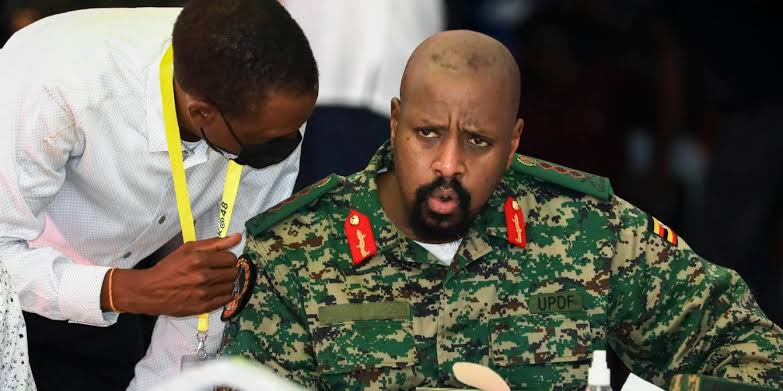
This week, however, the spotlight shifted from their reporting to a blistering attack directed at them by Chief of Defence Forces Gen. Muhoozi Kainerugaba.
In remarks that immediately ignited discussion online, Muhoozi accused NTV and Daily Monitor of benefiting from years of political conflict and controversy involving his father, President Yoweri Museveni.
The military chief claimed the media outlets had built their success by covering stories surrounding political struggles, opposition activities, and national disputes that have defined much of Uganda’s modern political history.
Using unusually strong language, Muhoozi described the two outlets as “great circus clowns” for his father, suggesting that their reporting over the years had helped attract audiences and generate substantial revenue.
His comments did not stop there. Muhoozi went on to argue that the media organizations had earned billions of shillings while reporting on events that often involved the suffering, frustrations, and hardships of ordinary Ugandans.

The statement immediately spread across social media platforms, drawing both praise and criticism from different sections of the public.
Supporters of Muhoozi argued that some media organizations thrive on conflict because controversial stories naturally attract attention and generate public interest.
They contend that stories involving political confrontations, arrests, protests, and government disputes often receive more coverage than positive developments because they drive readership and viewership.
Others interpreted Muhoozi’s remarks as an expression of frustration with what he perceives as years of hostile or unfair coverage directed at his family and government institutions.
For decades, President Museveni has been one of the most heavily covered political figures in East Africa. As a result, media organizations have dedicated significant resources to reporting on his leadership, policies, critics, and political opponents.
The relationship between governments and the media has rarely been simple. While journalists argue that scrutiny is necessary for accountability, political leaders often feel that certain reports fail to present a balanced picture.
That tension has frequently surfaced in Uganda’s political landscape, where debates about press freedom and media responsibility have become recurring topics.
Muhoozi’s latest comments have once again brought those discussions back into the national spotlight.
Critics of the military chief were quick to defend the role of independent journalism, arguing that media organizations have a duty to report on issues of public interest regardless of whether such reporting is welcomed by those in power.
Several commentators pointed out that stories involving political conflict, elections, governance, and public accountability are central to journalism in every democracy.
Others noted that media houses do not create political controversies but rather report on events as they unfold.

The remarks also arrive at a time when social media is increasingly challenging the dominance once enjoyed by traditional news organizations.
Unlike previous generations of leaders who relied heavily on newspapers and television stations to communicate with citizens, modern political figures can now speak directly to millions of followers through online platforms.
This shift has transformed the information landscape and reduced the gatekeeping power once held by traditional media institutions.
Some analysts believe Muhoozi’s comments reflect this changing reality, where influential political actors feel less dependent on mainstream media to shape public opinion.
Whether viewed as criticism, frustration, or political messaging, the statement has once again placed the relationship between power and the press under intense public scrutiny.
As debate continues, one thing remains clear: Muhoozi’s remarks have ensured that both NTV and Daily Monitor are once again at the center of a national conversation—this time not because of a story they reported, but because they have become the story themselves.
About the Author