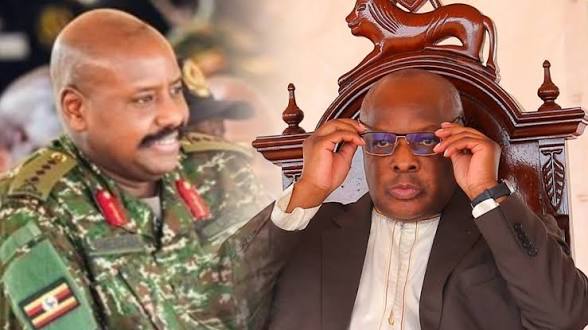
A fresh social media statement from Gen. Muhoozi Kainerugaba has ignited widespread discussion after the Chief of Defence Forces publicly declared his unwavering support and protection for the Kabaka of Buganda, sending a strong message to anyone he believes may threaten the kingdom’s monarch.
The remarks were made through Muhoozi’s official X account, where he referred to the Kabaka as his uncle and emphasized what he described as a deep historical and personal connection to the revered cultural leader.
In the strongly worded post, Muhoozi stated that the Kabaka is a Muchwezi and insisted that he had made his position on the matter clear many times before.
He went on to issue a stern warning, declaring that anyone who dares to touch the Kabaka would effectively be touching him personally.
The General further intensified his message by stating that there would be “hell to pay” for any person who attempts to harm, undermine, or interfere with the Kabaka.
The statement quickly spread across social media platforms, attracting thousands of reactions from Ugandans eager to interpret the meaning and significance of the remarks.

Many supporters welcomed the comments, arguing that they reflected the respect and admiration that numerous Ugandans hold for the Buganda Kingdom and its cultural institutions.
Others viewed the statement as a public reaffirmation of Muhoozi’s longstanding relationship with Buganda and its leadership.
Political observers noted that comments involving the Kabaka often attract significant public attention due to the central role Buganda continues to play in Uganda’s cultural and political landscape.
The Kabaka remains one of the most influential traditional leaders in the country, commanding immense respect among millions of subjects both within and outside Buganda.
As a result, any public statement concerning his welfare, security, or status is almost guaranteed to generate national discussion.
Some social media users interpreted Muhoozi’s remarks as a message of solidarity and loyalty toward the kingdom at a time when cultural institutions remain important pillars of national identity.
Others debated whether the statement carried broader political implications beyond its apparent expression of support for the Kabaka.
Several commentators pointed out that Muhoozi has frequently used social media to communicate directly with the public, often making statements that dominate national conversations.

The latest post once again demonstrated his ability to generate widespread attention through a single message shared online.
Supporters praised what they described as his willingness to openly defend cultural institutions and traditional leaders whom many Ugandans deeply respect.
Critics, however, argued that strongly worded statements from senior public officials can sometimes be interpreted in different ways and may require additional context.
Despite the differing opinions, there was broad agreement that the comments underscored the enduring significance of the Buganda Kingdom in Uganda’s social and cultural affairs.
The remarks also reignited conversations about the historical connections between traditional institutions and contemporary national leadership.
As debate continues across social media, radio talk shows, and political forums, Muhoozi’s message has once again become one of the most discussed topics in the country, highlighting both the influence of the Kabaka and the growing impact of digital communication on Uganda’s public discourse.
About the Author