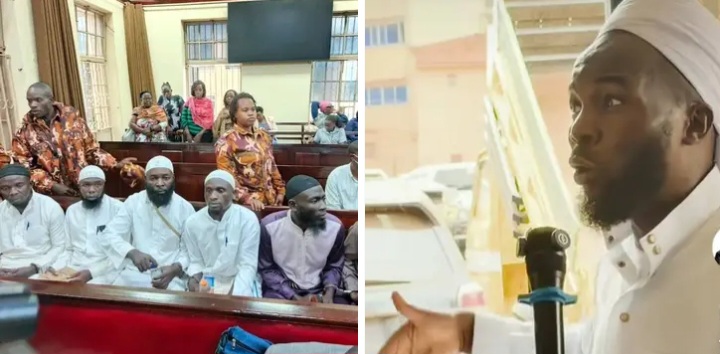
Muslim clerics have expressed anger over the decision to dress convicted killers of businesswoman Susan Magara in what they described as purely Muslim attire during their public appearance.
The clerics have condemned the move, arguing that it creates a negative impression about Islam and unfairly links the actions of individuals to the wider Muslim community.
Speaking during Juma prayers, Sheikh Kassim Ramathan questioned why the suspects were presented wearing Islamic clothing after being convicted of a serious crime.
He argued that such a presentation could be interpreted by some people as an attempt to associate criminal acts with the Islamic faith.
“When Okello killed the pupils, he was never dressed in Catholic attire. But when a Muslim kills, why dress them in purely Islamic clothes?” Sheikh Kassim questioned.
The cleric said criminals should be identified by their individual actions rather than the religion they belong to.

He claimed that presenting the convicted individuals in Islamic clothing was unfair because it could damage the image of innocent Muslims who have nothing to do with the crimes committed.
Sheikh Kassim said Islam does not support killing innocent people and that those who commit crimes should carry personal responsibility for their actions.
He questioned how people from the same religion could be involved in killing someone from another faith if they truly followed the teachings of Islam.
The cleric also raised concerns about the treatment of prisoners, questioning why the suspects appeared with long beards while other inmates in Luzira Prison are reportedly required to follow prison grooming rules.
He wondered why some prisoners are allowed to maintain certain appearances while others are forced to shave their hair.
The comments come after the convicted killers of Susan Magara appeared in public wearing clothes associated with Islamic identity, a move that sparked debate among different groups.
Muslim leaders have repeatedly maintained that acts of violence committed by individuals should not be blamed on an entire religious community.
They have urged authorities and the public to avoid actions that could create religious tensions or encourage discrimination.
The clerics said Uganda has a history of peaceful coexistence between different faith communities and that this should be protected.
They called on government institutions to handle criminal matters in a way that focuses on justice rather than religious identity.

According to the clerics, criminals should be presented based on their legal status and not their religious background.
They also urged religious leaders to continue promoting peace, tolerance and respect among Ugandans of different beliefs.
The debate has attracted public attention, with different people questioning the circumstances surrounding the appearance of the convicted individuals.
Muslim leaders have insisted that Islam should not be judged based on the actions of a few individuals accused of committing crimes.
They called for fairness and responsibility when handling issues involving religion, security and criminal justice.
The clerics said protecting unity among Ugandans should remain a priority regardless of differences in faith or background.
About the Author